
SDG Evidences
SDG 1 – No Poverty SDG 2 – Zero Hunger SDG 3 – Good Health & Wellbeing SDG 4 – Quality Education SDG 5 – Gender Equality SDG 6 – Clean Water & Sanitation SDG 7 – Affordable & Clean Energy SDG 8 – Decent Work & Economic Growth SDG 9 – Industry, Innovation and Infrastructure SDG 10 – Reduced Inequalities SDG 11 – Sustainable Cities and Communities SDG 12 – Responsible Consumption and Production SDG 13 - Climate Action SDG 14 - Life Below Water SDG 15 - Life and Land SDG 16 – Peace, Justice, and Strong Institutions SDG 17 – Partnerships for the GoalsSDG 1 – No Poverty
Kuwait has made notable advancements in reducing poverty and enhancing the living standards of its citizens. However, narrowing income gaps and ensuring equal opportunities for all continue to be national priorities. The Kuwaiti government acknowledges that achieving SDG 1 extends beyond income support, it also requires equitable access to quality education, employment, and sustainable economic opportunities for every individual.
Australian University, actively contributes to achieving SDG 1 in Kuwait:
- Financial aid, scholarships and grants
- Students’ employment opportunities
Financial Aid, Scholarships & Student Employment
The University administers various financial assistance schemes for students registered in AU’s programs of study to help them manage educational expenses and ensure equal access to learning opportunities. Any type of financial assistance scheme requires the student to be registered in full load and to be in good academic standing. If eligible for financial assistance based on the criteria mapped in the policy, students may apply through the Office of Student Financial Assistance. Applications are assessed by the Student Financial Assistance Committee. AU’s financial assistance schemes are competitive, selective, based on academic merit and availability of seats. AU’s Student Financial Assistance Committee reviews, on an annual basis, the types, numbers and values of financial assistance schemes offered. Students with a record of violation under the University’s Code of Conduct and Conduct of Academic Integrity are not eligible for financial assistance. The University’s financial assistance schemes are outlined below: The University administers various financial assistance schemes for students registered in AU’s programs of study to help them manage educational expenses and ensure equal access to learning opportunities. Any type of financial assistance scheme requires the student to be registered in full load and to be in good academic standing. If eligible for financial assistance based on the criteria mapped in the policy, students may apply through the Office of Student Financial Assistance. Applications are assessed by the Student Financial Assistance Committee. AU’s financial assistance schemes are competitive, selective, based on academic merit and availability of seats. AU’s Student Financial Assistance Committee reviews, on an annual basis, the types, numbers and values of financial assistance schemes offered. Students with a record of violation under the University’s Code of Conduct and Conduct of Academic Integrity are not eligible for financial assistance. The University’s financial assistance schemes are outlined below:
Bursary
Bursaries are available to any student studying at AU regardless of the semester of study they are undertaking. Bursaries are up to KWD 1,000. Bursaries approved by the Financial Assistance Committee will be offset against the tuition fees payable for the particular semester. Funds are available on a semester basis. Students may only apply for and be awarded one bursary per semester. Students must apply or re-apply each semester and disclose all required details in support of their application for assistance. Prior to enrolment, if any student is in a situation, where they may face issues with payment of their fees, they are required to make a full disclosure of their situation. The University will consider various options with the student including deferral of enrolment. Student Financial Assistance Committee will determine the allocation of funds based on academic performance, attendance, financial situation of the student and other criteria as applicable.
Academic Scholarship
The Australian University offers Academic Scholarships that cover either full or partial tuition fees for one semester. Students may apply for an Academic Scholarship after completing the first semester of their program of study. Academic Scholarship holders must continue to perform at outstanding levels to enhance the opportunity for further allocations. Students may apply for a scholarship in subsequent semesters. Eligible students may apply after completing their first semester of study, provided they are enrolled in a full academic load and have achieved a minimum cumulative GPA of 3.8 out of 4.0. Academic performance, along with factors such as participation in extracurricular activities, is considered during selection. Scholarship recipients must maintain outstanding academic standing to remain eligible for future awards, and the achievement is formally recognized on their official transcript.
Special Grants
New Students
New first-time self-funded students applying to AU with a High School GPA of 3.75 are eligible to apply for a discount determined by the Student Financial Assistance Committee. To retain the discount, students must maintain a cumulative GPA of 3.50 with a full academic load as per the terms stipulated in AU’s Student Academic Load Policy throughout the duration of their studies. If a student receives a “Fail” grade in any course during his/her study, he/she will no longer qualify for this discount. In this case, the student will be liable to pay the discounted amount for that course.
First Degree Relative Discount
A discount of 10% on tuition fees is applied to the sibling of an existing self-funded AU student who are simultaneously registered as full-time students at the University. AU offers up to 50% discount of tuition fees to the children of an existing full-time AU faculty/staff member. AU offers a 15%-25% discount of tuition fees to a first degree relative of an existing full-time AU faculty/staff member. Intending students are responsible to disclose the relative’s degree information while applying to the University.
Sheikh Jaber Al Sabah Fund
Through an endowment in honor of Sheikh Jaber Al Sabah, Kuwaiti Diploma and Bachelor students may apply each semester for financial support. Applicants must have a minimum GPA of 2.00, no failed units in the previous semester, and must not be on another scholarship. A special financial situation must be declared, supported by relevant documentation. All required materials must be submitted within the deadlines announced on the AU website, late or incomplete applications will not be considered.
PUC Scholarship
In addition to the university’s own support schemes, AU students may also apply for scholarships provided by the Private Universities Council (PUC). For more information about PUC scholarships and eligibility criteria, students are encouraged to visit the PUC website at www.puc.edu.kw.
AU and CQU Joint Graduate Programs and Scholarships
The Australian University (AU) has signed a collaboration agreement with Central Queensland University Australia (CQUniversity) to offer joint graduate programs and scholarships. These graduate programs (Master of Management for Engineers, Master of Research and PhD) and scholarships are under the supervision of both universities. The graduate programs aim to support research priorities that are of mutual interest to both universities and will likely include topics in the areas of Artificial Intelligence, Machine Learning and Robotics, Data Science, Information and Communication Technologies, Cyber Security, Food Security, Digital Transformation, Business Management, E-marketing, Clean and Renewable Energy, Water and Environment, and Health. Additional research areas may also be considered if there is a demonstrated alignment with the research priorities of both universities and/or with the research objectives of relevant external organizations such as the Kuwait Foundation for the Advancement of Sciences (KFAS).
AU Career Fair
The University’s Career Fair brings together dozens of leading employers and hundreds of students and graduates to provide meaningful job and internship opportunities. By actively facilitating pathways into employment, the event supports SDG 1’s aim to eradicate poverty by enabling stable work, increasing earning potential and helping students move toward financial self-sufficiency.
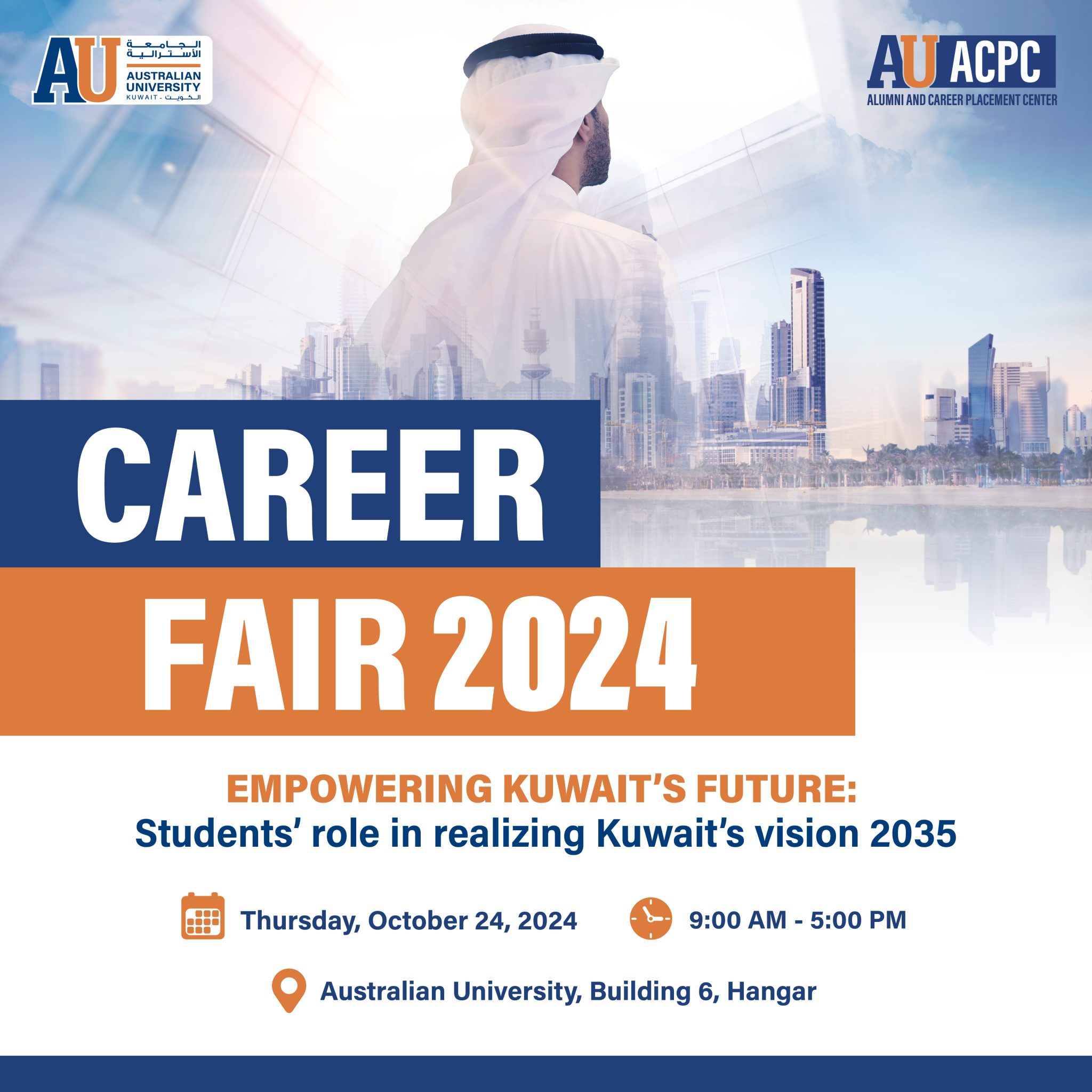
“Career Fair of 2024” with a Seminar themed “Empowering Kuwait’s Future: Students’ Role in Realizing Kuwait Vision 2035”
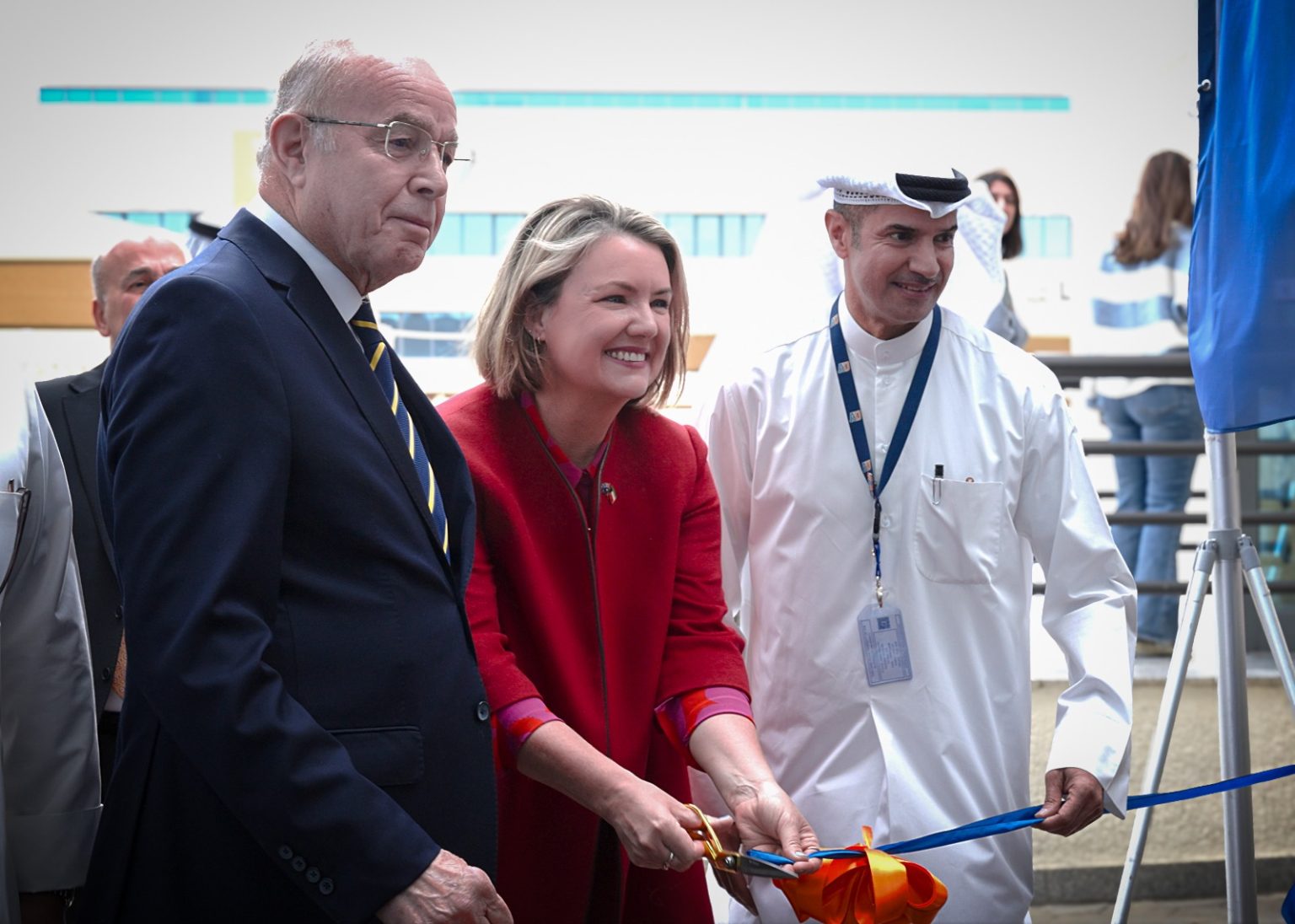
AU Hosts Career Fair Supporting Kuwait Vision 2035 On October 24, 2024, AU held a Career Fair with over 60 organizations, including top sponsors like Kuwait Petroleum Corporation. The event featured a seminar on Empowering Kuwait’s Future with AU’s President and industry leaders discussing the role of graduates in Kuwait’s Vision 2035. The fair provided students direct access to employers, networking, and job interviews.
Alumni and Career Placement Center
The Alumni and Career Placement Center – ACPC at The Australian University is dedicated to empowering AU diverse community of students and alumni from the disciplines of Business, Engineering, Maritime, and Aviation. Guided by its commitment to education that cultivates socially responsible citizens, ACPC provide comprehensive resources and personalized support for their professional journey. The mission takes into consideration the State of Kuwait’s vision of 2035. Through industry collaboration, innovative programs, and tailored guidance, alumni center aims to equip individuals with the skills, connections, and mindset needed to excel in their careers and contribute to national and global progress. The AU Placement Center empowers students and alumni to take confident steps toward meaningful and rewarding careers. The center provides personalized guidance, helping students translate academic achievement into real-world success through hands-on opportunities and targeted career support. The center has partner with leading industries to create pathways for growth, whether through internships, mentorships, skills workshops, or career events. From building a standout resume to preparing for interviews, the center ensures that AU students are fully equipped for today’s competitive job market.
Alumni and Career Placement Center Services
- Career Guidance: One-to-one advising, career planning, and professional development support
- Experiential Learning: Internships, field trips, competitions, and applied learning experiences
- Skill-Building: CV/resume development, interview preparation, and employability workshops
- Industry Engagement Employer partnerships, mentorship programs, and sector-focused events
- Alumni Support Ongoing career services and networking opportunities beyond graduation
SDG 2 – Zero Hunger
Australian University actively contributes to achieving SDG 2 in Kuwait:
AU Annual Ramadan Meal Distribution Drive
In the spirit of the holy month of Ramadan and in line with its commitment to corporate social responsibility, The Australian University (AU) is committed to its annual tradition of giving back to the community by organizing its annual Ramadan Meal Distribution Drive.
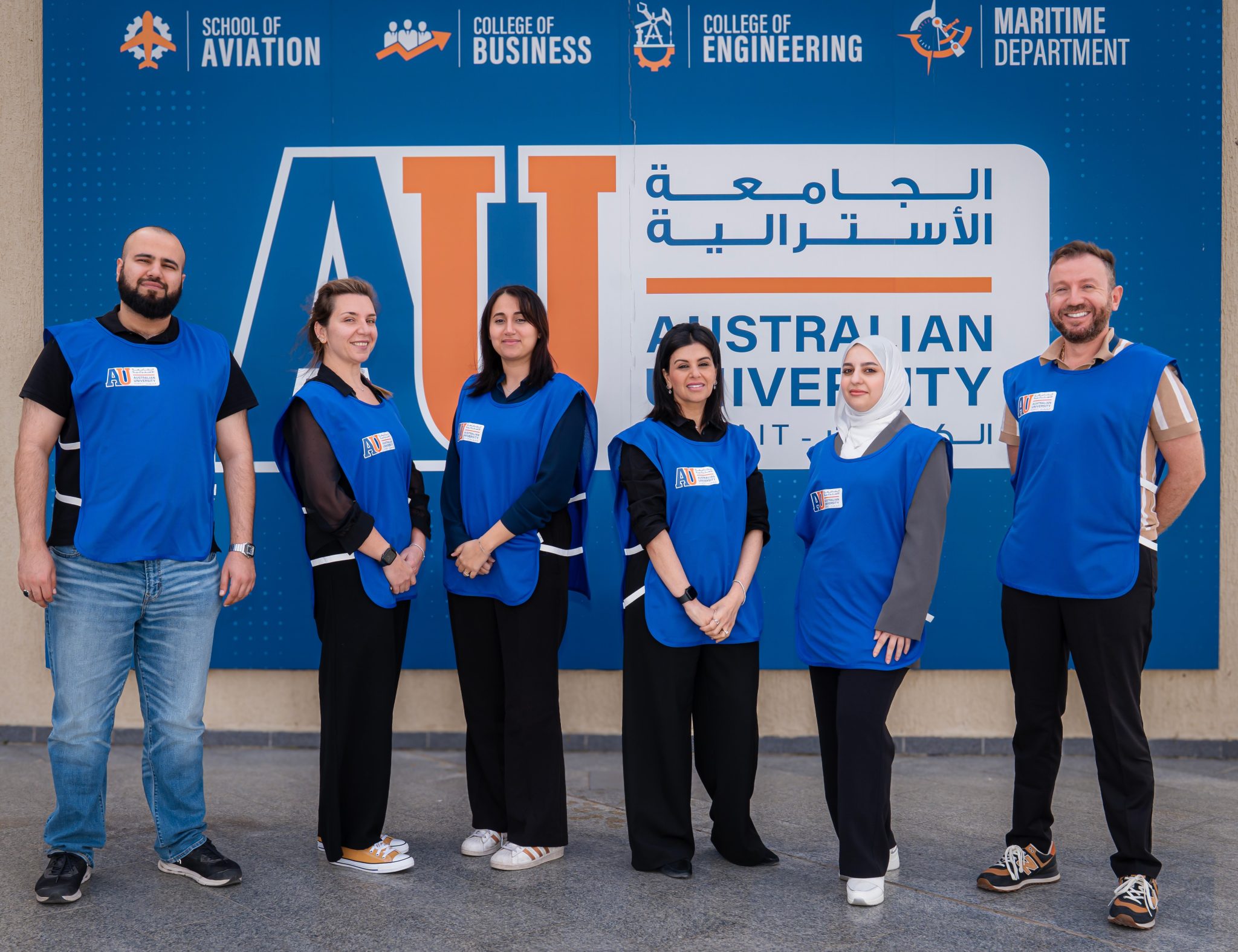
The distribution drive brought together AU staff members and students as volunteers to distribute meals to underprivileged individuals and families in areas with a higher population of laborers. Through such initiatives, AU aims to instill in its students the values of empathy, social responsibility, and the importance of giving back to the community. By actively participating in volunteer work, students develop a deeper understanding of the challenges faced by others and the impact of even the smallest acts of kindness. AU believes that fostering a culture of compassion and service among its students helps shape them into responsible and socially conscious individuals who will continue to make a difference beyond their university years.
This annual initiative is a cornerstone of AU’s dedication to community engagement and social good. It reflects our values of compassion, unity and generosity.
AU Launches “Beat the Heat with AU” Initiative
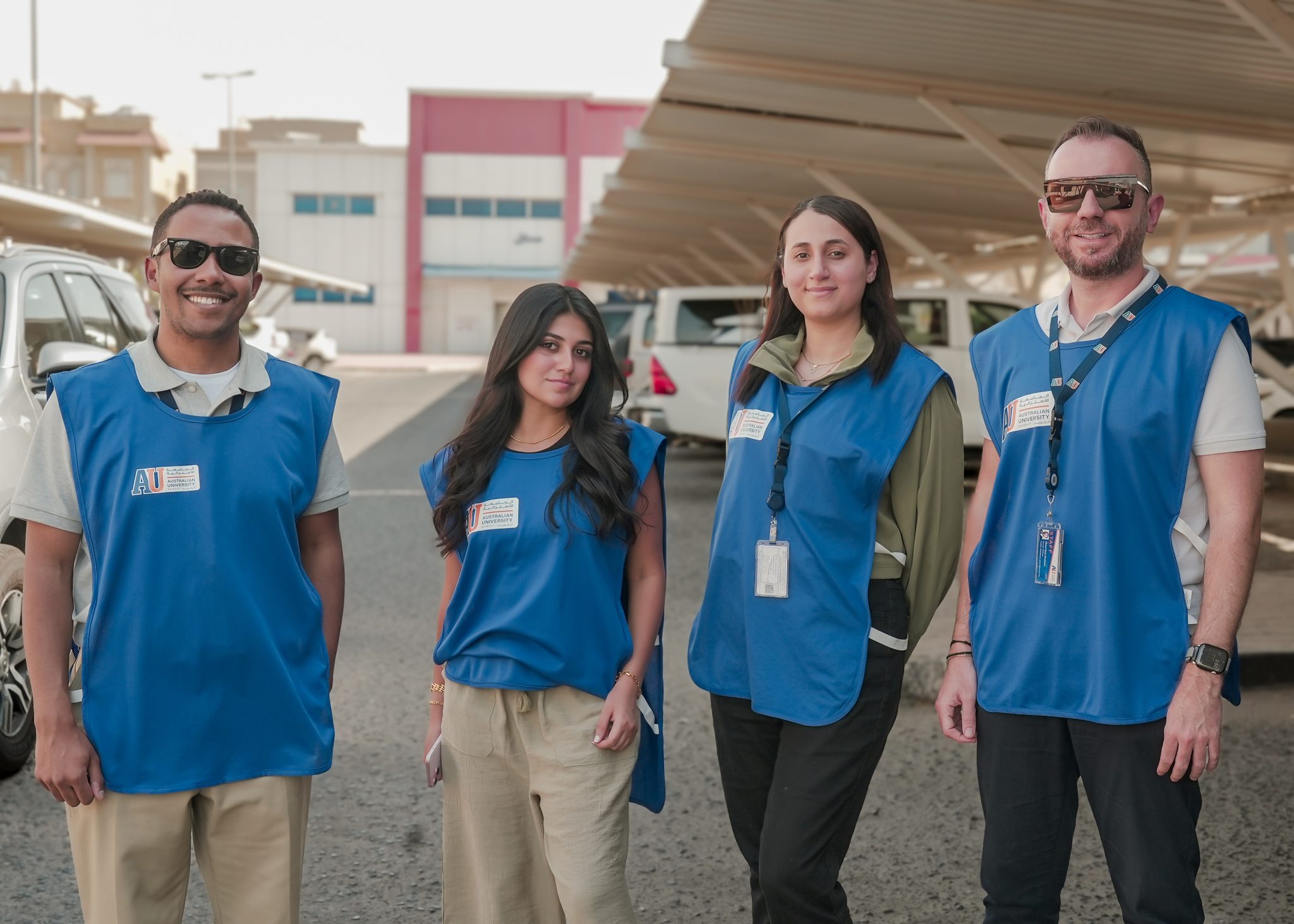
In line with its commitment to corporate social responsibility and environmental responsibility, the Australian University (AU) launched its “Beat the Heat with AU” initiative which aimed to support underprivileged gas station attendants. As part of the campaign, AU students and staff members visited numerous fuel stations across Kuwait to personally distribute durable and reusable water bottles to attendants, offering both immediate relief from the heat and a sustainable solution for hydration throughout the summer. The initiative witnessed active participation from AU’s students and staff, who came together to show appreciation for those who endure high heat during Kuwait’s intense summer. The campaign not only provided practical support but also encouraged environmental awareness by replacing single-use plastics with durable, eco-friendly alternatives.
SDG 3 – Good Health and Wellbeing
Australian Universit actively contributes to achieving SDG 3 in Kuwait:
Gut Health: Trend Or Truth
The Australian University hosted a seminar titled “Gut Health: Trend or Truth?” in the university auditorium. The event explored the scientific foundations of gut health, examining whether it is a passing wellness trend or supported by research evidence. The session was led by Reem Jallad, Director of Student Life, and aimed to raise awareness about the importance of nutrition and digestive wellness among students and staff.
Read more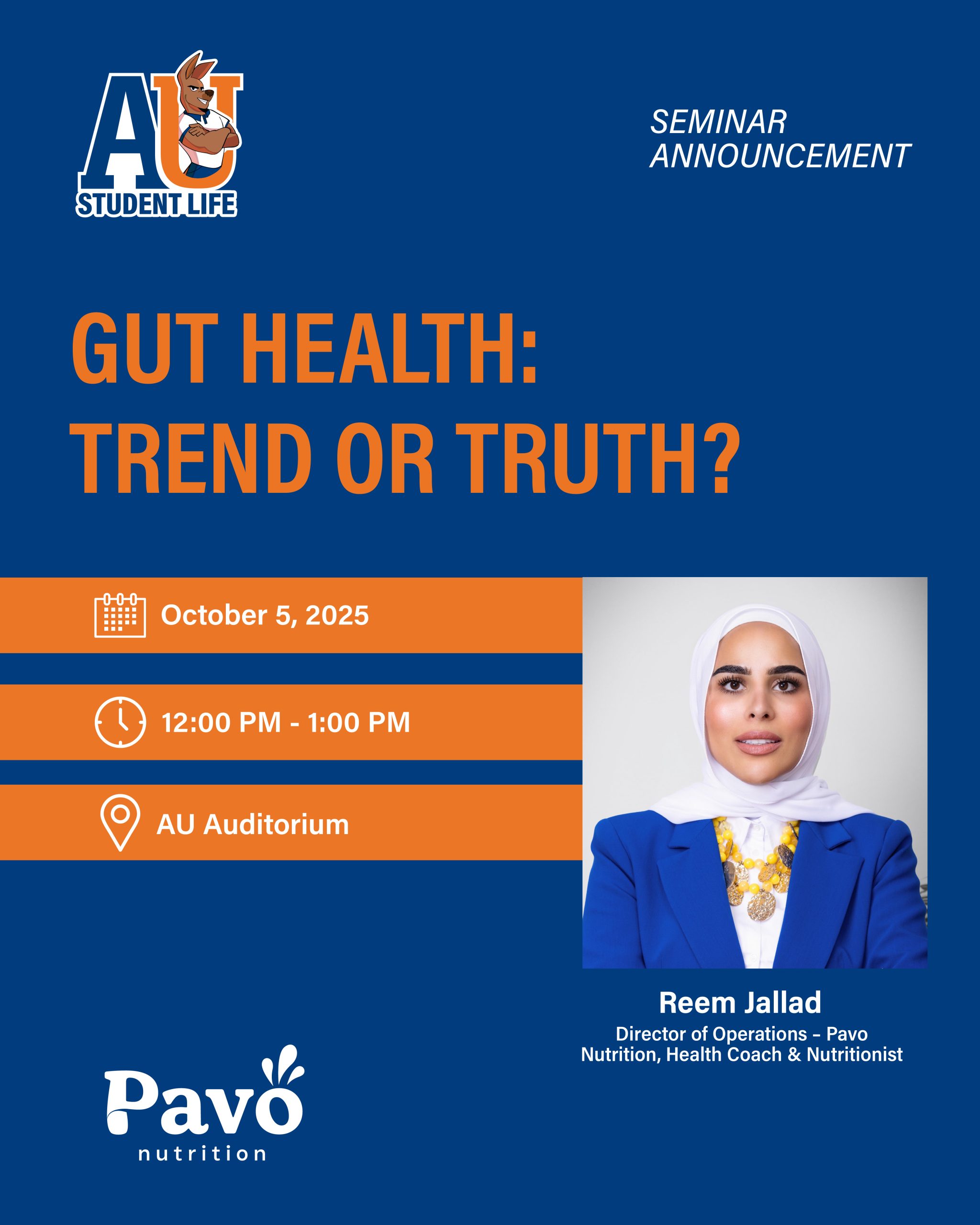
AU Hosted Emergency Response Session
AU hosted an Emergency Response session in collaboration with key safety organizations to raise awareness on campus. The event featured talks on university health, first aid, and fire safety, led by experts from the American Society of Safety Professionals (ASSP), the Ministry of Health, and the Kuwait Fire Force.
Read more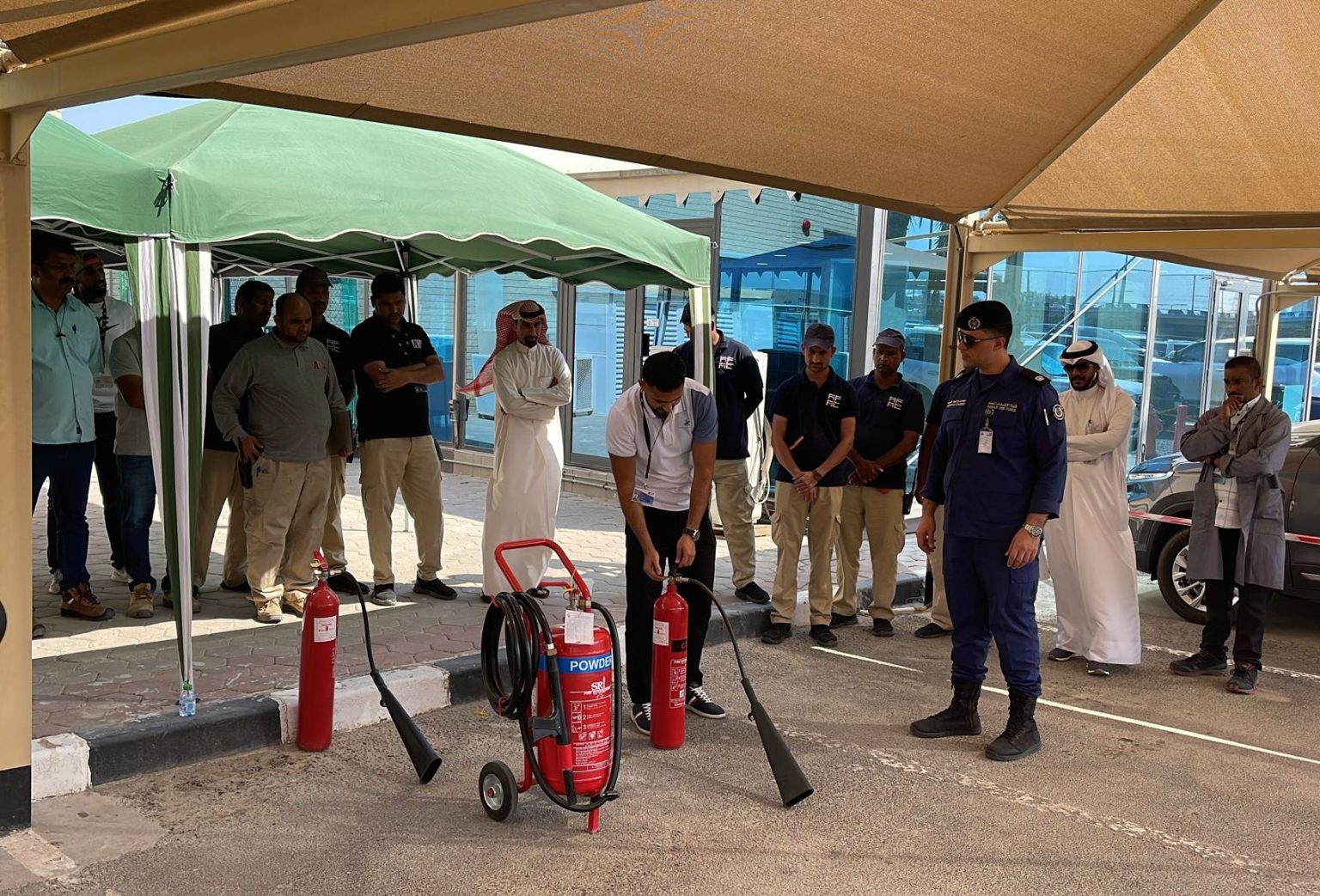
Health And Safety Culture at Work
The event titled “Health and Safety Culture at Work” at Australian University focused on cultivating a robust safety mindset within the workplace environment. It brought together students, faculty and staff to highlight key aspects of occupational safety, hazard awareness, fire protocols and emergency response practices. By emphasising prevention, shared responsibility and structured training, the initiative aimed to strengthen the university’s commitment to fostering a safe and healthy working and learning community.
Read more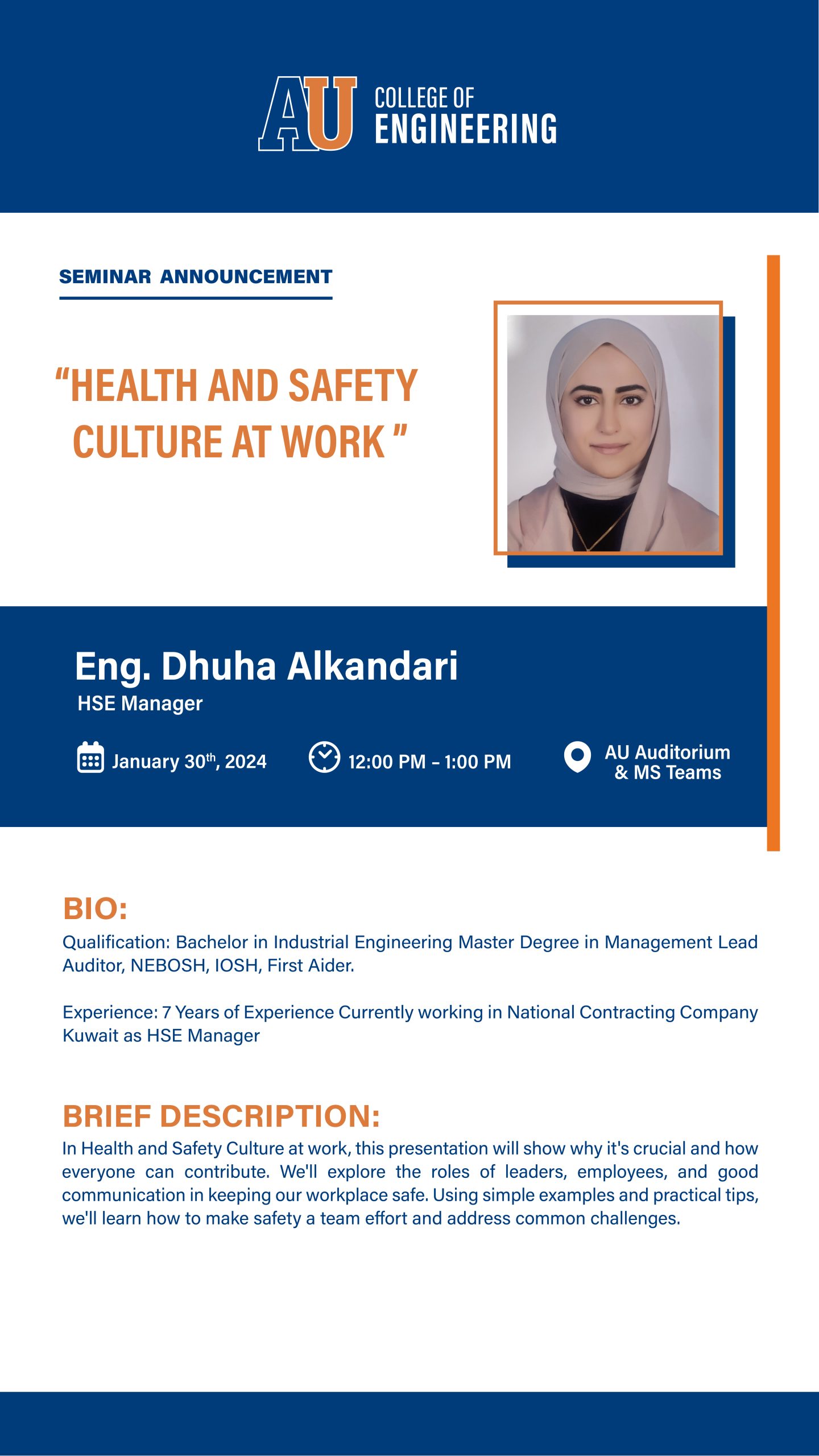
Breast Cancer Awareness Month
The Australian University held its “AU Goes Pink” campaign in support of Breast Cancer Awareness Month. The initiative featured on‑campus activities, awareness booths, and engagement with healthcare providers to encourage early detection and healthy lifestyle practices among students, staff and the wider university community.
Read more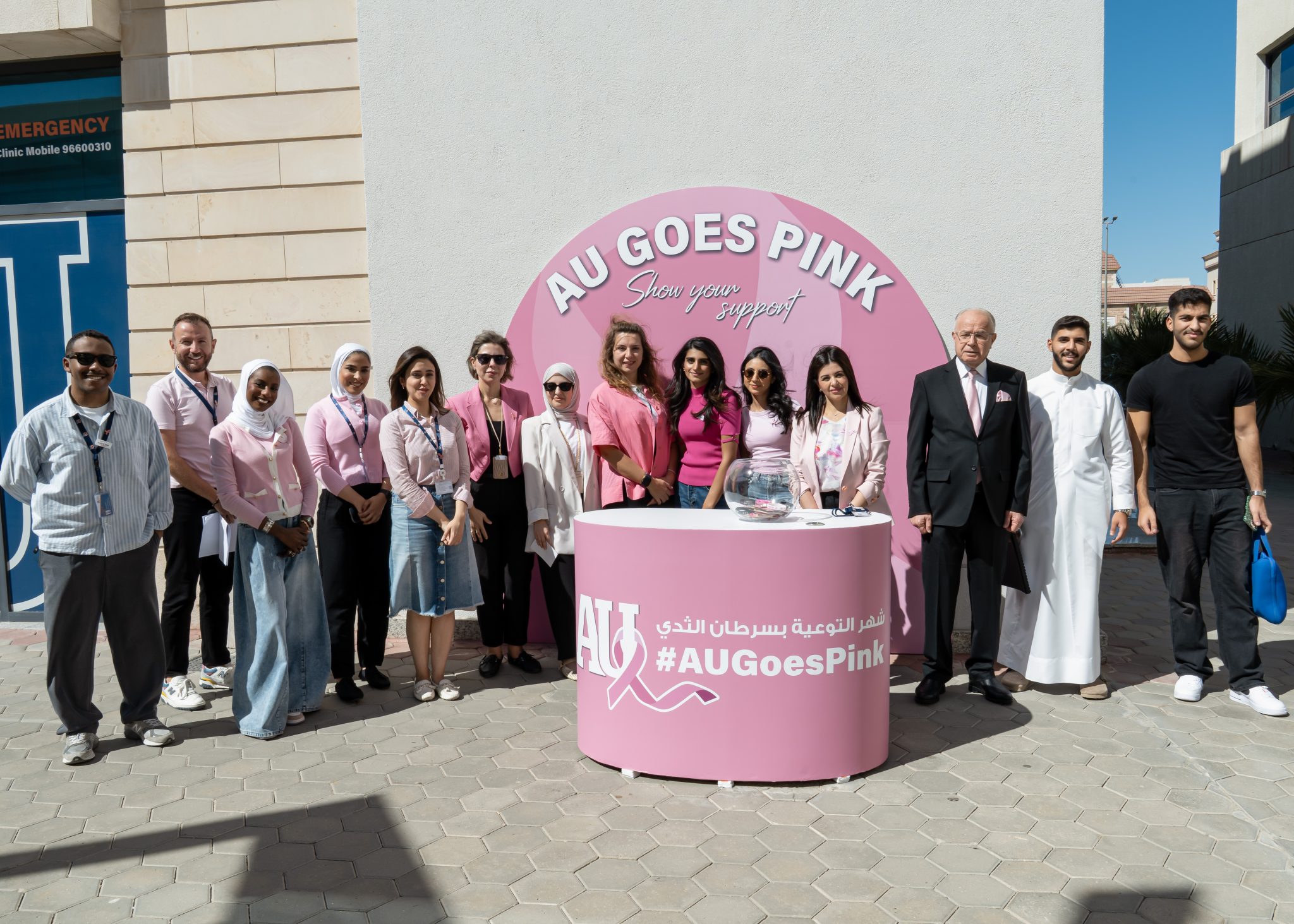
Annual Blood Donation Drive
The Australian University hosted its 5th Annual Blood Donation Drive under the slogan “With your blood, life flows”. The three‑day event took place on campus, with the first two days dedicated to staff and students and the third day open to parents and the wider university community.
Donors received health‑education materials, and student volunteers were involved in organising and registering participants — offering both a humanitarian contribution and a learning opportunity in event management and service.
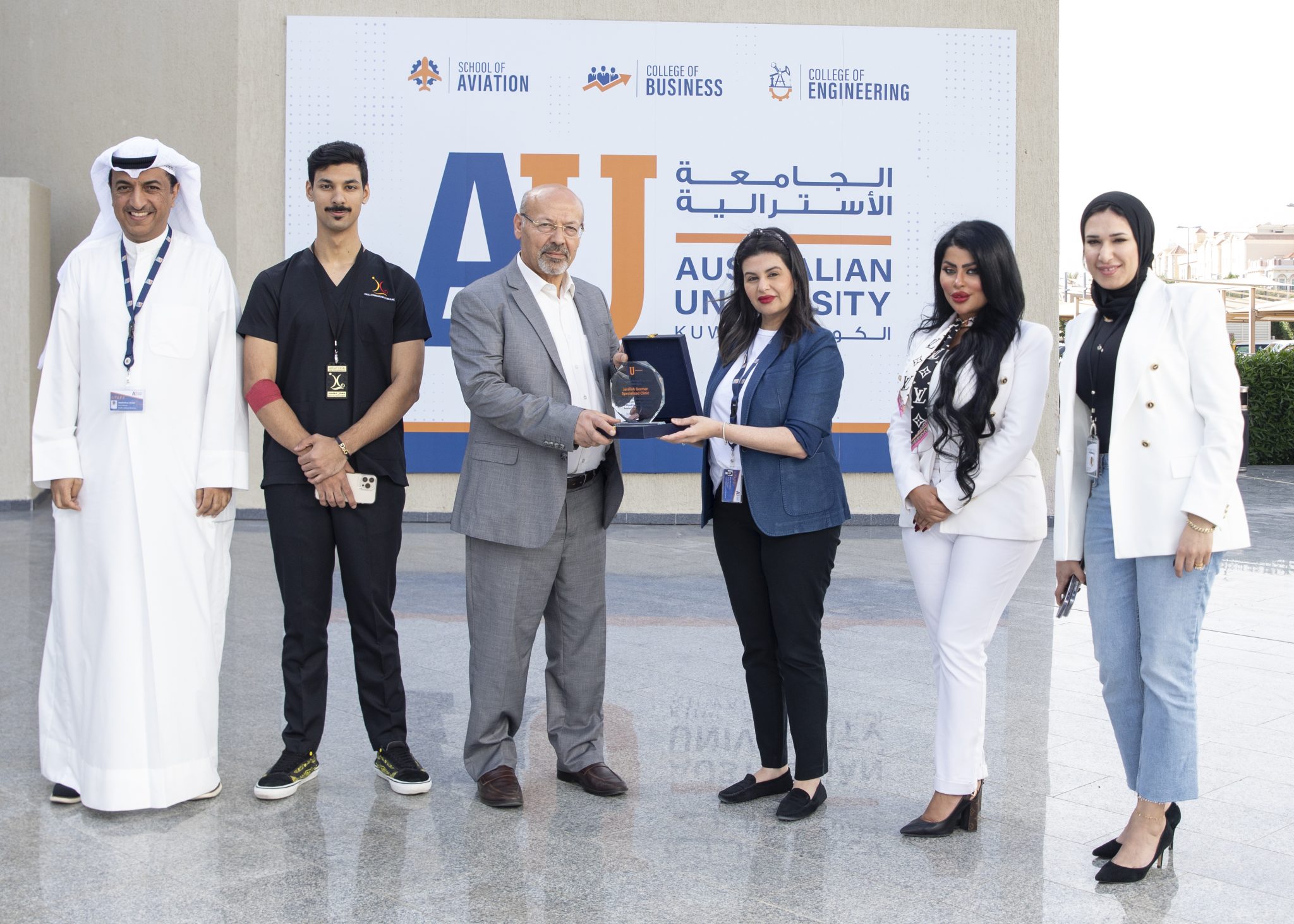
AU Weight Loss Challenge & Wellness Seminar
AU Wellness Seminar “Destress the Desk”, dedicated to promoting staff well-being and a healthier lifestyle. This seminar features engaging sessions on:
Nutrition and physical awareness
- Stress management
- Habit building for lasting wellness
As part of this initiative, AU also launching a semester-long Wellness Challenge designed exclusively for staff. From the seminar attendees, 50 participants will be joining this unique program upon registration during the seminar. This challenge includes:
- Customized diet and workout plans
- Biweekly one-on-one consultations
- Daily WhatsApp support
- Indoor and outdoor wellness activities
This initiative reflects AU’s ongoing commitment to investing in staff health in an innovative and engaging way.
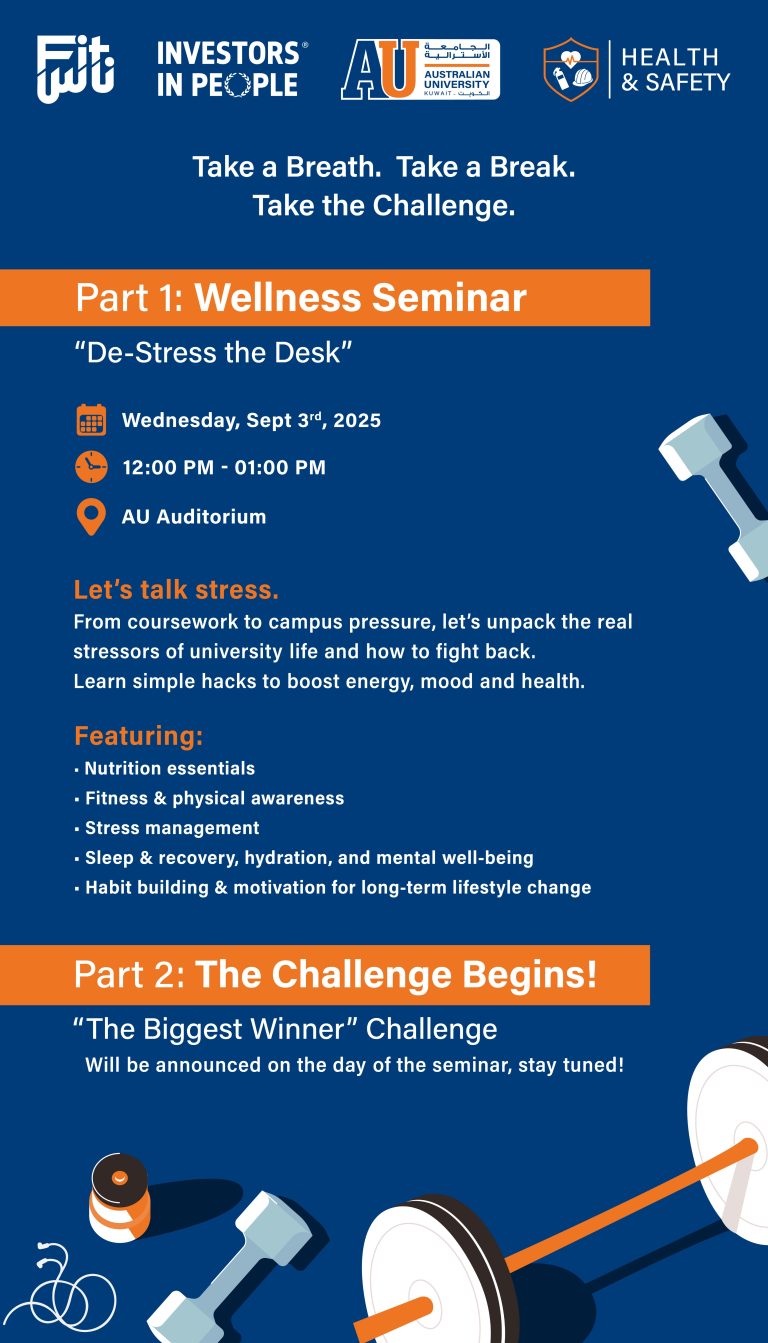
CSR: The Ripple Effect Initiative is hosting a “Stress Less Fest” In Collaboration with Health, Safety & Security Department
As part of its corporate social responsibility efforts, The Ripple Effect Initiative, in collaboration with the Health, Safety & Security Department, is hosting a "Stress Less Fest". This community project reflects the university’s dedication to student well-being and its commitment to embedding core values through positive, supportive initiatives.
SDG 4 – Quality Education
Australian University actively contributes to achieving SDG 4 in Kuwait:
- Community outreach initiatives
- Supportive services
- Certifications
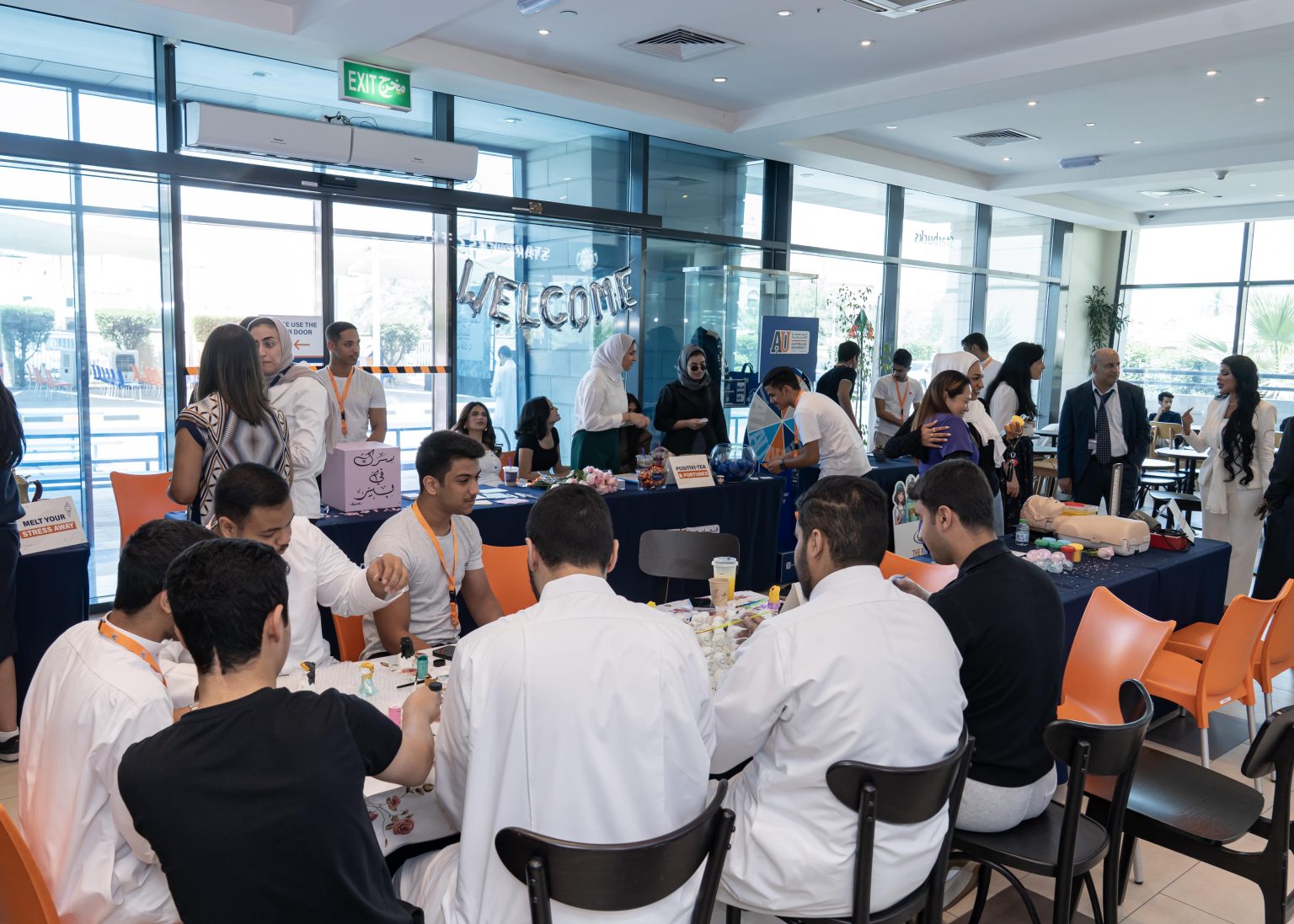
AU hosts its sixth annual Teaching and Learning Excellence Forum
The Teaching and Learning Center (TLC) at the Australian University (AU) held its sixth annual Teaching and Learning Excellence Forum titled “The Future of Higher Education in the Age of Artificial Intelligence” under the patronage of the Private Universities Council in Kuwait.
The forum was attended by various distinguished guests from universities, schools, training centers, international and local companies’ leaders as well as representatives of ministry of education in Kuwait. This year’s forum aimed to explore the evolving role of artificial intelligence in higher education, and its theme reflected AU’s commitment to exploring emerging technologies and their implications on the educational landscape in alignment with Kuwait Vision 2035 and global sustainable development goals.
The insightful forum included a series of keynote speeches by distinguished members of academia and industry that tackled various aspects of artificial intelligence and its growing influence on the academic world. Speakers presented diverse perspectives, including how AI can redefine institutional priorities, unlock new possibilities in education, and offer innovative solutions to current challenges. Contributions also addressed AI’s role in transforming the student learning experience and the responsibilities of educational institutions in adapting to technological change. The forum further included a panel discussion on the role of AI in shaping the future of higher education, along with a workshop on AI Applications.
Commenting on the role of AI in education, keynote speaker Eng. Khalid Al Zanki, Founder and CEO of ETLAQ Consulting firm, said: “AI has changed a lot of sectors, including the educational sector. This is why today at the forum we are discussing about how the educational sector can benefit from AI. We are exploring how we can use practical applications of AI in the education and how we can get students to familiarize themselves with the technology and use it in a positive way that can change their future for the better.”
The forum brought together academics, policymakers, and industry experts, including English Language Program faculty, in a collaborative effort to shape a sustainable and ethical future for higher education.
Quality of Education and Higher Education Forum
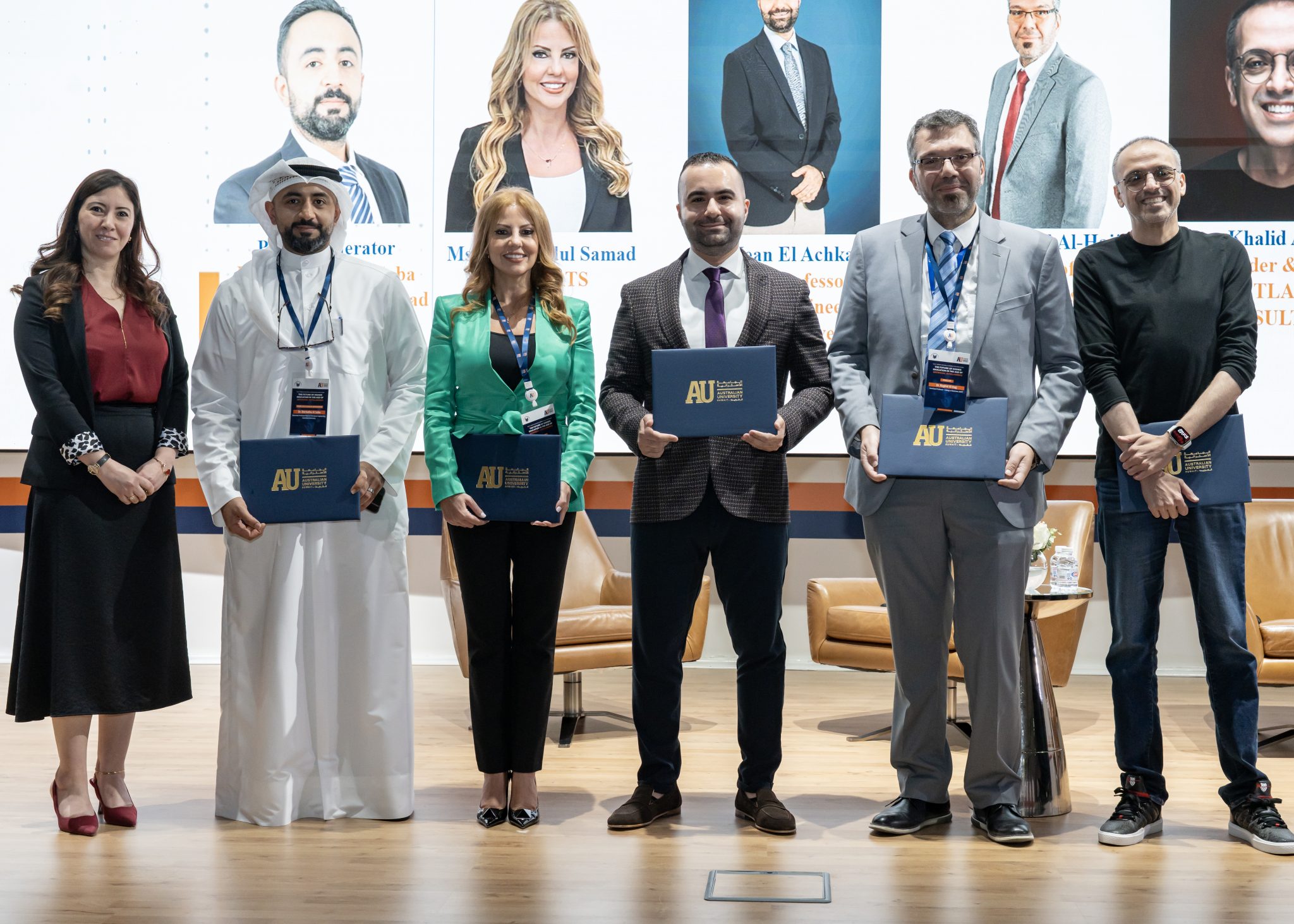
The Australian University hosted a forum titled “Bridging the Gap: Quality of Education and Higher Education” on 31 May 2023, organised by its Teaching & Learning Center in partnership with the Kuwait Foundation for the Advancement of Sciences (KFAS) and under the patronage of the Minister of Education and Higher Education. The event brought together educators, university leaders and representatives from schools to discuss current challenges in Kuwait’s education system, explore ways to enhance the quality of both K‑12 and higher education, and develop actionable recommendations aligned with Kuwait Vision 2035 and the United Nations Sustainable Development Goals.
Read more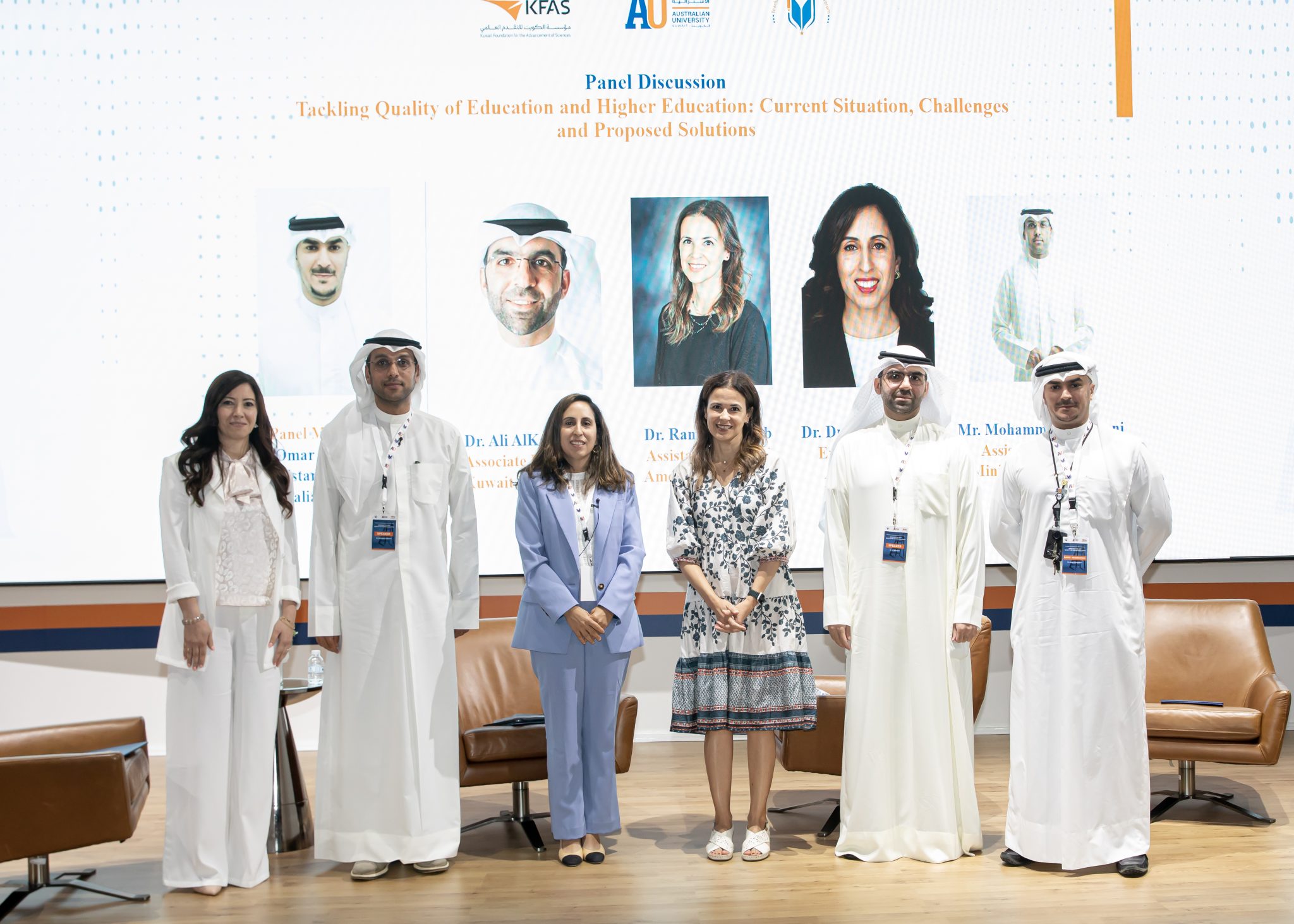
GPCA Leaders of Tomorrow Program at AU
The Gulf Petrochemical & Chemical Association (GPCA) “Leaders of Tomorrow” program at Australian University (AU) brought together students from the College of Engineering with industry experts to provide hands‑on insight into the petrochemical and chemical sectors. The event featured three sessions covering an introduction to the industry, innovation in chemicals, and career transition advice, and concluded with an invitation for students to join the GPCA Youth Council initiative.
Read more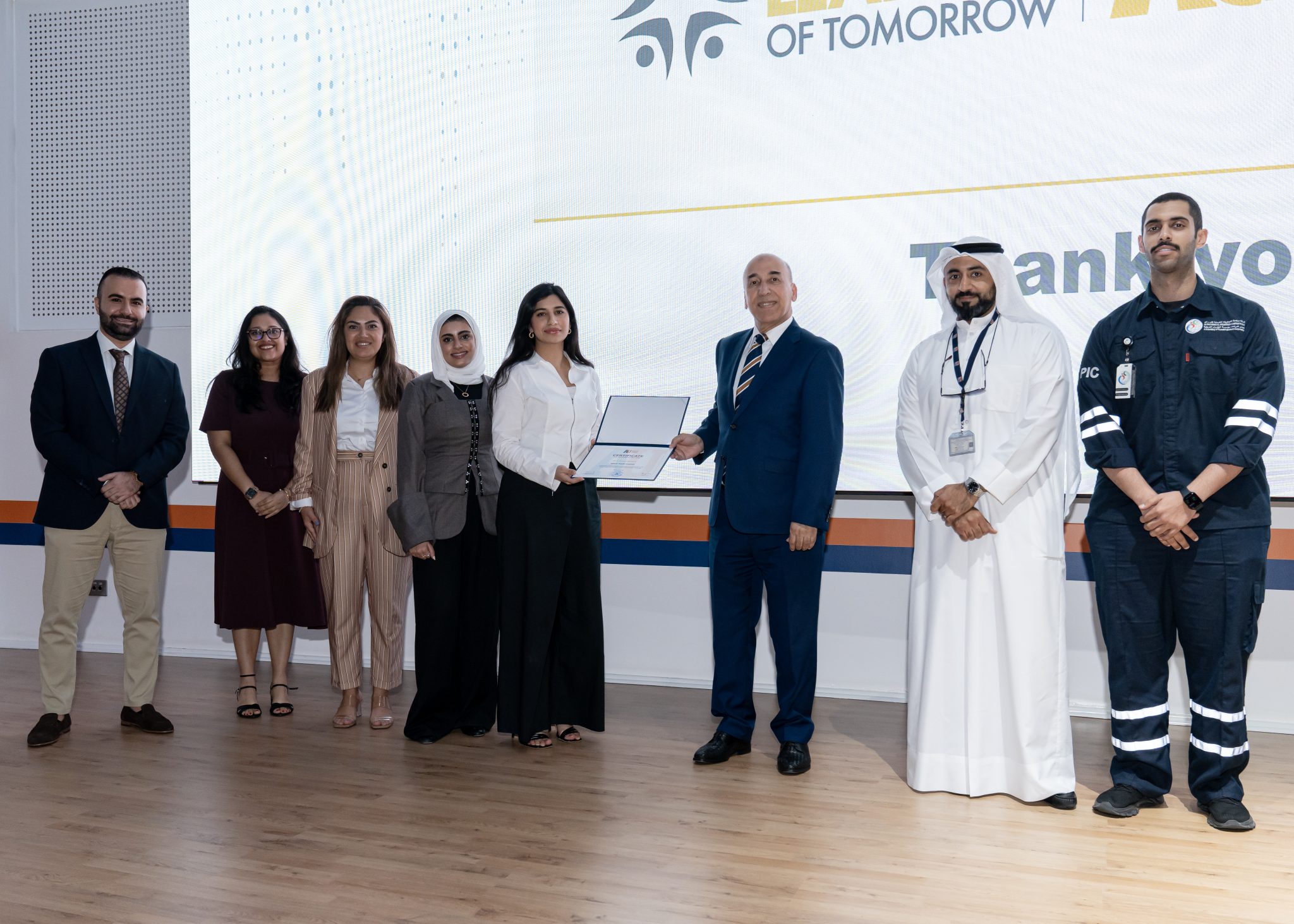
AU Library
The AU Library supports the mission of the University by serving the information needs of students and staff, utilizing educational & technological innovations and responding to the evolving curricula.
Read moreCorporate Training Center
The Australian University – Corporate Training Center offers a wide range of professional development solutions for individuals and organizations. Established in 2009, it delivers over 275 training programs across areas such as Leadership & Management, Mentoring & Coaching, Engineering, IT, Sales & Marketing, Health & Safety, English language and more. Services include accredited certifications, customized consulting and business‑solutions to meet the specific needs of public and private‑sector clients in Kuwait.
CT Courses Read moreILM Level 3 Certificate in Effective Coaching
The ILM Level 3 Certificate in Effective Coaching offered by Australian University Kuwait is a professional‑development qualification designed to help participants become effective workplace coaches. It covers key topics such as the role and responsibilities of a coach, ethical contracting, coaching models and tools, and reflection on one’s coaching practice. Participants apply their learning in real‑coaching situations and submit a portfolio of evidence to complete the course.
SAP Dual Study Program
Australian University has become the first private university in Kuwait to partner with SAP Middle East FZ LLC through its “Dual Study Program.” Students enrolled at AU will gain industry‑certified SAP training alongside their academic studies, equipping them with workplace‑ready digital skills upon graduation.
Read more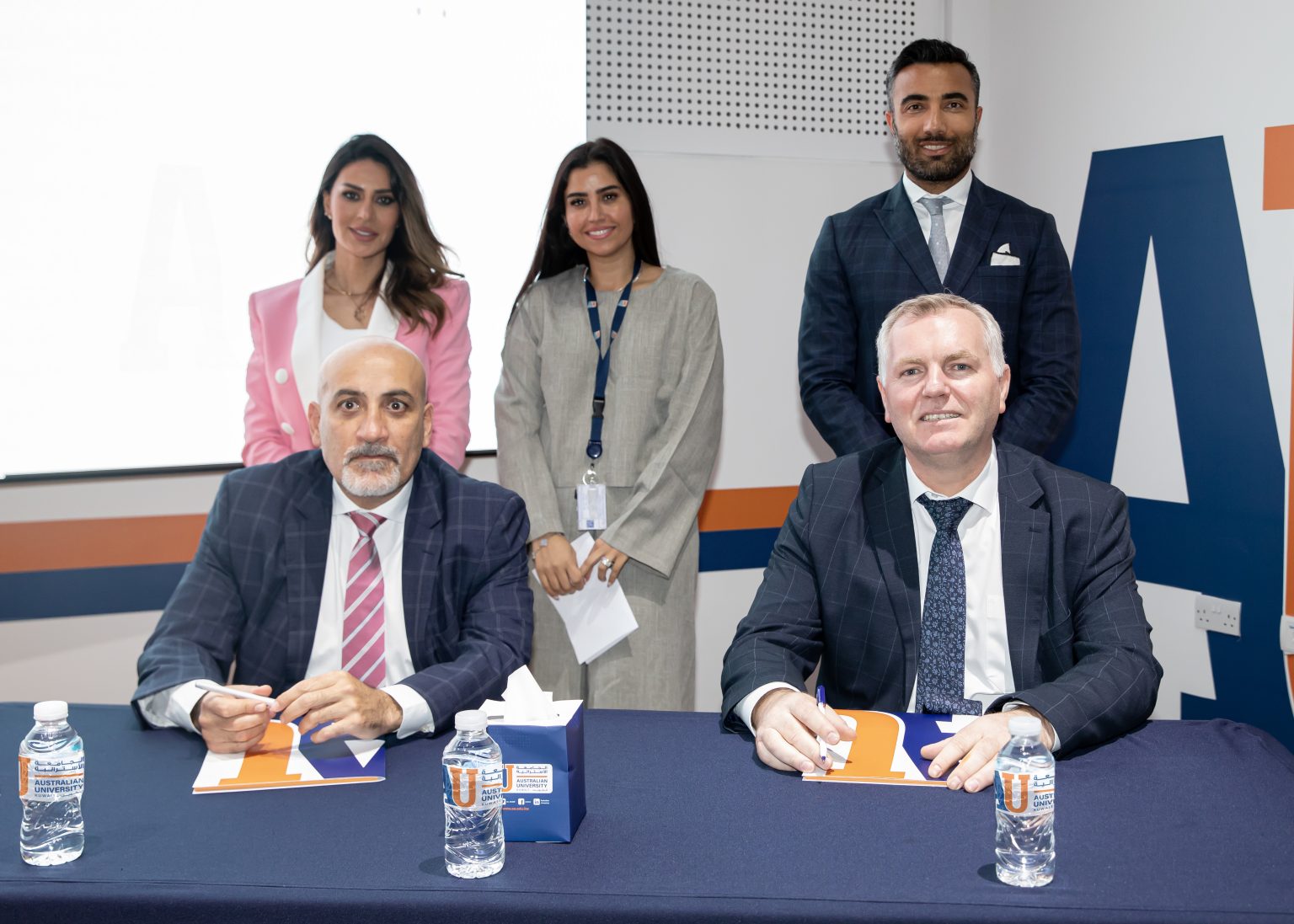
SDG 5 – Gender Equality
Australian University Kuwait (AU) is committed to promoting gender equality and empowering women across all aspects of academic and campus life. By integrating supportive policies, inclusive services, and targeted outreach programs, AU seeks to ensure equitable access, participation, and success for female students and staff, aligning with Sustainable Development Goal 5. AU operates in full compliance with Kuwait labour law no. 6 of the year 2010.
Read moreData‑Driven Monitoring and Targeted Support
AU systematically monitors gender participation and performance across its academic programs, tracking admission, registration, progression, and graduation rates. For the 2024/25 academic year, the student body consisted of approximately 53.8% female and 46.2% male, reflecting balanced access. When gaps are identified, AU provides tailored support, including mentoring, academic advising, counselling, learning‑difference assistance, and financial aid, to ensure equitable outcomes for female students.
Encouraging Women into Under‑Represented Fields
AU actively promotes female participation in traditionally male‑dominated areas such as STEM, Engineering, Aviation, and Maritime. Through initiatives like campus visits, lab showcases, and summer camps organized in collaboration with The Australian Academy, young women are exposed to practical experiences and role models that inspire interest and confidence in pursuing careers in these fields.
Supportive Student and Staff Facilities
AU provides a range of facilities and policies to support women on campus and in the workplace. These include child‑friendly lounges for students with children, nursery allowances for staff, flexible work arrangements after maternity leave, and mentoring programs. Such measures help female students and staff balance academic, professional, and family responsibilities while fostering career and personal development.
AU Nursery Policy
In accordance with Article 25 of the Kuwait labor law, all AU full-time female employees shall be eligible for paid nursery allowance provided by AU.
Women’s Mentoring Schemes
The Australian University is committed to supporting students in achieving academic success. Free tutoring services are available to all students seeking additional guidance in their studies, special attention is given to supporting female students, ensuring they have equal opportunities to succeed academically and continue their studies with confidence. The peer tutoring program is delivered by current students and recent graduates, offering both one-on-one and group sessions across a wide range of units, including Mathematics, Physics, Business, Engineering, and Aviation.
Tutors assist students in strengthening their understanding of course material, improving study skills, and building confidence in areas that may present challenges. Whether preparing for exams or seeking to deepen knowledge, tutoring services at the Australian University provide valuable support to help students succeed.
Tutoring sessions are arranged through Student Affairs Department. In addition, a mentoring list is created each semester, detailing the course name, mentor name, number of students mentored, and total hours of support provided. This record is carefully monitored and followed up by Student Affairs to ensure the quality and effectiveness of tutoring services, also to make sure that at least 10% of female students participate in women’s mentoring schemes.
Guidance and skills workshops are provided to strengthen academic confidence and career readiness.
Gender related Health and Wellness Initiatives
AU integrates gender‑related health support into its campus culture, exemplified by initiatives like the “AU Goes Pink” campaign during Breast Cancer Awareness Month. The campaign raises awareness about women’s health, encourages early detection practices, and promotes well‑being among students, staff, and the broader university community.
AU Maternity & Paternity Leave
A female pregnant staff member shall be entitled to a paid maternity leave of 70 days, not included in her other leaves provided that she gives birth within this period. After completing the maternity leave, the employer can grant a working woman, based on her request, leave of not more than four months without pay to care for the baby.
AU male staff members shall be entitled to a paid paternity leave of 5 days upon the birth of a child in Kuwait, this is not included in other leaves. This leave enables fathers to support the mother after the delivery period and to actively participate in childcare duties.
AU Non-Discrimination Against Woman Policy
- AU prohibits any form of discrimination against women. This includes direct, indirect, or systemic practices that disadvantage women in study, work, or campus life.
- AU ensures equal opportunity for male and female staff members.
- Decisions in admissions, scholarships, hiring, benefits, workload, promotion, research funding, and leadership appointments are made on merit using fair and transparent criteria.
- Harassment, including sexual harassment is not tolerated at AU.
- AU ensures for its female staff that pregnancy, maternity, and caregiving are protected.
- Reasonable adjustments, flexible arrangements, and access to private lactation spaces are provided without academic or career penalty.
- At AU, women have equal access to learning resources and research.
- AU maintains gender-disaggregated data on applications, offers, enrolment, benefits, promotion, leadership roles, complaints, and outcomes, and conducts annual audits.
- Pay and progression equity are monitored. Unexplained gender gaps are investigated and corrected with time-bound actions.
- Vendor and contractors include non-discrimination clauses aligned with this policy.
- Alignment with SDG 5. This policy supports AU’s commitment to gender equality and women’s full participation in higher education
AU’s women’s volleyball team secured 3rd place in Warba Bank League
AU's women’s volleyball team secured third place in the Warba Bank League, showing strong performance and teamwork. After a group stage win over KTECH and a semi-final loss to GUST, they defeated Kuwait University 2-0 in the third-place match. The achievement highlights the team’s dedication and resilience. This achievement reflects AU’s commitment to empowering women in sports and creating opportunities for female students to excel in competitive environments. By supporting women’s athletics and celebrating their success, AU actively promotes gender equality, confidence, and leadership among female students.
Read more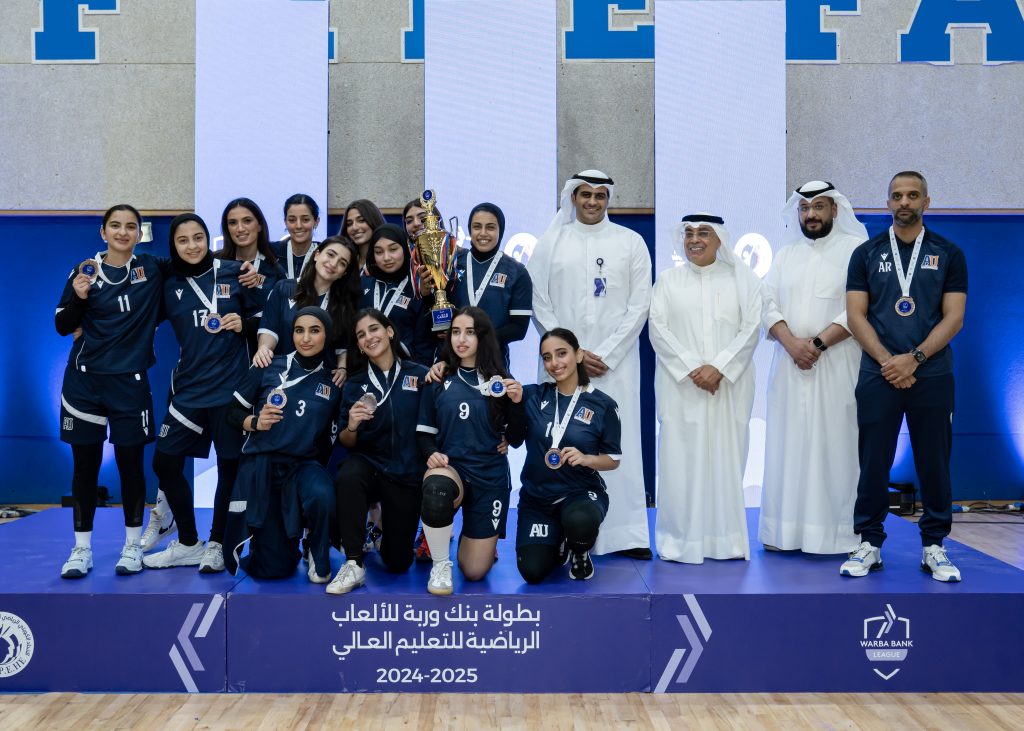
SDG 6 – Clean Water and Sanitation
Australian University actively contributes to achieving SDG 6 in Kuwait:
The Future Appearance of Water Scarcity in the Arabian Peninsula
The seminar titled “The Future Appearance of Water Scarcity in the Arabian Peninsula” at Australian University Kuwait featured Dr. Masoud Irannezhad of the Civil Engineering Department. The session addressed the critical challenge of water scarcity in the region—highlighting its root causes such as climate change, population growth and groundwater depletion—and explored future scenarios and sustainable responses for the Arabian Peninsula.
Read more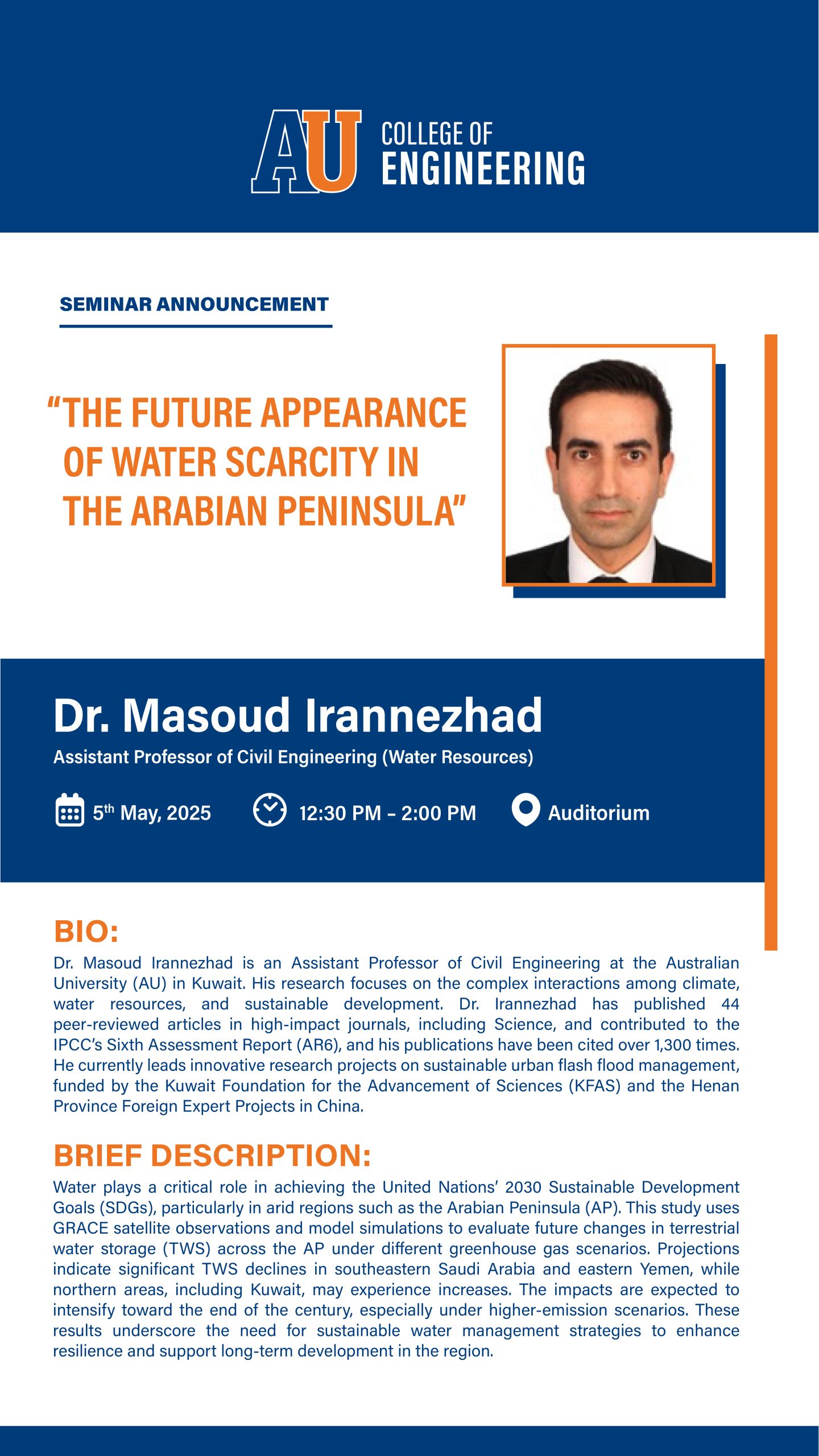
Water Security: A North Star To Global Sustainability
The Australian University hosted a seminar titled “Water Security: A North Star to Global Sustainability”, which examined the essential role of reliable, sustainable water systems in advancing global development goals. The session brought together experts and stakeholders to discuss water‑scarcity challenges, the impact of climate change on water supply, and innovative strategies for ensuring water resilience across regions.
Read more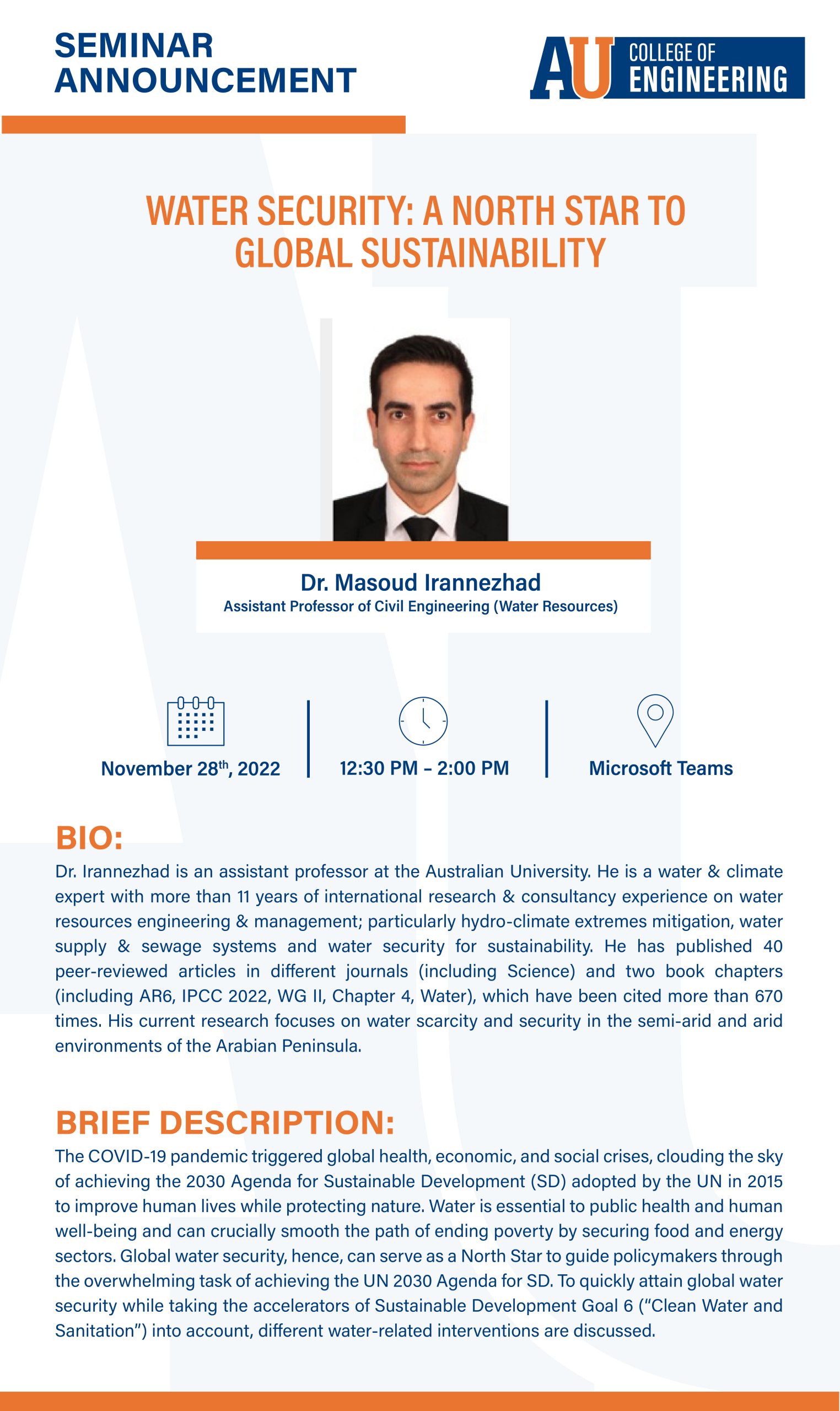
Life as a Civil Engineer and the Umm Al Hayman Wastewater Treatment Project, Kuwait
The Australian University hosted a seminar titled “Life as a Civil Engineer and the Umm Al Hayman Wastewater Treatment Project, Kuwait”, led by Dr. Umair Farooq. The session gave students from the College of Engineering a real‑world look into working as a civil engineer, with specific insights into the large‑scale wastewater treatment project in Kuwait, its technical, managerial and sustainability dimensions.
Read more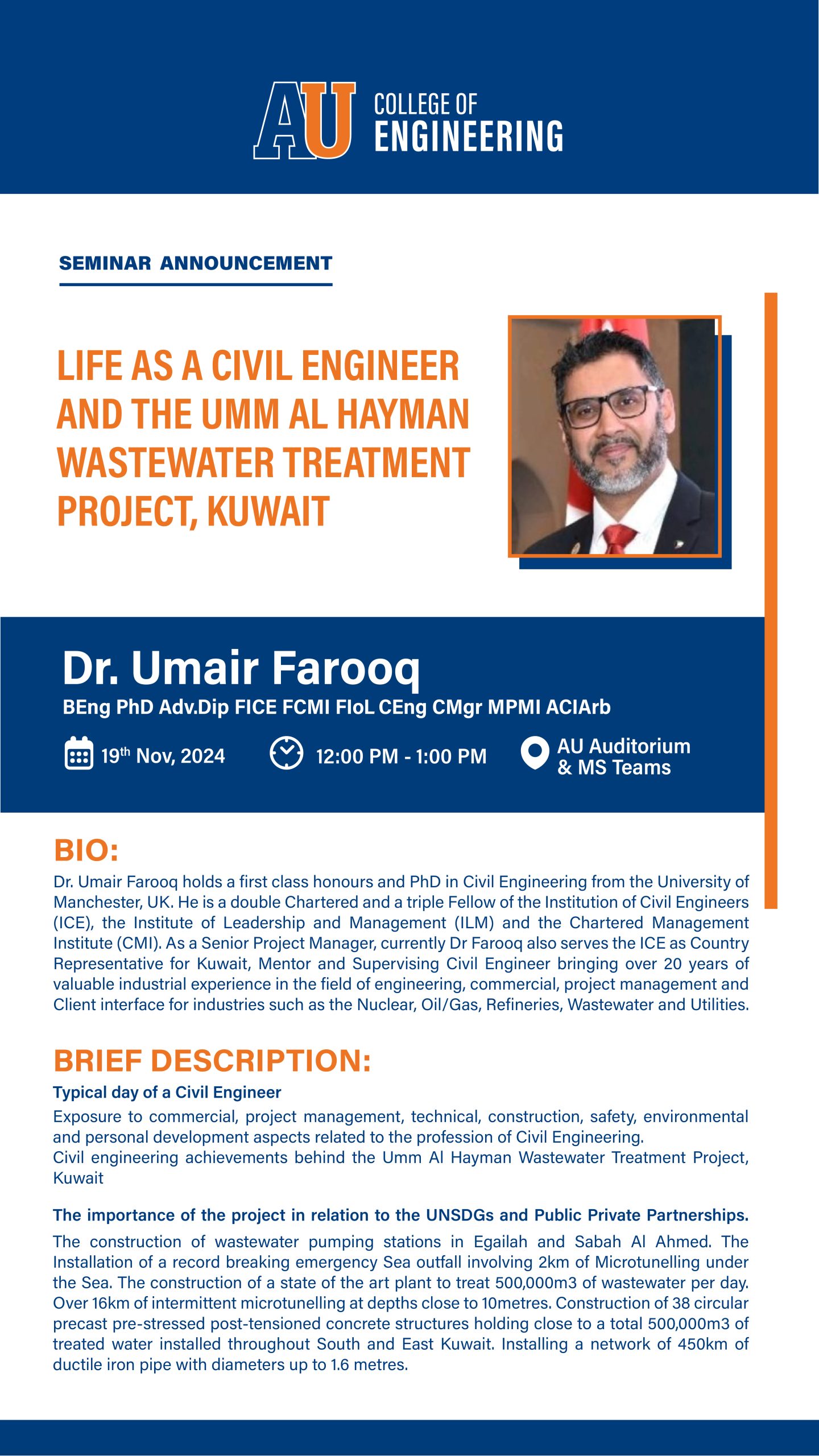
Water Security: A North Star to Global Sustainability
SDG 7 – Affordable and Clean Energy
Australian University actively contributes to achieving SDG 6 in Kuwait:
- Research and innovation initiatives
- Community outreach initiatives
- Industry engagement & professional development
Conference: The Future of Sustainable Transport
Australian University organized the International Scientific Conference on The Future of Sustainable Transport. This conference aimed to foster collaboration among researchers, industry representatives, scholars and policymakers, facilitating the presentation and discussion of cutting-edge research in the field of Electric Vehicles (EVs),EV Charging Infrastructure, Environmental and Economic Impact of EVs and other means of sustainable transport. This Conference was the final dissemination event for the project entitled "Breaking the Internal Combustion Engine Reign: A Mixed-Methods Study of Attitudes Towards Using and Purchasing Electric Vehicles in Kuwait", which is funded by KFAS.
Read moreSolar Lab at AU
Australian University partnered with Life Energy Co. to inaugurate a new Solar Lab on campus—marking a significant step in advancing renewable energy research and education in Kuwait. The collaboration aligns with Kuwait’s climate‑action goals and provides students with hands‑on experience in solar technology, enabling innovation, capacity‑building and sustainability‑focused engineering
Read more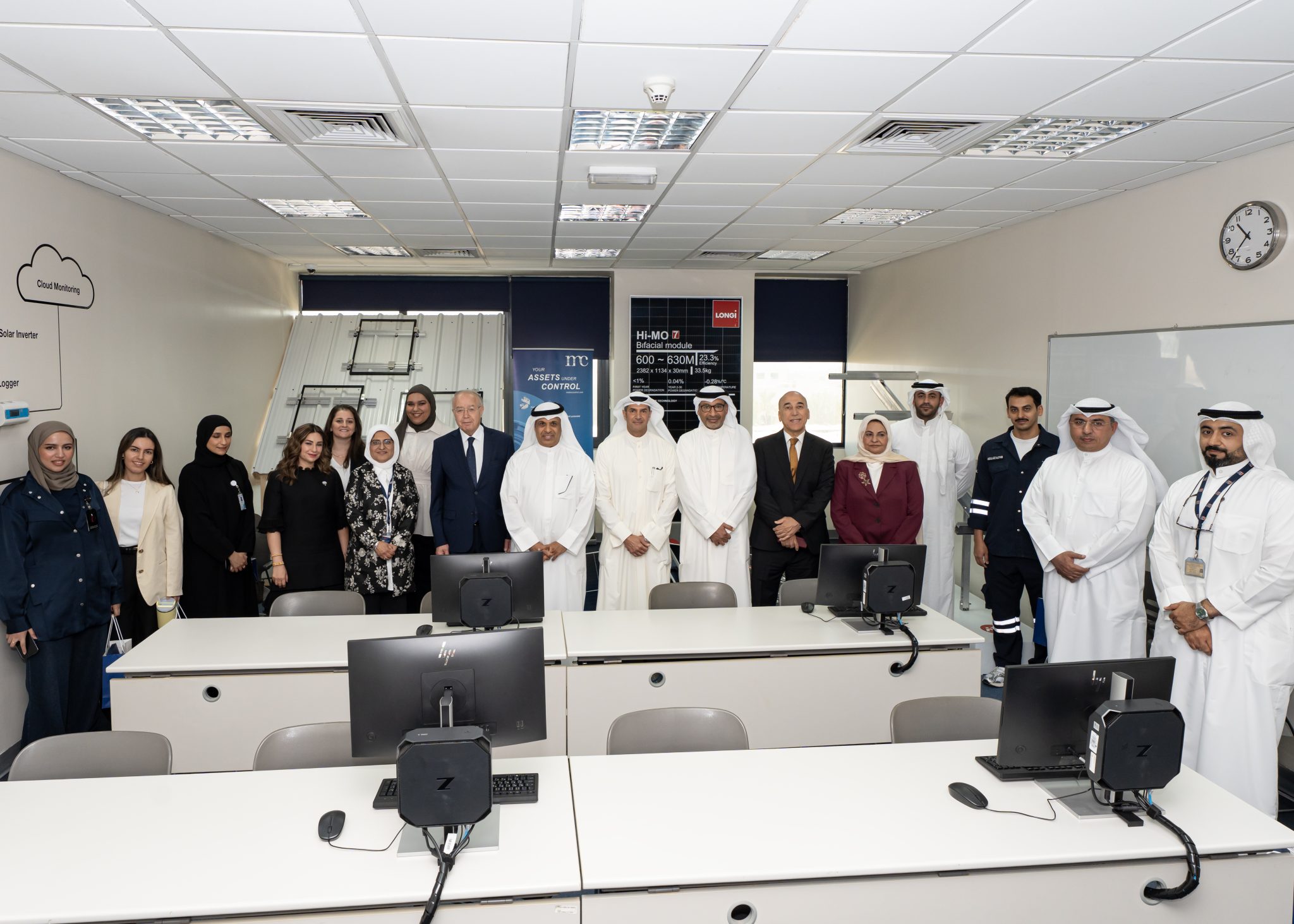
Kuwait Energy Transition Agenda
The Australian University hosted a focused seminar with the CEO and Chairperson of OiLSERV Kuwait, offering students and faculty key insights into leadership dynamics and operational strategy within Kuwait’s service and energy support sectors. By examining the company’s role in serving critical energy and industrial infrastructure, the session underscored how service innovation and sustainable practices contribute to broader goals like ensuring access to affordable, reliable, and clean energy (aligned with SDG 7).
Read more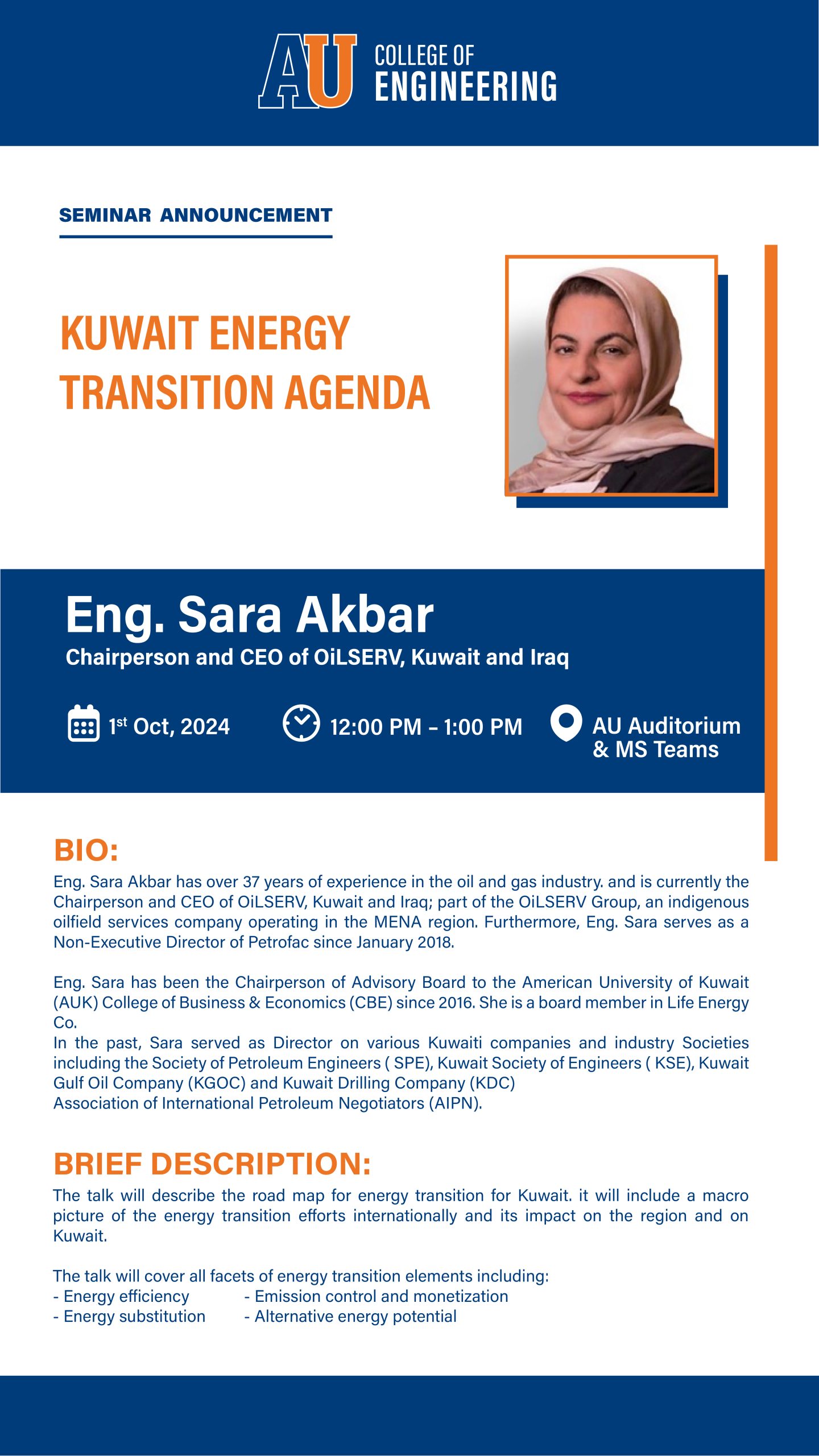
Best Booth Award at INJAZ Company Competition
Students from Australian University won the “Best Booth Award” at the INJAZ Kuwait “Company Program” competition for their innovative energy‑focused business idea. Their booth showcased a sustainable energy solution, demonstrating creativity, entrepreneurial skill, and teamwork. This achievement highlights AU’s commitment to fostering practical, real‑world business experience in sectors critical to sustainability and the energy transition.
Read more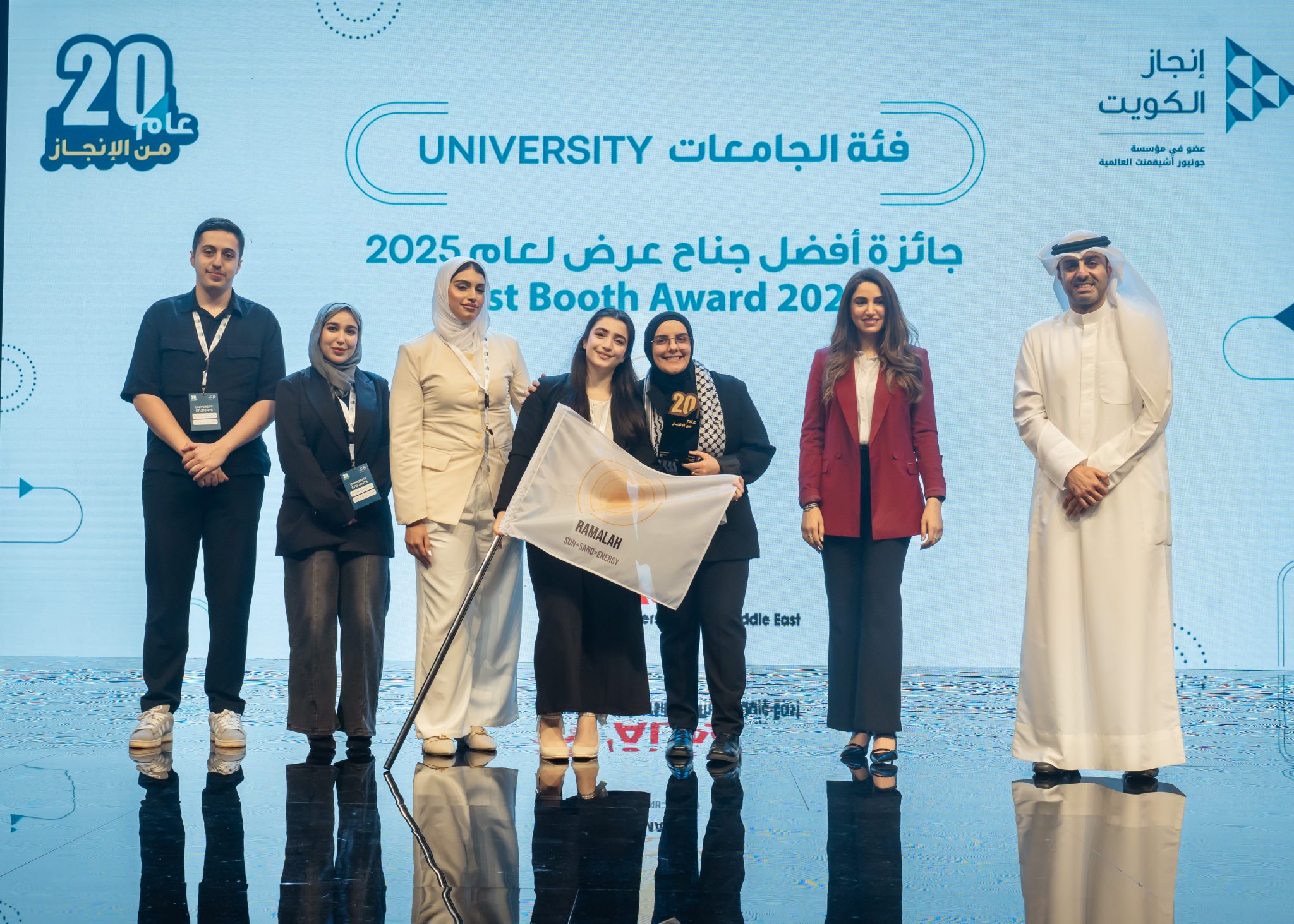
Prestigious Kuwait Fellowship at LSE
Dr Jean El Achkar, Assistant Professor in the Petroleum Engineering Department at Australian University Kuwait, has been awarded the prestigious London School of Economics and Political Science (LSE) – Kuwait Fellowship, funded by the Kuwait Foundation for the Advancement of Sciences (KFAS). During the fellowship (June 1 – September 1, 2025), Dr El Achkar will serve as a Visiting Research Scholar at LSE’s Middle East Centre, conducting research on “Unlocking Kuwait’s Bioenergy Potential: Integrating Organic Waste Valorization into Renewable Energy and Environmental Policy.” The award underscores both Dr El Achkar’s innovative approach to sustainability and AU’s commitment to advancing impactful research in renewable energy and environmental transitions in the Gulf region.
Read moreSDG 8 – Decent Work and Economic Growth
Australian University (AU) actively contributes to achieving SDG 8 – Decent Work and Economic Growth by fostering employability, promoting workforce development, and ensuring inclusive, sustainable economic opportunities for students, staff, and the wider community. Through strategic initiatives in education, training, and institutional development, AU empowers individuals with the skills, knowledge, and values needed to thrive in a dynamic labour market while supporting Kuwait’s broader economic goals.
Read moreInvestors in People (IIP) Accreditation
AU’s attainment of the Investors in People (IIP) accreditation reflects its dedication to building a people-centered, high-performing workplace.
Investors in People (IIP) is an internationally recognized accreditation standard for people management and organizational development. Established in the United Kingdom, it provides a framework for organizations to improve their performance through effective leadership, support, and development of their workforce.
The Australian University is a silver accreditation organization by IIP. This recognition underscores the university’s focus on employee engagement, professional growth, and organizational well-being. By investing in its staff, AU ensures a motivated and capable workforce, fostering decent work practices and contributing to sustainable institutional and economic growth. Furthermore, silver accreditation demonstrates that an organization is performing well above the industry norm in terms of people management.
To achieve this accreditation, organizations are evaluated on several key areas:
- Leading and inspiring people
- Living the organization’s values and behaviors
- Empowering and involving people
- Managing performance
- Recognizing and rewarding high performance
- Structuring work
- Building capability
- Delivering continuous improvement
- Creating sustainable success
IIP Silver accreditation is a significant achievement that demonstrates the Australian University’s commitment to effective people management practices, placing it among the top performers in this area. It reflects a culture of trust, employee voice, and alignment with organizational values and behaviors positioning the Australian University as an employer of choice, which is particularly valuable in the higher education sector in Kuwait.

Research and Education Strategy for Employability
AU’s research and education strategy prioritizes skill development and employability through purpose-driven learning that aligns academic programs with the needs of modern industries. By equipping students with practical knowledge and competencies relevant to the future of work, the university enhances career readiness and supports inclusive economic participation in Kuwait’s evolving labour market.
Corporate and Professional Training Programs
The university’s corporate and professional training programs provide individuals and organizations with access to targeted upskilling and professional development opportunities. These programs bridge the gap between education and industry by enhancing technical expertise, leadership capability, and lifelong learning. In doing so, AU contributes to workforce productivity, economic diversification, and the advancement of decent work opportunities in line with SDG 8.
AU Code of Conduct
- The Code of Conduct policy outlines the standards of behaviour expected of AU staff. It is designed to help staff understand their responsibilities and obligations. It is also designed to provide guidance for staff faced with an ethical dilemma or conflict of interest in their work.
- AU maintains a zero-tolerance policy toward discrimination of any kind. The University ensures equal treatment and opportunity for all individuals, regardless of gender, nationality, socioeconomic background, religion, political views, disability, or health condition.
- A Code of Conduct cannot cover every situation. If a staff member is unsure of what action to take in a particular situation, they should discuss the matter with their Line Manager and refer to the relevant AU policies and procedures, AU uses the following Code of Conduct principles:
- Cultural Sensitivity: Respect individual differences between people, in particular the variety of cultural and religious needs of the AU/Kuwait community.
- Impartiality: Treat all people fairly and objectively. Base actions, decisions and advice on a consideration of all relevant facts, and implement relevant policy and programs equitably.
- Integrity: Performing duties with honesty and report any unethical behaviour at work.
- Accountability: Achieve results through effective and efficient use of AU’s financial, physical and human resources.
- Responsive Service: Provide a relevant and timely service to clients.
AU Grievance Policy
The objective of the Grievance Policy is to achieve a resolution in the context of the following principles:
- With an emphasis on an informal means of resolution in the first instance, any employee who believes he/she has received unfair treatment is encouraged to approach the relevant manager.
- Only when informed discussion has been exhausted should a formal grievance be raised as per the grievance procedure. There is a stayed approach described in the grievance procedure.
- Resolution of the grievance shall be as close as possible to the source, unless it is serious, unlawful or not practical.
- It is expected that all parties involved will approach proceedings with a desire to resolve the grievance cooperatively and in good faith.
- Individuals shall not victimise or harass other parties involved in the matter.
- Confidentiality shall be strictly observed by all participants and at all stages of the grievance procedure.
- Complainants and respondents will be informed of the outcomes.
AU recognises that all those who work at the University have the legal right to:
- Raise any concern or complaint related to unfair treatment, discrimination, harassment. and other such issues.
- Have their concern, problem, complaint, or grievance dealt with confidentially, fairly, and effectively.
AU Equal and Competitive Payscale
- The University offers a competitive payscale designed to ensure fairness and equity for all employees. Payscale is based on position. Payscale maybe adjusted according to the financial situation of the university and external factors. The Pay scale clearly specifies the minimum and maximum salary levels for administrative and faculty staff, and is periodically reviewed to ensure fairness, competitiveness and reflect AU’s commitment to attracting and retaining high-quality staff and faculty.
- The University ensures that every employee, regardless of gender, nationality and religious background receives equal working conditions and benefits and adhere to the Kuwait Labour Law for all employees.
- AU maintains highly competitive salary ranges, updated through routine local market benchmarking and review. The Pay scale reflects AU’s commitment to maintaining compensation levels that are very competitive in the market, and definitely exceed the national minimum wage specified and announced by the Pubic Authority for Manpower.
- AU is committed to guaranteeing equal pay for equal work / work of equal value across all staff groups. This commitment aligns with Kuwait Labour Law No. 6 of 2010 (Article. 26) on equal remuneration and international best practice on equal pay for work of equal value.
- “Article 26 on equal remuneration for the same work: A working woman shall be entitled to a remuneration similar to the remuneration of a man if she performs the same kind of work.”
- AU as an institution measures and tracks pay-scale gender equity, with different methods, and KPIs on annual basis. It’s aligned with Kuwait Labour Law No. 6 of 2010.
- AU tracking pay-scale gender equity results (for all previous years) consistently show a zero gender pay gap for staff at same academic/administrative level, as pay is set by transparent salary bands, job descriptions, and a promotion cycle that do not vary by gender.
SDG 9 – Industry, Innovation and Infrastructure
The Australian University plays an active role in advancing Sustainable Development Goal (SDG) 9 in Kuwait:
AU Industrial Advisory Board
- Provide networking support with business leaders in the community allowing the university to develop strong industry partnerships and engagement with key industry decision makers.
- Provide trends and scenarios for the medium term development of industry sectors needs with respect to:
- Professional abilities or competencies.
- Market forces.
- Structural changes that affect human capital.
- The depiction of the trends of the industry needs are achieved for the above attributes and sectors through the development, and subsequent regular revision, of graduate attributes and Program-specific knowledge and skills (Program Educational Objectives), that fulfills industry requirements.
- Provide a platform that can support and enhance AU student internship and mentoring programs, by facilitating access to industry members’ organizations.
- Facilitate sponsorship of academic and student activities
- Provide a platform for industry contribution to the development and review of AU strategic vision, growth and development, and conducting research.
- Facilitate scholarships and funding applied research activities relevant to AU mission and national strategy.
- Provide advice on general activities to support the realization of the College mission and strategic plan.
Membership:
Members to cover the following activities and fields:
- Banking & Finance.
- National Funds for supporting Small and Medium Enterprise (SME)
- Higher Education
- Research & Development funding Institutions and Real Estates.
- Building & Construction Establishments.
- Industrial Sector.
- Services Sector.
- Oil & Gas Establishment.
- Research & Development Agencies.
In addition to AU Members:
- Chairman, (Ex-Officio)
- Advisor to the Chairman, (Ex-Officio)
- President.
- Member of the Chairman's Advisory Board, (Vice Chairman of the IAB)
- Vice President-Academic Affairs.
- Vice President-Administrative Affairs.
- Dean of College of Engineering.
- Dean of College of Business.
College of Engineering Industrial Advisory Board
- Provide networking support with industry in the community allowing the College to develop strong industry partnerships.
- Provide input and recommendations to the College from an industry perspective as well as supporting the College’s strategic directions in terms of academic programs and partnerships.
- Review the program educational objectives to ensure that they meet the industrial needs.
- Evaluate strengths, merits, and weaknesses of the current curriculum in the context of the College of Engineering mission and program educational objectives.
- Provide recommendations to the College of Engineering on all matters related to the curriculum to improve the relationship between academic and professional practices.
- Review student performances relative to the program outcomes from an industrial point of view and propose strategies for continuous improvement of the program.
- Help in identifying opportunities for student’s involvement in research and capstone projects.
- Review the College of Engineering activities and plans related to research, consultancy, and short courses and make recommendations.
- Help in identifying opportunities for faculty research and development.
- Facilitate sponsorship of academic and student activities.
- Provide assistance to support and enhance engineering student internships and help in placing students through the working experience program.
- Enhance the visibility of the College of Engineering in the engineering community.
College of Business Industrial Advisory Board
Provide trends and scenarios for the medium-term development of different sectors within industry with respect to;
- Professional abilities or competencies;
- Market forces;
- Structural changes that affect human capital (E.g. forecast skills shortages) in Business.
The depiction of the trends above is achieved through the development, and subsequent regular revision of graduate attributes and Program-specific knowledge and skills (Management, Marketing, HRM and other majors offered by the College of Business).
- Provide input and recommendations to the College of Business from an industry perspective as well as supporting the College’s strategic directions in terms of academic programs and partnerships.
- Review the College of Business curricula and educational objectives to ensure that they meet the industry needs. In addition, identify the strengths, merits, and weaknesses of the current curriculum in the context of the College of Business mission and educational objectives, to create opportunities for enhancement.
- Provide networking support with business leaders in the community allowing the College of Business to develop strong and enduring partnerships with industry and engagement with key decision makers to ensure consultancy opportunities for faculty and students; internship placements for students and research projects.
- Provide feedback on internship or employed student’s capabilities and gaps in knowledge to be included as curriculum development.
Innovation and Entrepreneurship Programs:
AU offers a range of programs and courses designed to cultivate innovation and entrepreneurial thinking among students. These initiatives encourage creativity, problem-solving, and business development skills, enabling students to transform ideas into viable ventures and contribute to innovation-driven industries.
Research and Development:
The university actively supports research focused on industrial advancement, sustainability, and infrastructure development. Faculty and students collaborate on applied research projects that address local and regional challenges, promoting technological innovation and practical solutions aligned with Kuwait’s development goals.
Collaboration and Partnerships:
AU maintains strong partnerships with government bodies, private sector organizations, and international institutions. These collaborations foster knowledge exchange, joint research initiatives, and internship opportunities, bridging the gap between academia and industry while driving innovation in key sectors.
Skill Development and Industry Readiness:
AU emphasizes experiential learning and technical skill development to align education with market demands. Through workshops, internships, and industry engagement, students gain hands-on experience that enhances employability and prepares them to support Kuwait’s industrial and economic growth.
Support for Startups and Innovation Ecosystems:
The university also provides mentorship, incubation, and funding opportunities for student-led startups, helping transform innovative ideas into market-ready products and services that contribute to Kuwait’s knowledge-based economy.
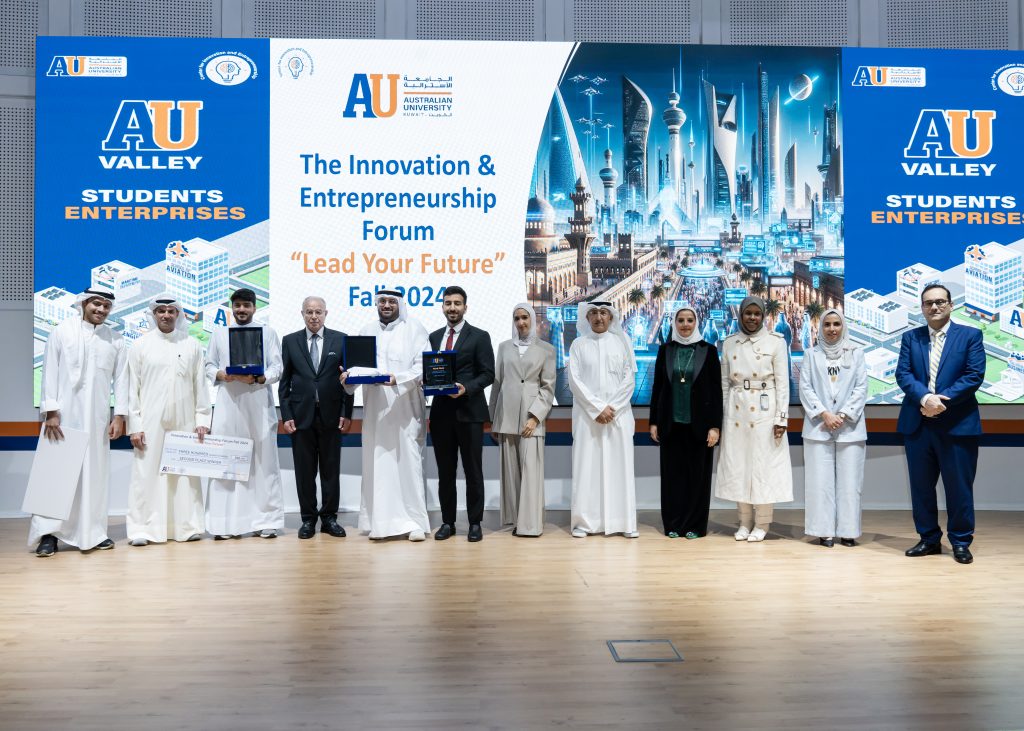
The Innovation and Entrepreneurship Forum (Lead Your Future) – Fall 2024 “AU VALLEY – Student Enterprises” new initiative
AU Launches “AU Valley” at Innovation Forum on November 18, 2024, AU’s Center for Innovation and Entrepreneurship hosted the “Lead Your Future” Forum, launching AU Valley, a new platform for students and alumni to showcase their businesses. The event featured projects from AU’s colleges and welcomed high school students for a campus tour. Key speakers included Australian Ambassador H.E. Ms. Melissa Kelly and H.H. Sheikh Fahad Naif Al Sabah. Dr. Bashayer Al Khalifa highlighted the center’s role in supporting youth innovation and aligning with Kuwait Vision 2035.
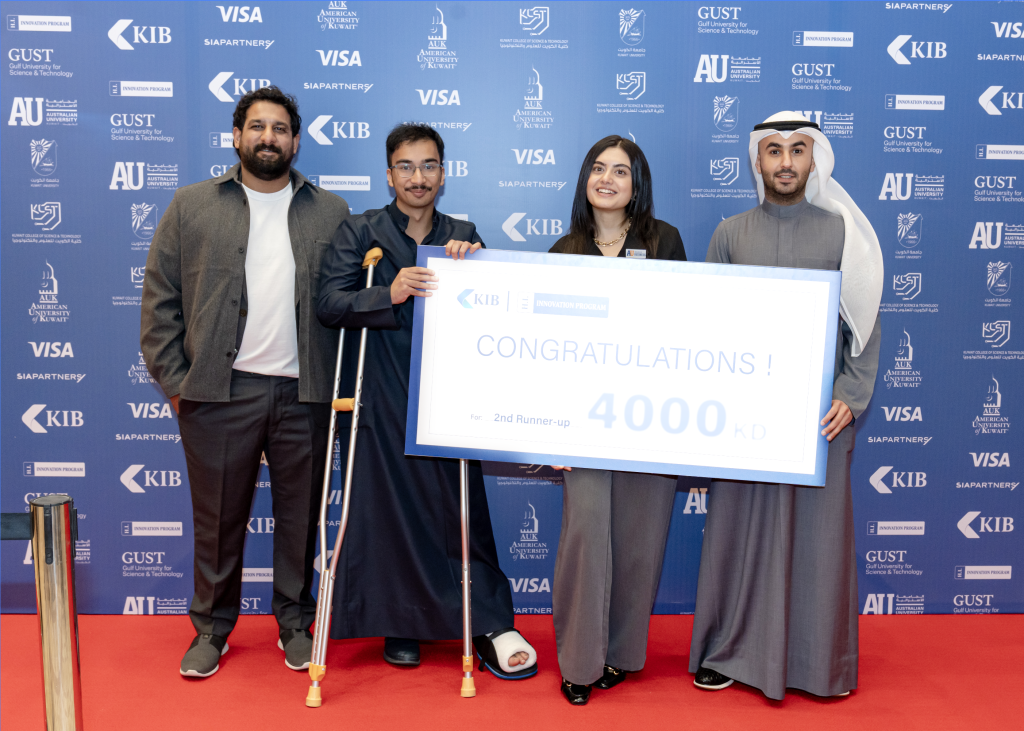
2nd Runner Up- KIB H.I Innovation
AU Business students won Second Runner Up in the KIB H.I. Innovation Program. Their banking solution impressed judges with its innovation, real-world impact, and strong presentation. The team was praised for their creativity, professionalism, and problem-solving skills.
Project Based Learning (PBL) Center
Project Based Learning (PBL) is an integral part of the curriculum in the Australian University. This model organizes learning around projects or complex tasks associated with in-depth questions or problems. Students are offered an enhanced form of learning through the adoption of a student-centered and active classroom pedagogy, where they engage collaboratively in complex and challenging projects that emphasize real world situations. The Australian University has established a designated center to manage its PBL model and to create an environment conducive for students and faculty to apply this approach. The University also signed a collaboration agreement with Aalborg University in Denmark to receive ongoing support from their experts in the field toward the development and delivery of PBL courses in AU.The PBL Center is an integral part of the College of Engineering and aims to:
- Develop a region-specific PBL model tailored to the socio-cultural context of the Middle East.
- Create and implement an effective PBL environment that enriches the academic experience of AU-Kuwait students.
- Train and mentor PBL facilitators to effectively support students and guide them through project-based learning.
- Represent PBL within AU-Kuwait, both internally and externally, showcasing its benefits and applications.

AU hosts Career Fair aligned with Kuwait’s vision 2035
The Alumni and Career Placement Center (ACPC) of AU hosted an expansive Career Fair on Thursday October 24th, under the patronage of His Excellency Dr. Nader Abdullah Al Jalal, Acting Minister of Education, Minister of Higher Education and Scientific Research. Over 60 organizations took part in the event with the aim of connecting with the next generation of Kuwaiti professionals. The Career Fair was graced by the presence of Her Excellency Melissa Kelly, the Australian Ambassador to Kuwait, and various representatives from major sponsors, including Platinum Sponsors: Advanced Industrial Manufacturing, Kuwait Petroleum Corporation and subsidiaries, Kuwait Finance House, Gulf Bank and Kuwait International Bank; God Sponsors: Boubyan Bank and Tazur; and Silver Sponsors: Burgan Bank and the Commercial Bank of Kuwait. Alongside the networking opportunities, the event also featured a seminar titled “Empowering Kuwait’s Future: The Role of Students in Achieving Kuwait Vision 2035,” which underscored Kuwait’s vision 2035 and emphasized the essential role of graduates to the national economy.
AU Students Demonstrate Excellence
Judge’s Award at Vex Robotics
A team of Electrical and Electronics Engineering students at the Australian University (AU) achieved a significant milestone by winning the Judges’ Award at the VEX Robotics Competition in February 2025. The team impressed the judges with their outstanding communication skills, teamwork, and professionalism.
Beginning of Fall 2024, the Electrical Engineering team, coached by lab engineers, successfully designed and built two unique robots that competed against other universities in Kuwait. This competition showcased the students’ engineering expertise, problem-solving abilities, and collaborative efforts.
The VEX Robotics Competition is a globally recognized event that challenges students to design, build, and program robots to complete various tasks. It promotes STEM skills while fostering innovation, teamwork, and perseverance among participants.
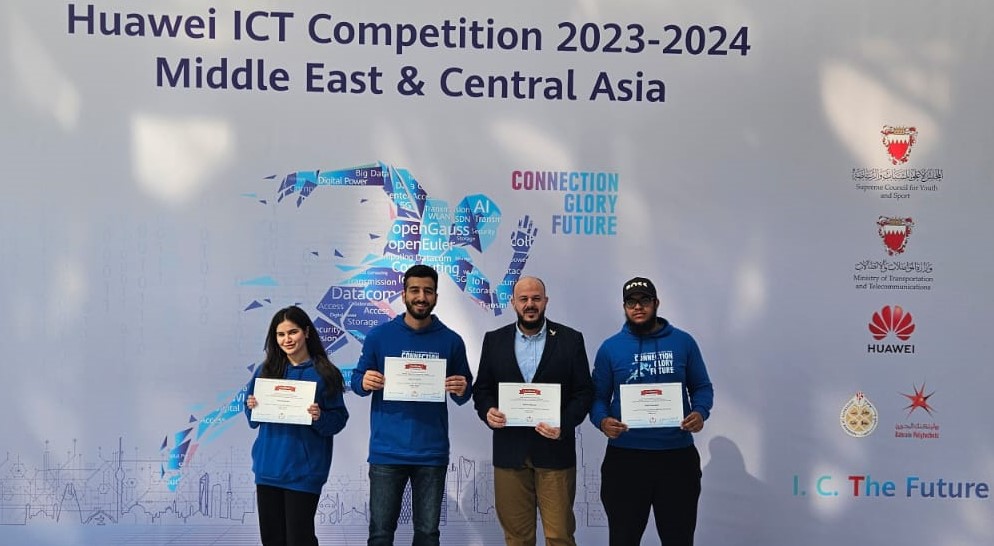
AU students secure 3rd place in Huawei Regional ICT Competition
AU students achieved third place in the Huawei Regional Final Information and Communication Technology (ICT) Competition 2023/2024.The Huawei ICT competition kicked off with two preliminary rounds, engaging participants from over a quarter of a million students across various countries. These participants showcased their skills in three challenge tracks: Computing, Networking and Cloud. The winning students then qualified to the Regional Final Competition which was held in Bahrain.
Representing Kuwait, AU students Otman Muzher, Faisal Alnwayem, and Haya Mansour, guided by Mr. Mohamed Zaki, Senior Instructor of Industrial Practice in the Electrical and Electronics Engineering department at AU, demonstrated exceptional talent and dedication. At the conclusion of the competition, the AU team secured an impressive third place in the Networking Challenge, competing with 63 participants from 11 countries in the Middle East and Central Asia.
In addition to the achievements, Huawei honored AU with the Best Academy Award for the fifth consecutive year. This recognition not only celebrates individual and team accomplishments but also underscores AU’s enduring commitment, led by the Management, to excel academically in both local and regional competitions.
AU Students Win Innovation Corner at MAINTCON 2022 in Bahrain
Four students from the Petroleum Engineering Department at the Australian University (AU) were among the winners of the Innovation Corner of the Maintenance Reliability and Asset Management Conference – MAINTCON 2022.
MAINTCON 2022 was organized by the Gulf Society for Maintenance and Reliability in association with the Bahrain Society of Engineers and was held in Bahrain under the patronage of H.E. Dr. Mohammed Bin Mubarak Bin Daina, Minister of Oil & Environment of the Kingdom of Bahrain. The competition is considered one of the largest gatherings for Maintenance and Reliability professionals in the world and was held this year under the theme of “Industry 4.0, Industrial Innovation & Technologies with Global Shift Towards Digitalization”.
The event featured participation from both AU students and faculty, with a group of four students being selected among the winners of the Innovation Corner. The group of winning students consisted of Abrar Ben Hussain, Nadeen Al Otaibi, Taiyeba Alamgir, and Noor Al Haddad, and the group was under the supervision of Dr. Rana Malhas, Assistant Professor of Petroleum Engineering at AU. Aside from the winning group, there was further participation at the conference by AU, with Assistant Professor of Petroleum Engineering at AU Dr. Suad Al Radhwan serving as the Chairman of the Innovation Corner Committee.
SDG10: Reduced Inequalities
Australian University actively works to reduce inequalities through a range of targeted initiatives:
Underrepresented Inclusion and Support at the University
Our university is dedicated to fostering an inclusive environment where all underrepresented groups are respected and valued. We recognize that diversity enriches our academic community, promotes innovation, and prepares all members to thrive in a global society.
By embracing the unique perspectives and experiences of individuals from various backgrounds—including those who are stateless —we strive to create a campus culture where everyone feels a true sense of belonging.
This commitment extends supporting staff members who are stateless, ensuring their full participation and sense of belonging within the university community.
This approach is in line with our university’s core values of respecting every staff member and treating all staff with dignity, respect, and integrity.
The following benefits and support are provided to underrepresented groups at the university:
- Inclusion of staff who are stateless in all university policies, benefits and resources.
- Support for staff members who are stateless to comply with the government regulations and requirements.
- Access to confidential counselling and well-being services tailored to the needs of minority staff.
- Opportunities for professional development and leadership training to ensure equal access to career advancement.
- Staff recognition program to highlight the contributions of minority staff within the university community.
- Job stability and long-term employment opportunities are provided to staff members who are stateless.
Our university continuously reviews and expands its support systems to ensure that all staff, regardless of background or circumstance, have the resources and opportunities they need to thrive.
We encourage ongoing feedback from all staff to help shape and improve our inclusion initiatives.
The university is committed to cultivating a genuinely welcoming and supportive environment for all members of its community.
By upholding these principles, we aim not only to meet but to exceed the standards of equity and inclusion, setting a positive example for other institutions. Together, we can build a university where diversity is celebrated, and every individual is empowered to reach their full potential.
Disability Inclusion and Support at the University
At our university, disability inclusion and support are central to our mission and values.
We warmly welcome students and staff with disabilities and are deeply committed to their welfare, well-being, academic and professional growth.
The Australian University (AU) exceptional campus, thoughtfully designed to cater to the diverse needs of our students. Our commitment to inclusivity shines through offering facilities suitable for individuals with learning differences, ensuring that every member of our community enjoys equitable access to a high-quality education.
Below are some examples of the facilities AU offers to support individuals with differences:
- AU allocate number of parking slots to accommodate the visitors, staff, and students.
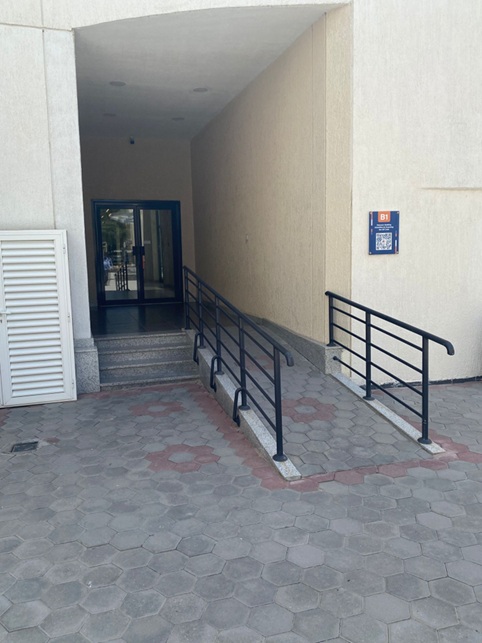
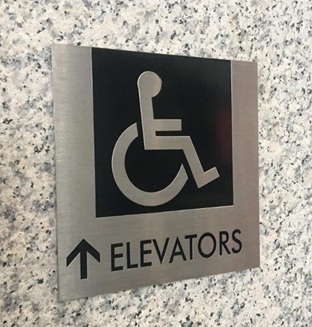
- Buildings are equipped with wheelchair ramps and elevators for those with mobility challenges.
- Specialized desks and workstations for students with disabilities
- AU campus has a special Lab for Learning differences students.
- Each of our building includes restrooms with clear designations for people with differences.
- Dedicated Computer lab for Learning differences students, these devices are loaded with special operating system. It offers several accessibility features and assistive technologies for users who are visually impaired.
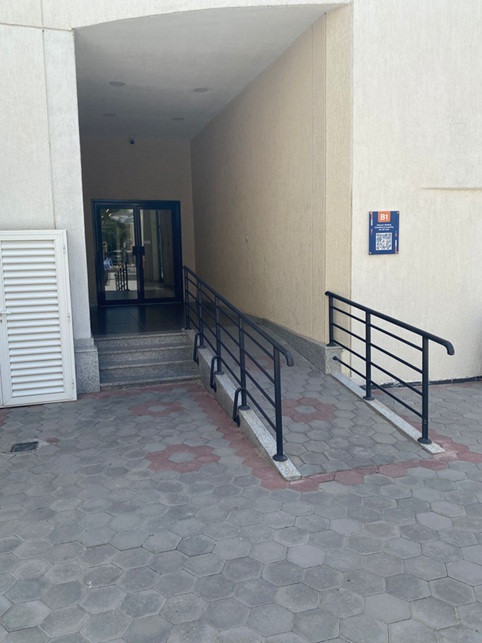
We recognize that staff with disabilities may face unique challenges in the workplace. To address this, our university is dedicated to identifying and removing barriers physical, social, and institutional, that could hinder participation and success. Discrimination on the basis of disability is not tolerated, and we actively promote a culture of respect, dignity, and equity.
Staff with disabilities are valued members of our community and are fully supported to ensure equal opportunities and a discrimination-free workplace. AU Recruitment Ads for call center agents specifically targeting people with disabilities.
The following accommodations are provided to staff with disabilities:
- Wheelchairs are readily available at each building to ensure easy mobility and accessibility for staff with disabilities.
- Ramps are installed at key locations throughout the campus to provide barrier-free access for staff with mobility challenges.
- Specially designated parking spots are provided close to building entrances for the convenience and accessibility of staff with disabilities.
- Golf carts are available to transport staff with disabilities across the campus, ensuring easy and efficient movement between buildings.
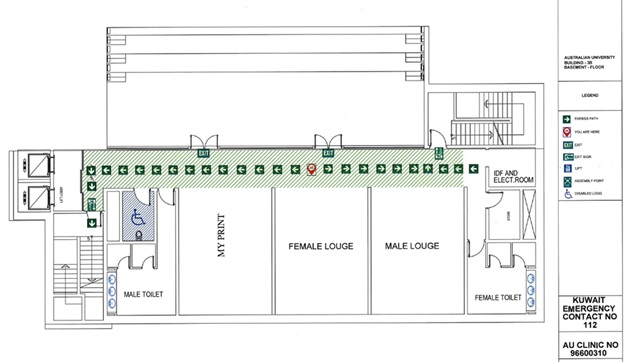
- Accessible restrooms, meeting rooms, and break areas are provided to ensure full inclusivity and convenience for staff with disabilities.
- Flexible work arrangements and adjusted schedules, including variable start and end times, are available to accommodate staff needs.
- Ergonomic workstations with adjustable desks, chairs, or specialized equipment are provided to reduce strain and support staff with physical needs.
- Additional breaks are allowed for staff who require them due to medical or disability-related needs.
- Emergency evacuation plans include clear communication strategies tailored to ensure the safety of staff with disabilities.
- Quiet rooms or sensory spaces are available for staff with disabilities who require breaks from sensory stimulation.
Additionally, the University provides reduced and/or flexible workload for certain period for medical and mental issues provided an official medical report to support the case.
Our university is always working to better support staff with disabilities by providing the resources and opportunities they need. The ongoing commitment to accessibility and inclusion demonstrates appreciation for their contributions to the university community.
For students specifically, AU offers the Center of Learning Differences (CLD) services. AU believes in the fundamental principle that all students have the right to an equal opportunity to education. CLD is committed to the ongoing support and development of students, ensuring a culture that promotes inclusivity and access to appropriate support. CLD focuses on students who have a recognized disability and ensures the facilitation of provisions covered by the Rights of People with Disabilities – State of Kuwait (Law Number 8 in 2010). Therefore, students are entitled to reasonable academic adjustments as per “AU Students with Disabilities and or Learning Differences Policy and Procedure”, and “AU Assessment Accommodations Procedure”, to help them overcome any difficulties caused by their condition.
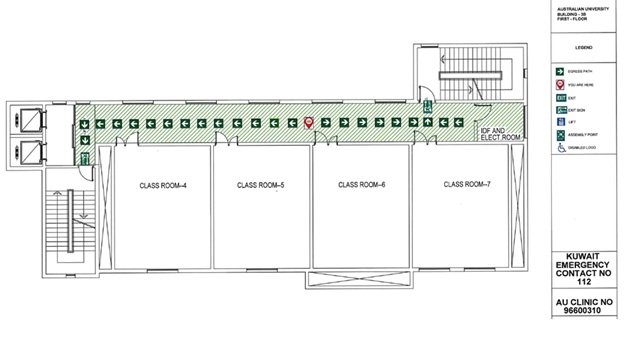
Below pictures show accessibility layout drawings for AU Campus. Each one marks the location and specifications of ramps, accessible (disabled) toilets, and parking lots in different AU Buildings. Together, they document how AU provides barrier-free access from arrival (parking) through campus (ramps) to facilities (toilets).
Scholarships and Financial Aid:
AU provides a wide range of scholarships, grants, and financial aid opportunities to support students from diverse socioeconomic backgrounds. These initiatives help remove financial barriers to higher education and ensure that deserving and talented students can pursue their academic goals regardless of their financial circumstances.
Inclusive and Diverse Campus Environment:
The university is deeply committed to fostering an inclusive, equitable, and welcoming learning environment. AU celebrates cultural, social, and gender diversity through policies, events, and awareness campaigns that promote respect, understanding, and equal opportunities for all members of its community.
Community Engagement and Social Responsibility:
AU actively partners with local organizations, NGOs, and government entities to implement outreach programs aimed at reducing inequalities in Kuwaiti society. These collaborations focus on education access, healthcare initiatives, and social welfare projects that empower underrepresented and marginalized groups.
Research, Advocacy, and Awareness Initiatives:
Faculty and students at AU engage in research that explores the root causes and impacts of inequality in different sectors. The university also hosts conferences, workshops, and public seminars to promote dialogue, raise awareness, and advocate for inclusive social and economic development.
Support Services and Accessibility:
AU provides academic and counseling support services to ensure all students can succeed academically and personally. The university continuously works to enhance accessibility across its facilities and digital platforms, ensuring that students with disabilities or special needs receive equal learning opportunities.
Global Citizenship and Equality Education:
Through its curriculum and extracurricular programs, AU promotes global citizenship, human rights, and equality education—encouraging students to become compassionate leaders who contribute to building fair and inclusive societies both locally and globally.
Center for Learning Differences
The center of learning differences (CLD) believes in the fundamental principle that all students have the right to an equal opportunity to education. CLD is committed to the ongoing support and development of students, ensuring a culture that promotes inclusivity and access to appropriate support.
CLD focuses on students who have a recognized disability and ensures the facilitation of provisions covered by the Rights of People with Disabilities – State of Kuwait (Law Number 8 in 2010). Therefore, students are entitled to reasonable academic adjustments to help them overcome any difficulties caused by their condition.
The center provides academic accommodations for eligible students to create a supportive learning environment that promotes academic success. These services may include, but are not limited to:
- 50% extra time on exams.
- Exams taken alone or with a small group.
- Deadline extension.
- Enlarged font on all exams.
- Preferential seating in class.
- Reduced course load.
- Permission to record lectures.
AU Students with Disabilities and/or Learning Differences Policy and Procedure
- AU complies with the Kuwait Law (8/2010) concerning right of People with Disabilities and makes best efforts to provide equal access to its academic programs by provision of a supportive learning environment and reasonable accommodations for students with disabilities and/or learning differences.
- Students who require accommodations are expected to make their needs known to receive support as permitted by the University resources. Although disclosure is voluntary, failure to register as a student with disability and/or learning differences will delay the assistance offered to the student.
- The University does not grant accommodations that may fundamentally alter the nature of a course or a program. Students are expected to select programs that take into account their own particular strengths and weaknesses. Accommodations granted for a student in other institutions do not guarantee that the same accommodation will be granted in AU. Accommodations are not granted retrospectively.
- Students that are registered with disabilities or learning differences are bound by all the University’s policies and procedures
- Admission as a student with disability and/or learning differences:
- Dyslexia;
- Dyscalculia;
- Dysgraphia;
- Dyspraxia,
- A mild Auditory and/or Visual Processing Disorder;
- Mild Cerebral Palsy;
- A Mild Visual Impairment;
- A Mild Hearing Impairment;
- A Physical Disability;
- Attention Deficit (Hyperactivity) Disorder;
- With a minimum Intelligence Quotient of 85 on a standardized local Test (Wechsler).
- It is the student's responsibility to identify him/herself as a person with a disability and/or learning differences in their admission application and provide the required diagnostic documentation to the Center for Learning Differences.
- Accommodations and Auxiliary Aids Provided by the University. The academic accommodations and auxiliary aids offered by AU may include:
- Presentation Accommodations which allow students to access instruction and instructional materials in ways that do not interfere with their disabilities. Examples include:
- Providing recorded instructions;
- Providing instructions in large print;
- Reducing number of items per page or line;
- Providing a designated reader;
- Presenting instructions orally.
- Response Accommodations which allow students to record their work in alternate ways or to solve or organize their work using some type of material or device. Examples include but are not limited to
- Allowing for verbal responses;
- Allowing for answers to be dictated to a scribe;
- Allowing the use of tape recorder to capture responses;
- Permitting responses to be given via computer;
- Permitting answers to be recorded directly into test booklet.
- Timing/scheduling accommodations that increase the allowed length of time for assignments, projects, assessments/exams or change the way the time is organized. Examples include:
- Allowing frequent breaks;
- Extending the allotted time for any given assessment up to 50%;
- Allowing subtests to be taken in a different order;
- Administering a test at a specific time of day
- Setting Accommodations that change the location in which instructions, activities, assignments/exams are given or the conditions of the setting. Examples include:
- Providing preferential seating;
- Providing a space with minimal distractions;
- Administering assessments/exams in a small group setting;
- Administering assessments/exams in a private room or alternative test site.
- Other accommodations that include:
- Provision of special test preparation;
- Provision of on-task/focusing prompts; and
- Provision any reasonable accommodation that is not listed above.
- Center for LD will facilitate the offering of the accommodations and monitor their effectiveness by using the LD Academic Feedback Form.Changes will be made as needed with the involvement of students, parents and instructors.
- If a student’s disability prevents them from taking a full course load, the student may be eligible for a reduced load as per AU’s Student Academic Load Policy which will be determined in conjunction with the Academic Advisors and the Center for LD.
- Confidentiality and Information Release: AU is committed to ensuring that all information regarding a student is maintained confidential as required or permitted by Kuwait’s law. The University will disclose information on a student to the relevant staff and faculty only to the extent necessary for provision of accommodations or for protection of the health and safety of the student and the community.

AU Assessment Accommodations Procedure
- The University provides assessment accommodations for students with documented disabilities and learning differences registered with the Center for Learning Differences (CLD) in order to provide them with an environment that allows them the opportunity to perform to the best of their abilities.
- Assessment Accommodations do not alter the expected learning outcomes of a course or weaken its academic rigor. Students are expected to demonstrate valid and reliable evidence of achievement.
Assessment Accommodations1 may include, but are not limited to:
- Fifty percent extra time on all assessments;
- Assessments taken alone or in a small group of no more than 15 students with learning differences and/or physical disabilities;
- Assessments taken on a computer;
- Assessments presented on a different format, such as:
- Large font
- More spacing between questions
- One or two questions per page
- Scrap paper to brainstorm ideas before answering questions.
- Grey coloured paper for students with dyslexia.
- Calculator, Formulae and/or conversion sheet and Graph paper (for mathematics
- assessments);
- A designated question reader;
- Note-taker (scribe);
- Permission to give answers orally;
- Translator (for hearing impaired students);
- Modified equipment or resources to accommodate mobility disorders (for students completing practical skills assessments in courses with lab components).
AU Counselling Policy
- Students and Staff at AU have access to independent and confidential counselling with a dedicated professional counsellor.
- AU follows the Code of Ethics for the American Psychological Association (APA) and the Code of Ethics for the Australian Psychology Society (APS).
- Counselling Referrals and Appointments: Students or AU Staff member can make an appointment on their own initiative or can be referred for counselling by a member of staff, by a guardian or by the Student Affairs Department as a result of student misconduct as per the terms of the AU Student Code of Conduct. Students must ensure that appointments with their counsellors do not clash with their classes. The frequency and length of appointments will depend on the nature of each student’s needs.
- In situations where a student is seeking counselling for academic related matters, the Student Counselling refers the student to the relevant academic department.
SDG11: Sustainable Cities and Communities
The Australian University actively supports the development of sustainable cities and communities through a variety of initiatives:
Sustainable Campus Practices:
The Australian University (AU) has adopted a comprehensive sustainability strategy that integrates environmentally responsible practices across its campus operations. This includes energy-efficient building designs, renewable energy integration, water conservation systems, and effective waste management and recycling programs. Green spaces and eco-friendly landscaping further promote environmental awareness and create a healthy learning environment.
Research and Academic Excellence in Sustainability:
AU offers specialized programs and conducts cutting-edge research in areas such as sustainable urban planning, environmental management, renewable energy systems, and resilient infrastructure. Faculty and students collaborate on research projects aimed at developing innovative solutions for urban sustainability and improving the quality of life in communities across Kuwait and beyond.
Community Engagement and Partnerships:
The university actively collaborates with government agencies, municipalities, and local NGOs to advance sustainable urban development. Through community outreach, awareness campaigns, and volunteer projects, AU contributes to environmental education, social equity, and community resilience. These initiatives strengthen the link between academia and society, fostering shared responsibility for sustainable growth.
Sustainable Transportation Initiatives:
AU promotes sustainable mobility by encouraging students and staff to adopt eco-friendly transportation modes, such as carpooling, cycling, and public transit. The university also explores the use of electric vehicles and implements infrastructure to support low-emission commuting options, helping to reduce its overall carbon footprint.
Green Innovation and Technology:
The university supports innovation and technology-driven approaches to sustainability, such as smart building systems, renewable energy research, and digital tools for urban management. These initiatives align with Kuwait’s national vision for smart, sustainable cities.
Awareness, Training, and Student Involvement:
AU integrates sustainability themes into its curriculum and extracurricular activities, encouraging students to take part in environmental clubs, green campaigns, and sustainability-focused events. Workshops and seminars help raise awareness about sustainable living, urban resilience, and community well-being.
Long-Term Vision for Urban Sustainability:
Through its strategic policies and initiatives, AU aims to serve as a model institution for sustainable development in Kuwait, demonstrating how higher education can play a transformative role in building environmentally responsible, inclusive, and resilient cities.
AU & Life Energy joining forces for a sustainable future
The Australian University (AU) proudly hosted the inauguration ceremony of its newly established Solar Lab, a pioneering initiative generously supported and installed by Life Energy Co. This milestone marks a significant advancement in AU’s commitment to sustainable energy research and education.
The establishment of the Solar Lab aligns with Kuwait’s national vision for climate action and sustainability. Recognizing the urgency of addressing climate change, Kuwait has set ambitious targets for emission reduction, renewable energy integration, as part of its long-term strategies for 2040, and net zero emissions by 2050 for the oil and gas sector and 2060 for the country. The Solar Lab contributes directly to this vision by fostering knowledge creation, capacity building, and innovation to support Kuwait’s transition toward a cleaner and more resilient future.
The ceremony took place at the AU Auditorium and attended by distinguished guests and representatives from leading organizations including the Ministry of Energy & Water & Renewable Energy, KNPC, KPC, ECO Environmental Consultants, and the Chairperson of the Sustainability Committee at the Kuwait Water Association, among others. In recognition of Life Energy’s generous support, Mr. Al Radhan was presented with a commemorative trophy as a gesture of appreciation.
AU Signs MoU with ECO Environmental Consultants
The Australian University, represented by its Center for Innovation and Entrepreneurship (CIE), has signed a Memorandum of Understanding (MoU) with ECO Environmental Consultants, a leading Kuwait-based firm specializing in environmental consulting and sustainability solutions.
ECO Environmental Consultants is certified to 13 ISO standards, including ISO 9001 (Quality Management) and ISO 14001 (Environmental Management), reflecting its commitment to excellence and global best practices.
This partnership aims to foster collaboration in key areas such as:
- Joint research and development in environmental management, sustainability, and energy efficiency
- Environmental consultation for academic and applied projects
- Training programs, seminars, and internship opportunities for AU students
- Knowledge exchange between academia and industry to promote innovation and practical learning
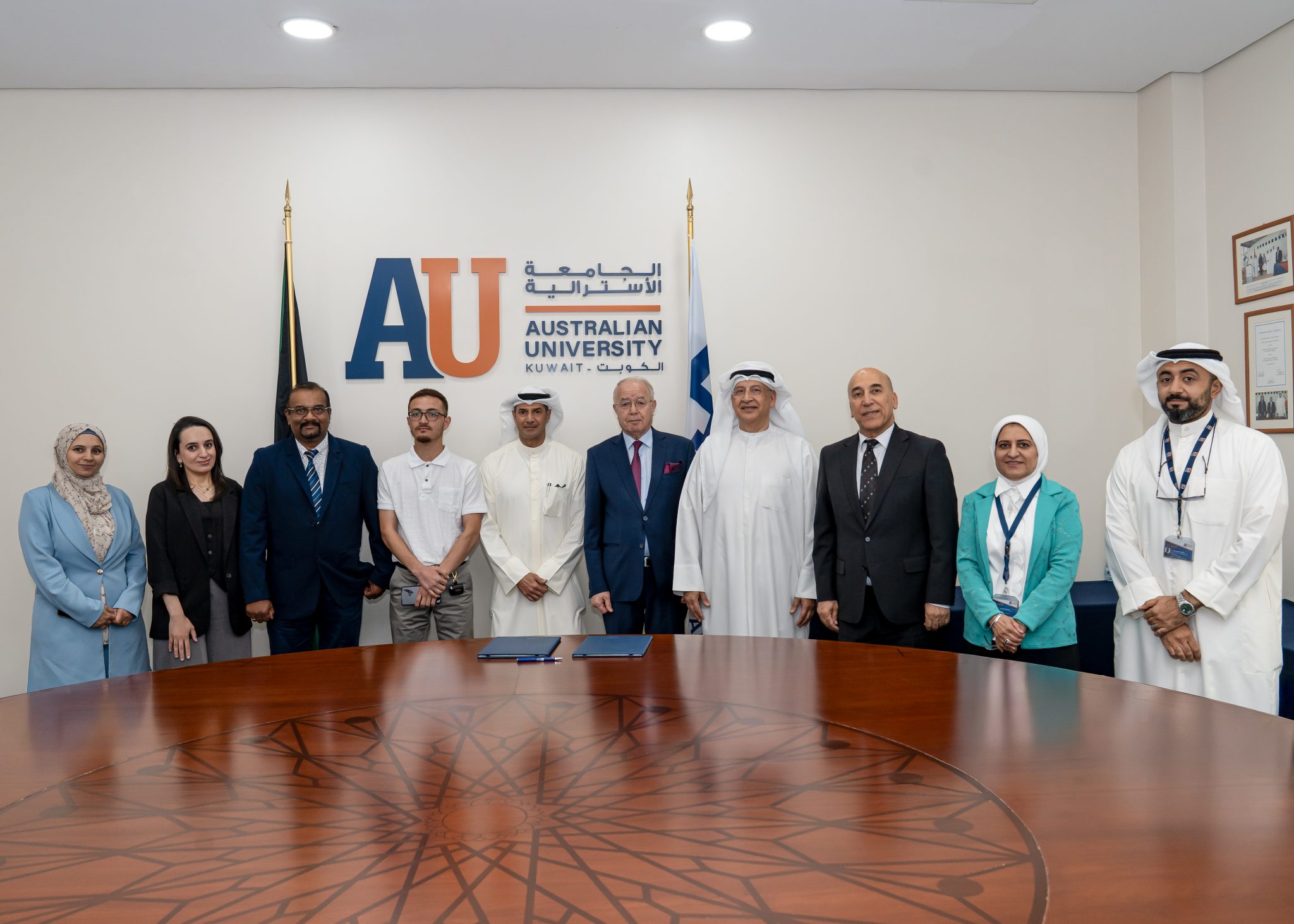
AU Engineering Faculty and Students Recognized at the 16th TICE & 9th EEA Forum
The Australian University (AU) top performed in the 16th Technological Innovations Conference and Exhibition (TICE) and the 9th Engineering Excellence Award (EEA) by securing awards under the category of “Energy”.
AU’s involvement in TICE dates to its 10th edition in 2019, reflecting the university’s long-standing commitment to advancing research, innovation, and collaboration with Kuwait’s engineering community.
This year, AU’s College of Engineering achieved remarkable success. Dr. Arash Mehdizadeh, Assistant Professor of Electrical and Electronics Engineering at AU, presented a technical paper and, along with his students, earned the Silver Award under the “Energy” category. Meanwhile, Dr. Suad AlRadhwan, who also chaired a technical session featuring five industrial presentations, and her students received the Gold Award in the same category.
The project that received the gold award, titled “Feasibility Study of Shifting Vehicles in Kuwait to Green Hydrogen in Comparison to Fossil Fuel and Electric Vehicles,” was led by Dr. Suad AlRadhwan with students Yasmain AlOwaisheer, Mohamed Abdelmageid, Fatemah AlKhadhari, and Nawal AlSamhan.
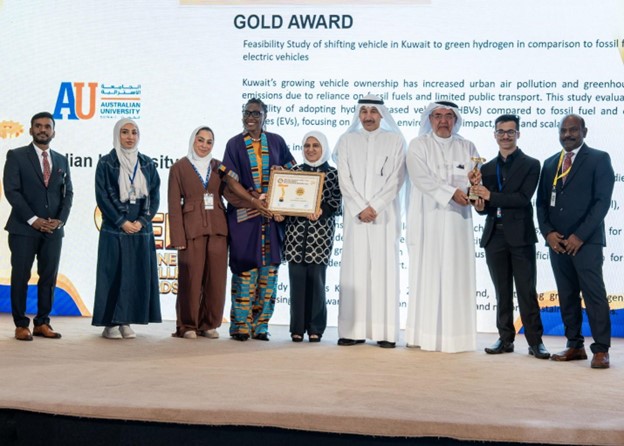
FLAX FIBER REINFORCED CONCRETE FOR SUSTAINABLE BUILDING MATERIAL
SDG12: Responsible Consumption and Production
The Australian University actively advances responsible consumption and production through a range of sustainability-focused initiatives:
Campus Sustainability Initiatives:
AU has implemented a comprehensive sustainability strategy across its campus, focusing on waste minimization, energy conservation, and water efficiency. The university’s infrastructure incorporates environmentally friendly design principles, such as efficient lighting, green spaces, and recycling systems, all aimed at reducing its ecological footprint and promoting a culture of sustainability within the university community.
Integration of Sustainability in Curriculum:
AU embeds sustainability and environmental responsibility into its academic programs, ensuring that students gain a strong understanding of responsible consumption and production. Courses, seminars, and projects emphasize the importance of sustainable resource management, circular economy practices, and environmental ethics, preparing graduates to contribute meaningfully to sustainable development in their future professions.
Research and Innovation for Sustainability:
The university actively supports research initiatives that explore sustainable production technologies, renewable energy, and waste management solutions. Faculty and students collaborate on innovative projects that address pressing environmental challenges and propose practical methods to reduce the impact of consumption and production on ecosystems.
Community and Industry Engagement:
AU partners with local industries, NGOs, and government bodies to advocate for sustainable practices in production, consumption, and waste management. Through workshops, public lectures, and community outreach campaigns, the university promotes awareness about reducing waste, conserving resources, and adopting eco-friendly behaviors in everyday life.
Sustainable Procurement and Operations:
The university is committed to adopting responsible procurement policies, ensuring that materials, supplies, and services are sourced from environmentally and socially responsible vendors. This approach supports ethical supply chains and reinforces AU’s commitment to sustainable operations.
Student Involvement and Awareness Campaigns:
AU encourages student participation in sustainability initiatives through clubs, competitions, and green projects. These activities nurture environmental leadership, promote sustainable lifestyles, and foster a sense of accountability toward responsible consumption.
Long-Term Vision for Sustainable Development:
Through education, research, and community engagement, AU strives to be a leading example of responsible consumption and production in Kuwait. The university’s long-term sustainability vision aligns with national and global goals, contributing to the transition toward a more resource-efficient and environmentally conscious society.
Carrier delivers hands-on VRF training at AU
The Australian University (AU) recently hosted a professional development session led by Carrier, focusing on Variable Refrigerant Flow (VRF) systems. The session provided students with a solid introduction to VRF technology, covering fundamental principles of operation, system components, and energy efficiency benefits.
Students engaged in hands-on demonstrations and explored real-world case studies, helping them connect theory with practical application. The interactive training also covered key troubleshooting techniques and system design considerations, enhancing their technical understanding.
By the end of the session, students had gained valuable insights and practical skills relevant to the HVAC industry. Each participant received a certificate of participation from Carrier, recognizing their successful completion of the training.
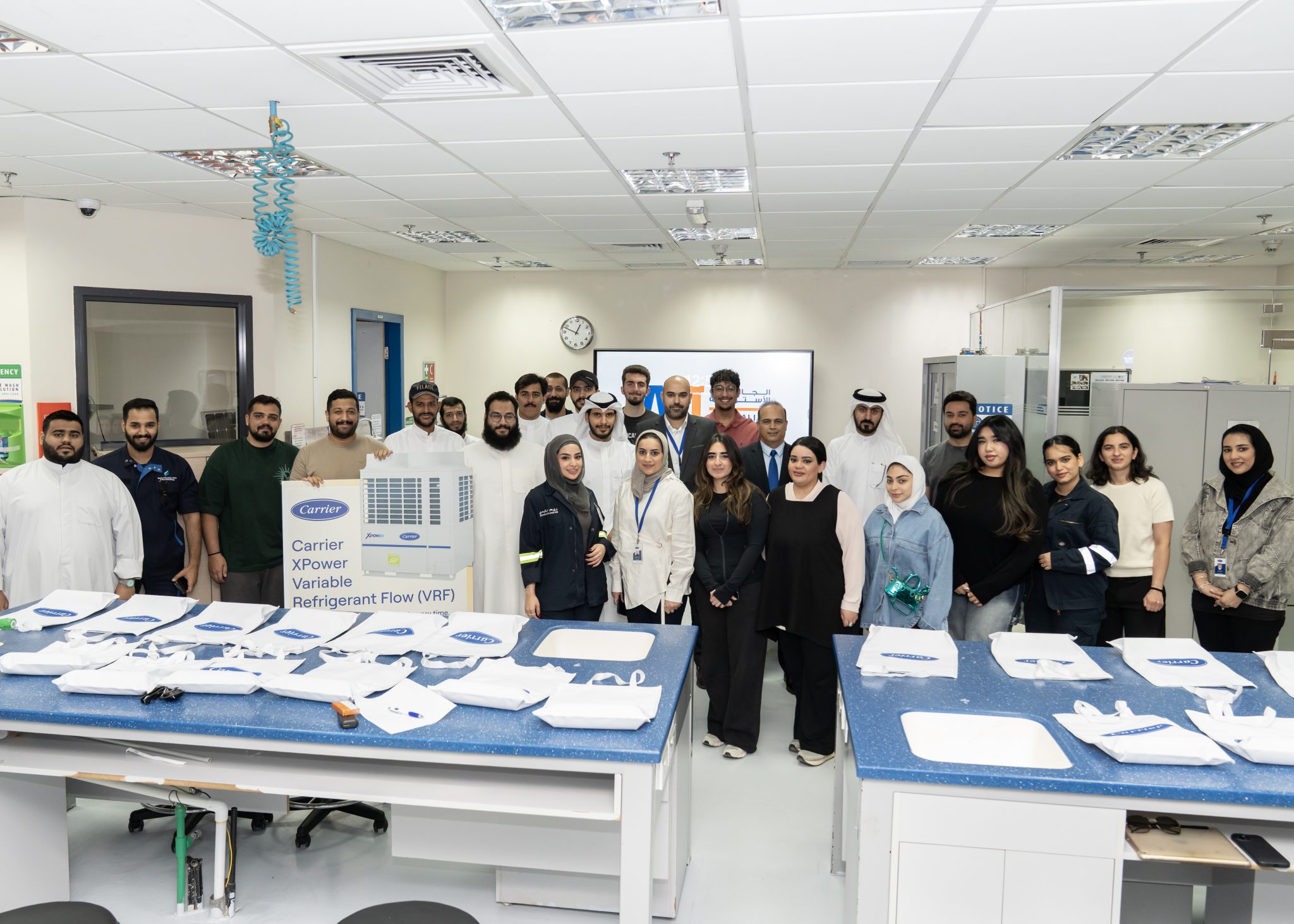
AU contributes to LSE Kuwait Conference 2025
AU is proud to announce that Dr. Jean El Achkar, Assistant Professor of Petroleum Engineering at AU and Research Fellow at the London School of Economics and Political Science (LSE) – Middle East Centre, participated as a panelist at the LSE Kuwait Conference 2025, hosted by the Kuwait Foundation for the Advancement of Sciences (KFAS) on 15 September 2025.
Speaking in the panel “Opportunities and Strategies”, Dr. El Achkar highlighted the importance of transforming Kuwait’s organic waste into renewable bioenergy within a circular economy framework. He discussed strategic policy pathways, investment opportunities, and behavioral shifts that support Kuwait’s Vision 2035 and enhance resilience beyond oil.
Dr. El Achkar also shared insights from his research fellowship at the LSE Middle East Centre, where he developed a policy blueprint for bioenergy in Kuwait. The study, set to be published by LSE, provides actionable recommendations to advance renewable energy and sustainability in the country, reinforcing AU’s commitment to innovation and national development goals.
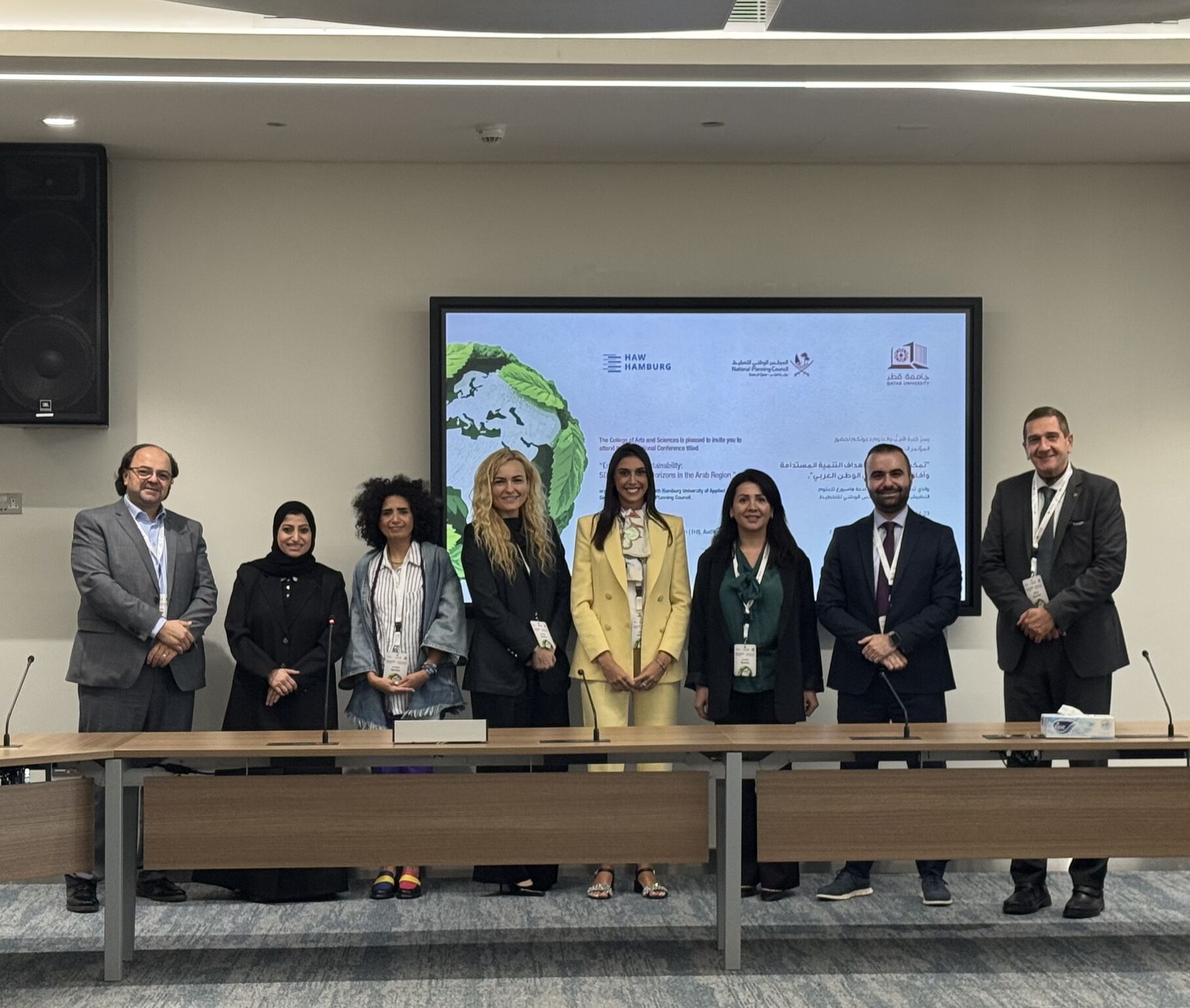
AU students rank 7th globally at GOTECH 2025 AI Hackathon II
Representing AU under the mentorship of Dr. Mohammad Omar, Assistant Professor of Petroleum Engineering, students Manaris Morad and Fatemah Al Tannak demonstrated exceptional skills and innovation by developing an AI-based solution for Surface Network Production Flow Behavior Prediction and Optimization. Advancing through a rigorous evaluation process, they secured 7th place globally and earned recognition among the Top 20 Honorable Finalists.
Commenting on the achievement, Dr. Mohammed Abdul Niby, Dean of the College of Engineering, stated: “This accomplishment is a clear reflection of the dedication of our students and faculty. It reinforces our mission to develop future leaders who are ready to drive innovation and sustainability within the evolving energy sector.”
Dr. Mortadha Alsaba, Head of the Petroleum Engineering Department, also praised the students’ performance, adding: “We are incredibly proud of our students’ success on the global stage. Their achievement highlights the strength of our petroleum engineering program and underscores our commitment to fostering innovation, critical thinking, and real-world problem-solving skills among our students.”
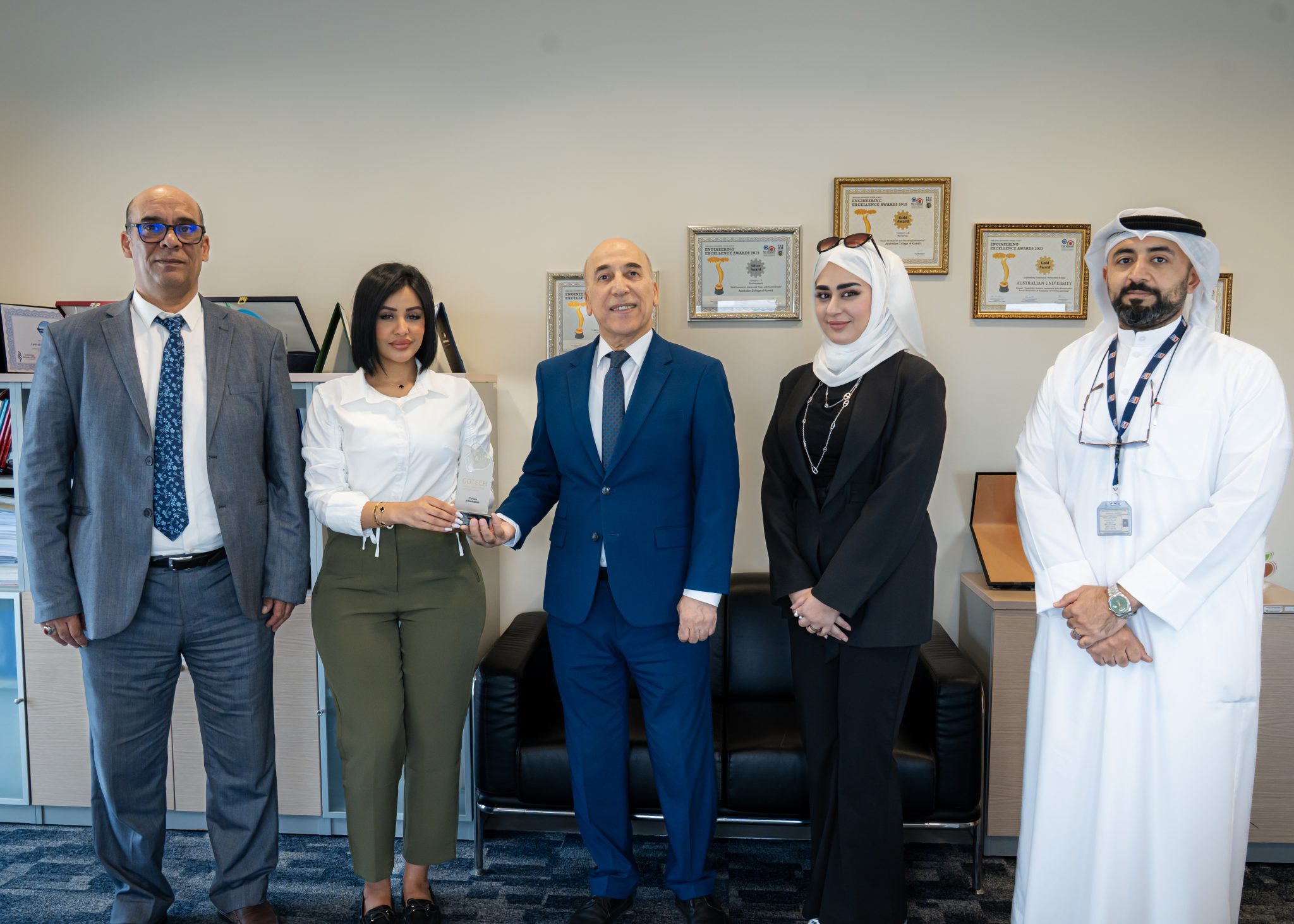
AU & Life Energy joining forces for a sustainable future
The Australian University (AU) proudly hosted the inauguration ceremony of its newly established Solar Lab, a pioneering initiative generously supported and installed by Life Energy Co. This milestone marks a significant advancement in AU’s commitment to sustainable energy research and education.
The establishment of the Solar Lab aligns with Kuwait’s national vision for climate action and sustainability. Recognizing the urgency of addressing climate change, Kuwait has set ambitious targets for emission reduction, renewable energy integration, as part of its long-term strategies for 2040, and net zero emissions by 2050 for the oil and gas sector and 2060 for the country. The Solar Lab contributes directly to this vision by fostering knowledge creation, capacity building, and innovation to support Kuwait’s transition toward a cleaner and more resilient future.
The ceremony took place at the AU Auditorium and attended by distinguished guests and representatives from leading organizations including the Ministry of Energy & Water & Renewable Energy, KNPC, KPC, ECO Environmental Consultants, and the Chairperson of the Sustainability Committee at the Kuwait Water Association, among others. In recognition of Life Energy’s generous support, Mr. Al Radhan was presented with a commemorative trophy as a gesture of appreciation.
SDG 13: Climate action
The Australian University actively advances climate action through a variety of strategic initiatives:
Sustainable Campus Practices:
The Australian University (AU) has implemented comprehensive sustainability initiatives across its campus, including energy-efficient building designs, solar energy installations, waste reduction and recycling programs, and promotion of green transportation options such as cycling, electric vehicles, and public transit. These measures aim to reduce the university’s carbon footprint and model sustainable living for the campus community.
Curriculum Integration:
AU incorporates climate science, sustainability, and environmental stewardship into its academic programs. Students learn about the causes and impacts of climate change, mitigation strategies, and adaptation solutions, equipping them with the knowledge and skills to address climate challenges in their future careers.
Research and Innovation:
The university actively conducts research on climate-related topics, including renewable energy technologies, carbon reduction strategies, climate-resilient infrastructure, and sustainable agriculture. Faculty and students collaborate on innovative projects that provide practical solutions for local, regional, and global climate challenges.
Climate Advocacy and Awareness:
AU engages in climate advocacy by organizing workshops, seminars, awareness campaigns, and public events to educate the community about climate change and the urgency of climate action. The university collaborates with governmental bodies, NGOs, and industry partners to promote climate-conscious policies and practices beyond the campus.
Sustainable Operations and Policies:
The university integrates climate considerations into its operational and administrative policies, such as green procurement, energy management systems, and low-emission infrastructure projects. These policies demonstrate a commitment to minimizing environmental impact in all areas of campus operations.
Student Engagement and Leadership:
AU encourages students to take an active role in climate initiatives through environmental clubs, sustainability projects, hackathons, and volunteering programs. This involvement fosters leadership, innovation, and a sense of responsibility toward achieving climate goals.
Partnerships for Global Climate Action:
The university collaborates with international research institutions, environmental organizations, and climate networks to contribute to global climate solutions, knowledge exchange, and implementation of best practices in sustainability and climate resilience.
Long-Term Vision for Climate Action:
AU aims to be a model institution for climate leadership by integrating sustainability into education, research, operations, and community engagement. Its long-term vision aligns with national and international climate goals, advancing efforts to create a resilient and low-carbon future.
AU to lead climate resilience research in China
Dr. Masoud Irannezhad, Assistant Professor of Civil Engineering, has been awarded a prestigious research grant under the Henan Province Foreign Expert Projects in China. The grant will support his innovative research on the development of resilient digital twin systems for the sustainable management of hydroclimate extreme events.
This research will be carried out during his appointment as a visiting full research professor at the North China University of Water Resources and Electric Power (NCWU) in Zhengzhou, China from 2025 to 2028.
Dr. Irannezhad’s research focuses mainly on the critical interactions between climate, water resources and sustainable development. He has published extensively in high-impact journals, including Science, in addition to contributing to the Sixth Assessment Report (AR6) of the Intergovernmental Panel on Climate Change (IPCC)—one of the world’s foremost scientific organizations.
This prestigious grant represents another significant achievement in Dr. Irannezhad’s distinguished career and further strengthens AU’s global reputation in advancing climate resilience and environmental innovation.
Petroleum Engineering Seminar “KNPC Role In Climate Change Mitigate”
KNPC has recognized its role and initiated a pivotal role in mitigating climate change by adopting cleaner technologies, improving energy efficiency, and investing in sustainable practices.
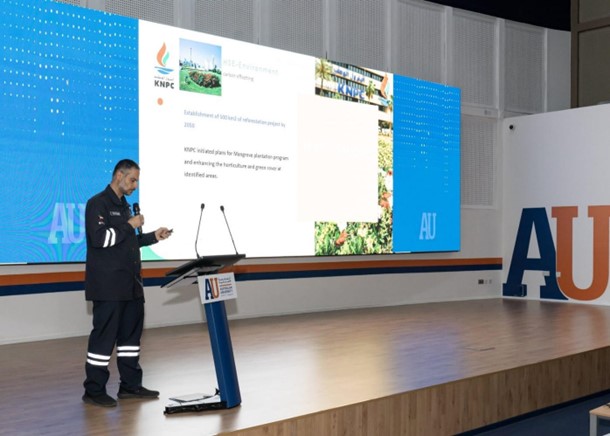
AU contributes to LSE Kuwait Conference 2025
AU is proud to announce that Dr. Jean El Achkar, Assistant Professor of Petroleum Engineering at AU and Research Fellow at the London School of Economics and Political Science (LSE) – Middle East Centre, participated as a panelist at the LSE Kuwait Conference 2025, hosted by the Kuwait Foundation for the Advancement of Sciences (KFAS) on 15 September 2025.
Speaking in the panel “Opportunities and Strategies”, Dr. El Achkar highlighted the importance of transforming Kuwait’s organic waste into renewable bioenergy within a circular economy framework. He discussed strategic policy pathways, investment opportunities, and behavioral shifts that support Kuwait’s Vision 2035 and enhance resilience beyond oil.
Dr. El Achkar also shared insights from his research fellowship at the LSE Middle East Centre, where he developed a policy blueprint for bioenergy in Kuwait. The study, set to be published by LSE, provides actionable recommendations to advance renewable energy and sustainability in the country, reinforcing AU’s commitment to innovation and national development goals.
AU & Life Energy joining forces for a sustainable future
The Australian University (AU) proudly hosted the inauguration ceremony of its newly established Solar Lab, a pioneering initiative generously supported and installed by Life Energy Co. This milestone marks a significant advancement in AU’s commitment to sustainable energy research and education.
The establishment of the Solar Lab aligns with Kuwait’s national vision for climate action and sustainability. Recognizing the urgency of addressing climate change, Kuwait has set ambitious targets for emission reduction, renewable energy integration, as part of its long-term strategies for 2040, and net zero emissions by 2050 for the oil and gas sector and 2060 for the country. The Solar Lab contributes directly to this vision by fostering knowledge creation, capacity building, and innovation to support Kuwait’s transition toward a cleaner and more resilient future.
The ceremony took place at the AU Auditorium and attended by distinguished guests and representatives from leading organizations including the Ministry of Energy & Water & Renewable Energy, KNPC, KPC, ECO Environmental Consultants, and the Chairperson of the Sustainability Committee at the Kuwait Water Association, among others. In recognition of Life Energy’s generous support, Mr. Al Radhan was presented with a commemorative trophy as a gesture of appreciation.
SDG 14 – Life Below Water
Sustainable Development Goal (SDG) 14, "Life Below Water," focuses on protecting marine life. Kuwait’s coastline and marine habitats are an important part of its natural landscape, and preserving them has become a national priority. At AU, the university contributes to SDG 14 primarily through its strong maritime education programs, specialized courses, and practical training that equip students with the knowledge and skills needed to understand, protect, and responsibly manage marine resources.”
AU Maritime Department
The Maritime Department at AU offers a comprehensive range of programs and services to the maritime sector that are tailored to suit both statutory and industry needs.
These programs focus on quantifiable learning objectives and are competency-based. They are taught by knowledgeable, experienced, and professional instructors who employ a variety of current teaching techniques.
Our goal is to assist the maritime sectors in ensuring that their employees have the information, skills, and attitudes necessary to operate safely and efficiently in a challenging environment.
Approvals and Partnerships
AU Maritime Department courses have been developed both internally and in collaboration with established maritime education and training institutions and have been approved by recognized authorities where required.
AU Maritime Department Training Partners
- Alfa Marine Services
- City of Glasgow College
- Wartsila Voyage
- Glasgow Maritime Academy
AU Maritime Department Approvals
- United Kingdom Maritime and Coastguard Agency (MCA)
- Kuwait Ministry of Interior
Advanced Diploma in Nautical Science
Australian University and City of Glasgow college cooperating to provide High National Diploma program in Nautical Science in Kuwait.
The Advanced Diploma in Nautical Science provides the type of officer who is in great demand worldwide. Currently this demand exceeds supply and therefore employment opportunities are enhanced.
The use of the Advanced Diploma in Nautical Science with its wide range of nautical subjects provides the academic requirements for Certificates of Competency and has long been recognized for reasons as follows:
- The Advanced Diploma commands respect among young people, their parents, and careers advisors.
- As part of the overall training scheme the Advanced Diploma works well and produces an outcome which matches the needs of employers, in that it provides officers who are adaptable to change, flexible in their roles and attitudes and able to move from ship to ship, having a thorough understanding of their duties.
- The Advanced Diploma is recognized by higher education institutions to the extent that in many cases it enables direct progression into the 2nd year or above of many degree programs.
- The Advanced Diploma provides status and is seen by the industry as a valuable base for progression to shore-based employment within the individual company structure.
- The Advanced Diploma is recognized internationally and is in high demand for qualifications as part of a Merchant Navy Certificate of Competency from numerous foreign nationals at all levels.
- The Advanced Diploma in Nautical Science also provides the skills and knowledge relevant to many shore-based careers in the operational aspects of shipping, including ship management, cargo handling, pilotage, towage, pollution control, surveying, port control and other marine related occupations.
- The awards allow for great flexibility in delivery to a wider range of entry qualifications.
SQA Accreditation for the Advanced Diploma in Nautical Science
The Australian University’s Advanced Diploma in Nautical Science is accredited by the Scottish Qualifications Authority (SQA), reflecting its adherence to the highest international educational standards. Delivered in collaboration with the esteemed City of Glasgow College and approved by the Private Universities Council, this program exemplifies AU’s unwavering commitment to excellence in maritime education and training.
This prestigious accreditation ensures that graduates of the program receive a globally recognized qualification, enhancing their professional standing and career opportunities within the maritime industry. By aligning with SQA’s rigorous standards, the program equips students with advanced knowledge and practical skills, positioning them to thrive in an ever-evolving global maritime sector.
For more information about SQA and its accreditation standards, visit the SQA website.
AU Maritime Department International and Local Client Relationships
AU Maritime Department clients include oil majors, major shipping companies, port authorities, pilotage organizations and government and defense organizations.
Our courses have international recognition but at the same time are tailored to local requirements.
Major corporate clients that have chosen AU include:
- KPC (Kuwait Petroleum Company)
- KOC (Kuwait Oil Company)
- KOTC (Kuwait Oil Tanker Company)
- Ministry of Interior- Kuwait Coastguard
- Kuwait Naval Force
- Kuwait Ports Authority (KPA)
- Kuwait Environmental Public Authority (KEPA)
- Nakilat (Qatar)
AU Maritime Department Courses
Navigation and Ship Handling
- Electronic Chart Display and Information Systems (STCW) (MCA approved)
- Human Element Leadership and Management (Operational) (STCW)
- Human Element Leadership and Management (Management) (STCW)
- Maritime Resource Management
- Shiphandling
- Ship to Ship (STS) Transfer Simulator
- ASD Tug Handling Simulator
- Marine Pilot Training
- Coastal Navigation (NOKITHA A)(available in Arabic & English and is required by the MOC for the Nokhitha A license)
- Search and Rescue Simulator
GMDSS
- GMDSS General Operator
- GMDSS Restricted Operator
Tanker Operations
- Basic Training in Oil, Chemical and Liquefied Gas Tanker Operations (STCW)
- Advanced Training for Oil Tanker Cargo Operations (STCW)
- Advanced Training for Chemical Tanker Cargo Operations (STCW)
- Advanced Training for Liquefied Gas Tanker Cargo Operations (STCW)
- Tanker Vetting
- Safety, Environment and Security
- Oil Spill Combating for First Responders (IMO-1)
- Oil Spill Combating Operations for (Supervision IMO-2 and Management IMO-3)
- Shipboard Safety Officer
- Personal Safety & Social Responsibility (STCW)
- Elementary First Aid (STCW)
- Medical First Aid (STCW)
- Proficiency in Medical Care on Board Ships (STCW)
- International Ship and Port Facility Security Code (ISPS)
- Proficiency in Security Awareness (STCW) (MOC)
- Proficiency in Designated Security Duties (STCW) (MOC)
- Ship Security Officer (STCW) (MOC)
- Company Security Officer (MOC)
- Port Facility Security Officer (MOC)
- ISM Lead Auditor
Technical Courses
- Training Course for Instructors (IMO Model Course 6.09)
AU recognized as official provider for Basic Maritime Competency courses
The Maritime Department at the Australian University (AU) is continuing its efforts to accredit maritime training programs. A specialized team from the General Directorate of the Coast Guard has authorized AU to conduct training and issue certificates for the Basic First Aid course and the Personal Safety and Social Responsibilities course, which are among the basic maritime competency courses recognized as mandatory for personnel working aboard ships in accordance with the requirements of the International Convention on Standards of Training, Certification and Watchkeeping for seafarers (STCW).
This recognition follows the recommendations of the Director General of the Coast Guard, Brigadier General Sheikh Mubarak Ali Al Yusuf Al Sabah, regarding the importance of offering and accrediting various academic maritime programs and training courses for their significant role in developing professionals in the maritime sector, and seafarers in general. The delivery of Certifications of Competency (CoC) courses in Kuwait is a crucial step towards issuing official certification of competence and eligibility for captains, officers, maritime engineering and seafarers under the authority of the General Directorate of the Coast Guard.
It is worth noting that the Maritime Department has recently earned the confidence of the General Directorate of the Coast Guard to offer several specialized courses, such as the Nawkhatha A course, the International Ship and Port Facility Security Code (ISPS) course, and the specialized course for Port Facility Security Officers.
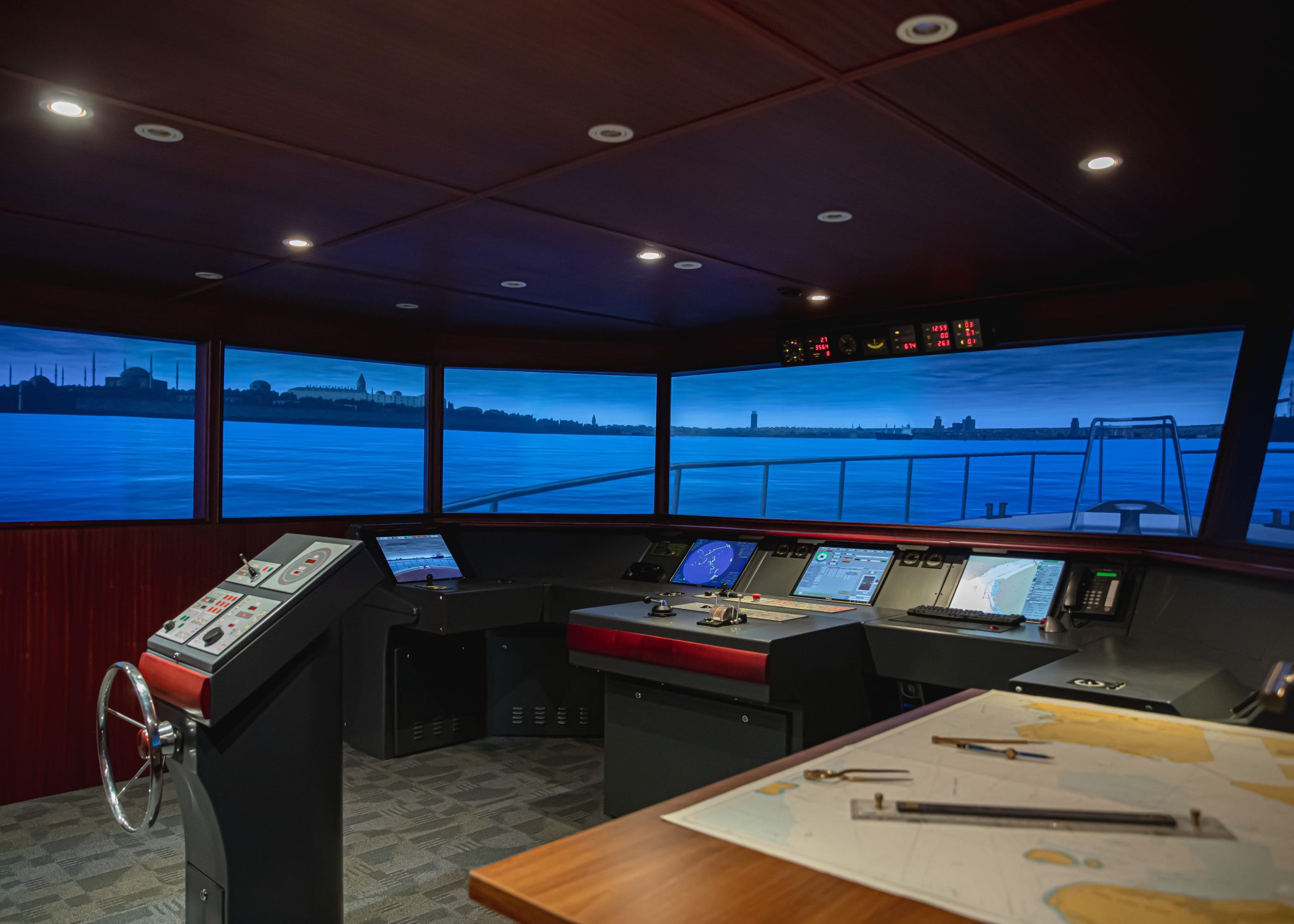
Navigation Course at AU receives accreditation from the Coast Guard
The Australian University (AU) has received approval from the General Department of the Coast Guard as a licensed and accredited institution to train and qualify those wishing to obtain a Nokhita (A) license, and to issue certificates to those who meet the course requirements.
This significant milestone was achieved following a thorough inspection by a specialized team from the General Department of the Coast Guard. The team evaluated AU’s facilities, training halls, simulators, and the procedures followed by AU’s Maritime Department in their Nokhita (A) course.
To mark the occasion, Brigadier General Shiekh Mubarak Ali Al Yusuf Al Sabah, Director of the General Department of the Coast Guard, presented a certificate of accreditation to Mr. Sager Al Sharhan, Assistant to the President for Support Services at AU. The presentation took place during an event held at the Sabah Al Ahmad Naval Base and was attended by Mr. Abdullah Shams Al Deen, Maritime Technical Manager at AU, Marine Colonel Mishaal Al Quraifa, Marine Colonel Yusuf Al Salem, Marine Colonel Abdullah Al Rashed, and Marine Lieutenant Colonel Yusuf al Haddad.
Commenting on the achievement, Mr. Shams Al Deen said: “We would like to thank the Ministry of Interior, represented by the General Department of the Coast Guard for their trust in our university, and we would like to stress on AU’s constant keenness to strengthen its ties with the public sector for the benefit of Kuwait as a whole. The Maritime Department will continue to seek accreditation for other maritime courses to cater the maritime sector and seafarers in general with the best caliber.”
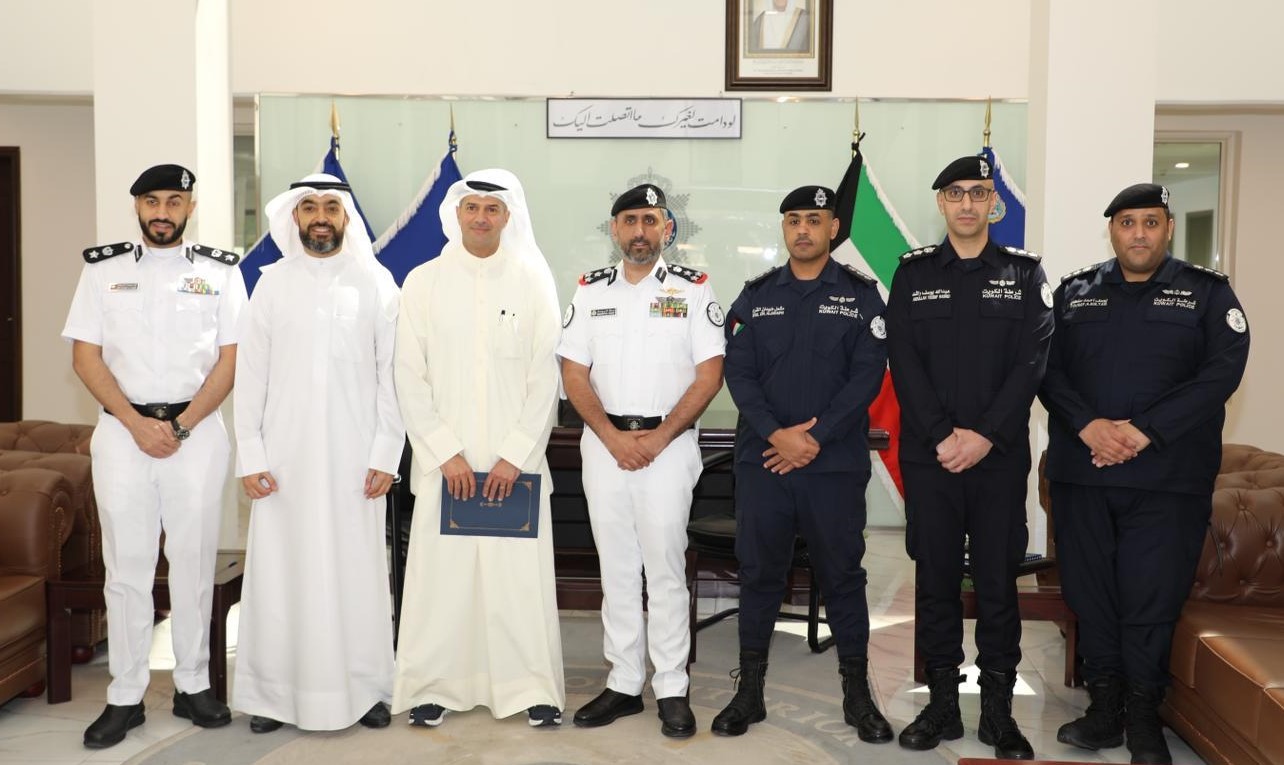
AU successfully passes Coast Guard evaluation of Maritime Programs
Reaffirming its commitment to delivering high quality maritime education, the Australian University has successfully completed the periodic evaluation conducted by the Audit and Quality Department of the Kuwaiti Coast Guard. The review aimed to ensure that AU’s maritime training, assessment, and certification programs meet the international standards outlined in the International Convention on Standards of Training, Certification and Watchkeeping for Seafarers (STCW) of 1978 and the Manila Amendments of 2010, in line with Amiri Decree No. (115) of 2016 approving the Manila Amendments.
The two-day audit was carried out by a Coast Guard evaluation team led by Captain Abdullah Al Rashed as chief evaluator, alongside Captain Hamad Al Ateeqi, Captain Omar Khalefouh, and Engineer Fatima Al Naqi. The team met with AU President Professor Isam Zabalawi and representatives from various departments. The evaluation results confirmed full international requirements, reflecting AU’s dedication to upholding global standards in maritime education and training, and its continuous efforts to enhance the quality and efficiency of its academic and training programs.
This achievement reinforces AU’s standing as a regional hub for maritime training, applying best practices and international standards in the field, and further strengthens the ability of Kuwait’s educational institutions to graduate highly qualified maritime professionals with world-class competencies.
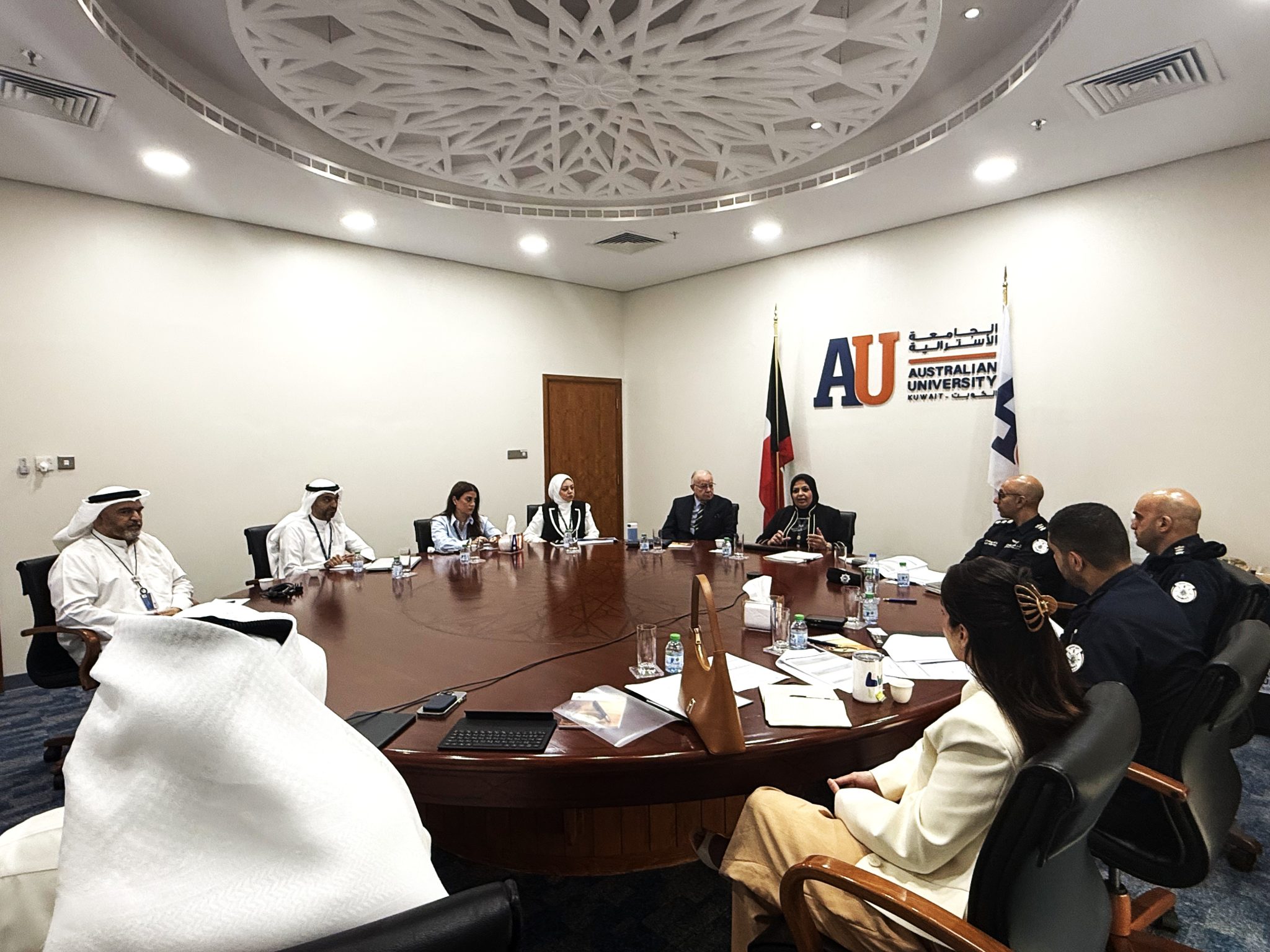
AU explores training opportunities for Maritime Graduates with KOTC
In line with its belief in the importance of empowering individuals by providing an integrated educational and practical environment, and as a reflection of national partnership between the educational and professional sectors in Kuwait, AU held a meeting with the Kuwait Oil Tanker Company (KOTC) in the presence of the General Protectorate of the Coast Guard, which represents the flag authority of the State of Kuwait. The meeting aimed to explore the possibility of providing practical training opportunities for the university’s graduates aboard the KOTC’s vessels. This would offer students a unique and practical professional experience in maritime officer duties.
Discussions also focused on the delivery of essential basic marine competency courses required for seafarers, and the feasibility of offering them locally in Kuwait. These courses are critical for obtaining the Certificate of Competency (CoC), issued by the flag authority. The parties also coordinated on accelerating initiatives that support the development of the maritime sector. Notably, the General Directorate of the Coast Guard has taken swift and significant steps to accredit various maritime courses aimed at enhancing the qualifications of maritime professionals.
Participants in the meeting included Mr. Saqer Al Sharhan, Assistant to the President for Support Services at AU; Eng. Nizar Al Sultan and Captain Alan Kaziver from KOTC; Colonel Faisal Al Mubarak, Colonel Majed Al Shukri, Lieutenant Colonel Marine Engineer Yousef Al Haddad, and First Lieutenant Yousef Al Shatti from the Coast Guard; as well as Mr. Abdullah Shams Al Deen, Manager of Maritime Technical at AU, and Captain Liam Toner, Senior Manager of Maritime Operations and Quality.
The meeting concluded with a tour of the Maritime Studies facilities, where attendees reviewed the university’s preparedness to deliver the diploma program and marine competency training.
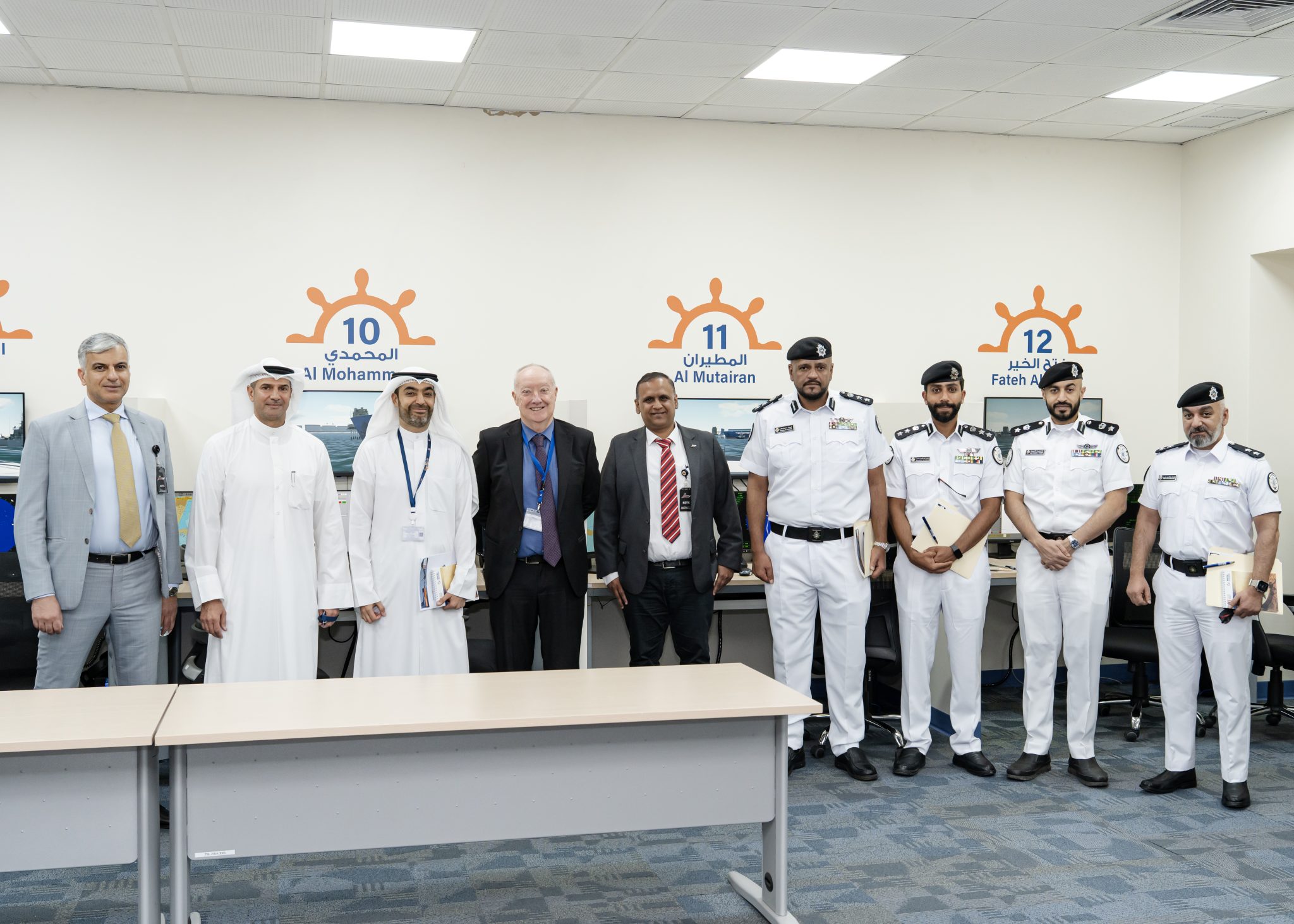
SDG15: Life and Land
The Australian University actively advances life and land through a variety of strategic initiatives:
Research and Education on Terrestrial Ecosystems:
AU actively conducts research on local ecosystems, biodiversity, and terrestrial conservation. Faculty and students engage in studies that monitor wildlife populations, assess habitat health, and develop strategies for the protection and sustainable management of land resources. These efforts contribute to a deeper understanding of terrestrial life and inform conservation policies.
Campus Sustainability and Green Practices:
The university promotes sustainability across its campus through the creation of green spaces, native plantings, community gardens, and comprehensive waste reduction and recycling programs. These initiatives serve as a living model of responsible land management and ecological stewardship for students and visitors alike.
Community Engagement and Public Awareness:
AU organizes educational events, workshops, seminars, and outreach campaigns to raise awareness about the importance of land conservation, biodiversity protection, and sustainable use of natural resources. These activities aim to inspire community participation and environmental responsibility.
Collaborations and Partnerships:
The university works closely with governmental agencies, environmental NGOs, and local communities on conservation projects, including afforestation, habitat restoration, and wildlife protection programs. These partnerships enhance the impact of AU’s initiatives and promote sustainable land management practices.
Student Involvement and Experiential Learning:
Students are actively involved in conservation projects, fieldwork, and citizen science initiatives, gaining hands-on experience in ecosystem monitoring, habitat restoration, and biodiversity assessment. This engagement fosters environmental leadership and practical skills for future careers in sustainability.
Policy Support and Research Dissemination:
AU contributes expertise to inform environmental policy, land-use planning, and conservation strategies at local and national levels. Faculty and students disseminate research findings through publications, conferences, and workshops to support evidence-based decision-making.
Innovation in Land Management:
The university explores innovative approaches to sustainable land management, including soil restoration techniques, biodiversity-friendly landscaping, and the integration of technology for ecological monitoring and habitat conservation.
Long-Term Vision for Biodiversity and Land Sustainability:
Through research, education, campus practices, and community engagement, AU strives to be a leader in land conservation and biodiversity protection, promoting sustainable ecosystems that support both environmental health and the well-being of local communities.
AU contributes to LSE Kuwait Conference 2025
AU is proud to announce that Dr. Jean El Achkar, Assistant Professor of Petroleum Engineering at AU and Research Fellow at the London School of Economics and Political Science (LSE) – Middle East Centre, participated as a panelist at the LSE Kuwait Conference 2025, hosted by the Kuwait Foundation for the Advancement of Sciences (KFAS) on 15 September 2025.
Speaking in the panel “Opportunities and Strategies”, Dr. El Achkar highlighted the importance of transforming Kuwait’s organic waste into renewable bioenergy within a circular economy framework. He discussed strategic policy pathways, investment opportunities, and behavioral shifts that support Kuwait’s Vision 2035 and enhance resilience beyond oil.
Dr. El Achkar also shared insights from his research fellowship at the LSE Middle East Centre, where he developed a policy blueprint for bioenergy in Kuwait. The study, set to be published by LSE, provides actionable recommendations to advance renewable energy and sustainability in the country, reinforcing AU’s commitment to innovation and national development goals.
AU to lead climate resilience research in China
Dr. Masoud Irannezhad, Assistant Professor of Civil Engineering, has been awarded a prestigious research grant under the Henan Province Foreign Expert Projects in China. The grant will support his innovative research on the development of resilient digital twin systems for the sustainable management of hydroclimate extreme events.
This research will be carried out during his appointment as a visiting full research professor at the North China University of Water Resources and Electric Power (NCWU) in Zhengzhou, China from 2025 to 2028.
Dr. Irannezhad’s research focuses mainly on the critical interactions between climate, water resources and sustainable development. He has published extensively in high-impact journals, including Science, in addition to contributing to the Sixth Assessment Report (AR6) of the Intergovernmental Panel on Climate Change (IPCC)—one of the world’s foremost scientific organizations.
This prestigious grant represents another significant achievement in Dr. Irannezhad’s distinguished career and further strengthens AU’s global reputation in advancing climate resilience and environmental innovation.
Petroleum Engineering Seminar “KNPC Role In Climate Change Mitigate”
KNPC has recognized its role and initiated a pivotal role in mitigating climate change by adopting cleaner technologies, improving energy efficiency, and investing in sustainable practices.
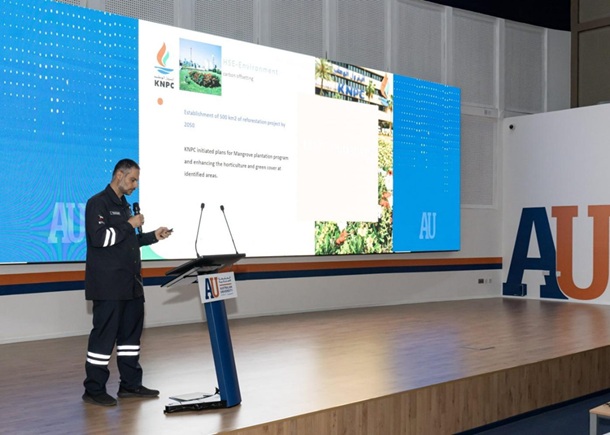
The Australian University (AU) proudly announces that Dr. Jean El Achkar, Assistant Professor in the Petroleum Engineering Department, has been awarded the prestigious Kuwait Fellowship by the London School of Economics and Political Science (LSE). LSE, a globally acclaimed institution recently ranked as the top university in the UK and named the ‘University of the Year 2025,’ is renowned for its excellence in social sciences and policy research.
This highly competitive fellowship, funded by the Kuwait Foundation for the Advancement of Sciences (KFAS), celebrates Dr. El Achkar’s visionary research proposal: “Unlocking Kuwait’s Bioenergy Potential: Integrating Organic Waste Valorization into Renewable Energy and Environmental Policy.” The distinguished judging panel commended Dr. El Achkar’s innovative methodology and the transformative potential of his research to address Kuwait’s critical challenges in energy sustainability and environmental resilience.
Dr. El Achkar will serve as a Visiting Research Scholar at the LSE Middle East Centre from June 1 to September 1, 2025. During this period, his research will focus on utilizing organic waste to produce renewable bioenergy and developing actionable policies to support Kuwait’s energy diversification and environmental sustainability goals.
SDG 16 – Peace, Justice, and Strong Institutions
Clubs at AU
AU’s student clubs contribute directly to SDG 16: Peace, Justice & Strong Institutions by fostering an inclusive, well-regulated, and supportive campus environment. Student Life ensures that all clubs operate transparently and in alignment with AU’s governance policies, promoting fairness, accountability, and responsible participation. Through academic, cultural, artistic, and social clubs, AU empowers students to express themselves, collaborate respectfully, build leadership capacity, and strengthen their sense of community. These initiatives reinforce a positive institutional culture where student voices are valued, diversity is respected, and strong campus governance is upheld.”
At AU, student clubs are dynamic platforms where creativity, leadership, and passion come to life. Student clubs empower students to express their talents, hone their skills, and engage in meaningful collaboration, all within a welcoming and spirited environment.
Student Life oversees and supports the establishment and growth of all student clubs, ensuring they operate within the university’s values and policies. Whether academic, cultural, artistic, or social in nature, our clubs offer students the opportunity to pursue their interests, build lasting friendships, and strengthen their sense of community.
Current Student Clubs
- AI and Robotics Club
- Arts Club
- Aviation Club
- Cooking Club
- Debate Club
- Gaming Club
- INJAZ Club
- Kingaroos Club
- Music Club
- English Language Public Speaking Club
- Social Media and Photography Club
- Toastmasters Club
AU celebrates student achievements at annual Student Life Awards
The Australian University recently hosted its annual Student Life Awards Ceremony, a tradition that has grown over the past several years to become a key highlight of the academic calendar. The event celebrates and recognizes AU students who have demonstrated exceptional engagement and contributions across a wide range of extra-curricular activities. The annual Student Life Awards at AU support SDG 16: Peace, Justice and Strong Institutions by promoting fairness, transparency, and responsible leadership within the university community. Through an inclusive and well-governed recognition process, AU celebrates students who demonstrate integrity, collaboration, and positive social engagement. This strengthens institutional trust, encourages active student participation, and reinforces AU’s commitment to fostering an accountable, ethical, and inclusive campus environment.”
The ceremony honors students for their participation in student clubs, sports leagues and tournaments, and community-based initiatives, while also highlighting achievements that reflect the vitality and spirit of AU’s student community. Among the awards presented were Team of the Year, Athlete of the Year, Academic Performance Award, and Club of the Year, alongside other awards designed to showcase leadership, teamwork, and commitment to AU values.
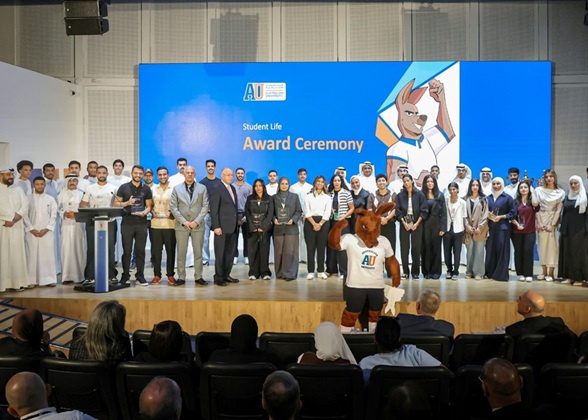
Outstanding Performance by AU Students During Asian Arabic Debate Championships
AU was successfully represented by its Debate club Team during the 2nd Asian Arabic Debate Championship held in Muscat-Oman, with AU being one of the four Kuwaiti universities participating in the competition.
This year’s Asian Arabic Debate Championship is the second edition of an international debate competition first organized by the Qatar Debate Center in 2020. The competition seeks to spread the culture of dialogue in the Arabic language amongst native speakers and non-native speakers alike, and to motivate students to raise the levels of civility, scientific-approach and language in discussion and debate cultures.
AU team consisted of students: Abbas Al Saleh, Faisal Al Balool, Ayah Al Sarraf, and Dalal Al Refai managed to secure 7th place in the competition becoming the only Kuwaiti team to reach the quarter finals of the championship, noting that the tournament featured 5 rounds between teams representing 42 universities from 18 Arab and Asian countries.
Read more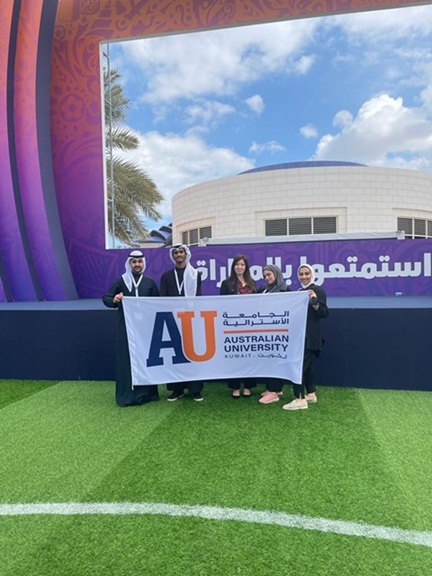
SDG 17 – Partnerships for the Goals
AU Researcher Wins Prestigious LSE Fellowship to Drive Bioenergy Solutions Aligned with the UN Sustainable Development Goals
- The Australian University (AU) proudly announces that Dr. Jean El Achkar, Assistant Professor in the Petroleum Engineering Department, has been awarded the prestigious Kuwait Fellowship by the London School of Economics and Political Science (LSE). LSE, a globally acclaimed institution recently ranked as the top university in the UK and named the ‘University of the Year 2025,’ is renowned for its excellence in social sciences and policy research. This highly competitive fellowship, funded by the Kuwait Foundation for the Advancement of Sciences (KFAS), celebrates Dr. El Achkar’s visionary research proposal: “Unlocking Kuwait’s Bioenergy Potential: Integrating Organic Waste Valorization into Renewable Energy and Environmental Policy.” The distinguished judging panel commended Dr. El Achkar’s innovative methodology and the transformative potential of his research to address Kuwait’s critical challenges in energy sustainability and environmental resilience. Dr. El Achkar will serve as a Visiting Research Scholar at the LSE Middle East Centre from June 1 to September 1, 2025. During this period, his research will focus on utilizing organic waste to produce renewable bioenergy and developing actionable policies to support Kuwait’s energy diversification and environmental sustainability goals. Expressing his pride and gratitude, Dr. El Achkar stated: “I am happy and proud to receive this prestigious fellowship from such a distinguished institution as LSE. This recognition motivates me to continue contributing to Kuwait’s sustainability journey and to translate my research outcomes into impactful policies that benefit Kuwait and the wider Middle East region.” The Kuwait Fellowship underscores the significance of fostering research excellence and advancing innovative solutions for regional sustainability. Dr. El Achkar’s selection highlights the international recognition of AU’s faculty and reinforces the university’s commitment to supporting impactful research that drives positive change.
- Funded by KFAS, Dr. Jean El Achkar has developed a policy blueprint for bioenergy in Kuwait. The study, set to be published by LSE, provides actionable recommendations to advance renewable energy and sustainability in the country, reinforcing AU’s commitment to innovation and national and sustainable development goals.
- Sustainability – AU
AU Faculty Participates in LSE Kuwait Conference 2025 on Sustainability and Circular Economy
Dr. Jean H. El Achkar, representing the Australian University (AU) in Kuwait, participated as a panelist at the LSE Kuwait Conference 2025, hosted by the Kuwait Foundation for the Advancement of Sciences (KFAS) and organized in collaboration with the London School of Economics (LSE) Middle East Centre.
Dr. El Achkar took part in a thought-provoking panel titled “Opportunities and Strategies,” alongside Sharifa Alshalfan, Dalal Al Hashash, and moderator Dr. Sara Mehryar. The panel examined how Kuwait can transform challenges in urban planning, waste management, and community engagement into tangible opportunities for resilience, sustainability, and the circular economy.
The session underscored the critical role of collaboration and interdisciplinary approaches in addressing the environmental and developmental priorities outlined in Kuwait’s Vision 2035.
AU Faculty Contribute to International Dialogue on Sustainability at Qatar University
Dr. Jean H. El Achkar, representing the Australian University (AU) in Kuwait, participated in the International Conference on “Empowering Sustainability: SDGs and Future Horizons in the Arab Region,” hosted by Qatar University.
In collaboration with Dr. Mortadha Alsaba, PhD, MIEAust CPEng, Dr. El Achkar presented a paper titled “Sustainability Initiatives Across Higher Education and Research Institutions Toward Kuwait’s Vision 2035.” The presentation highlighted AU’s efforts to embed sustainability within higher education, research, and community engagement, aligning institutional strategies with both the United Nations Sustainable Development Goals (SDGs) and Kuwait’s Vision 2035.
The conference gathered distinguished academics, policymakers, and sustainability leaders from across the Arab region to share innovative approaches for advancing the SDGs. Dr. El Achkar emphasized the pivotal role that higher education institutions play in shaping sustainable futures through research-driven initiatives and cross-sectoral collaboration.
AU signed MOU with Aalborg University
The Australian University and Aalborg University have entered into a Memorandum of Understanding (MoU) to establish a framework for collaboration in areas of shared interest. This strategic partnership is designed to support the development and advancement of the Project-Based Learning (PBL) Center at AU, enhance initiatives within the Center for Innovation and Entrepreneurship, and promote the joint development of academic programs that serve the mutual interests of both institutions.
MoU with Universiti Teknologi PETRONAS (UTP), Malaysia and the University of Petra and Isra University in Jordan
Australian University Signs International MoUs with Universities in Jordan and Malaysia. As part of its ongoing efforts to improve its offerings and expand its relationships with international education institutions, the Australian University (AU), has signed three Memorandums of Understanding (MoUs) with international renowned universities. The agreements include partnerships with the University of Petra in Jordan, the University Teknologi Petronas (UTP) in Malaysia and Isra University in Jordan.
Aiming to facilitate collaboration between AU and its partner universities, promoting joint scholarly activities related to teaching and learning, research, faculty, and student mobility. The MOUs also seek to establish further cooperation between the parties by facilitating the organization of joint conferences, seminars, and workshops.
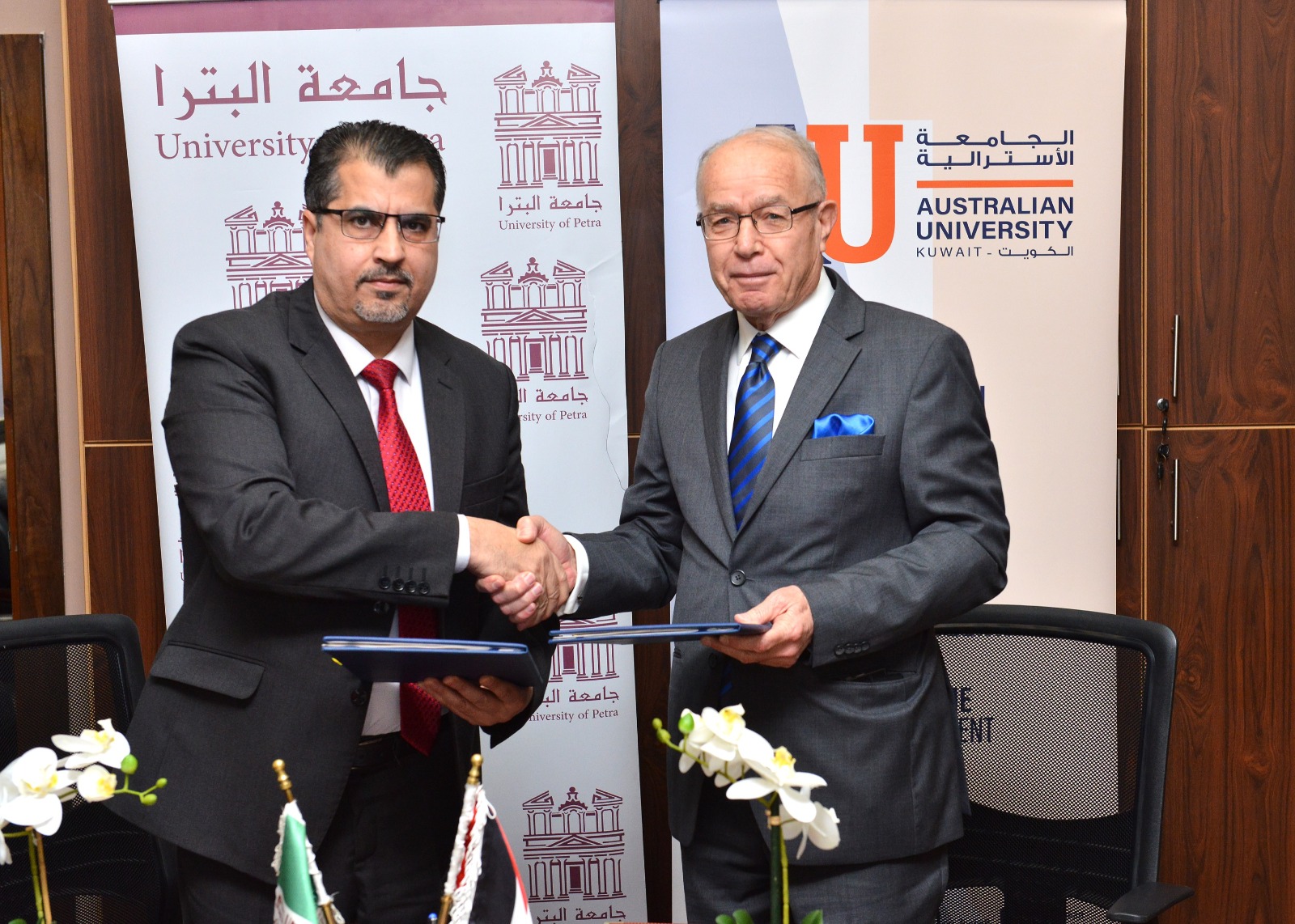
AU signs MoU with DHL to develop Kuwait’s future logistics workforce
The Australian University has signed a Memorandum of Understanding (MoU) with DHL, marking a significant milestone in strengthening Kuwait’s logistics and supply chain sector. The collaboration reinforces AU’s role as a key academic partner in shaping a skilled, industry-ready logistics workforce aligned with Kuwait’s vision 2035.
This partnership aims to bridge the gap between academic learning and industry application, ensuring that AU graduates gain the technical knowledge and hands-on experience needed to thrive in the fast-paced logistics industry. AU’s approach integrates logistics education with other critical disciplines such as engineering, business, and aviation, creating a cohesive, multidisciplinary talent pool essential for national economic progress.
Reflecting the success of this collaboration, AU alumna Kehkashan Faisal Akbar, who graduated with a Diploma in Logistics and Supply Chain Management, completed a two-month internship with DHL’s Air Freight department. During her internship, she managed cargo processing, shipment documentation, customs coordination, and shipment tracking. She noted that the experience deepened her understanding of operational efficiency and teamwork in global logistics. Ms. Kehkashan credited AU’s mentorship, strong industry ties, and practical workshops for helping her apply classroom learning to real-world freight operations, adding that the program prepared her to pursue a dynamic career in logistics and international trade.
Commenting on the partnership and internships, Mr. Mohammed Kriez, HR Business Partner DHL, said: “We are proud to announce that we had a dedicated internship program in collaboration with the Australian University, designed to empower fresh graduates with hands-on experience in the dynamic world of logistics and international trade. This initiative reflects our commitment to nurturing local talent and bridging the gap between academic learning and real-world application.”
For his part, Mr. Bassem Djedi, Deputy Head of Aviation Academic Programs, said: “The successful securing of an MOU with DHL is a landmark achievement that fundamentally reshapes the educational journey for our students. By embedding practical, real-world experience, such as the recent internship completed by our diploma graduate in Air Freight Forwarding, we are ensuring our students receive an education that is immediately relevant. This hands-on experience in a global company like DHL guarantees that our graduates are equipped with in-demand practical skills and professional exposure—not just theory. They gain the competitive edge required to become the specialized human capital needed to drive Kuwait’s future.“
AU and Jazeera Airways Sign MoU to Develop Future Leaders in Aviation
The Australian University (AU) has signed a Memorandum of Understanding (MoU) with Jazeera Airways, marking a significant milestone in advancing academic–industry collaboration and nurturing the next generation of Kuwaiti aviation leaders. The event was graced by the presence of H.E. Melissa Kelly, Australian Ambassador to the State of Kuwait.
The partnership sets the foundation for joint initiatives in education, research, training, and student development, aligned with Kuwait Vision 2035’s focus on empowering national talent and fostering innovation.
Barathan Pasupathi, Chief Executive Officer, Jazeera Airways, highlighted: “Jazeera Airways is currently driving efforts to fill 700 positions across different operational department. Kuwait is home to exceptional young talent poised to make their mark in aviation. By nurturing their skills and opening pathways to global careers, we are investing in the future leaders who will shape the industry. Developing local talent today lays the foundation for a stronger, more innovative aviation sector tomorrow.”
This collaboration marks a first for Jazeera Airways’ upcoming Management Trainee Program to be launched shortly. The program, specifically designed for high-potential fresh Kuwaiti graduates will offer participants structured exposure across key business functions, hands-on project experience, mentorship from senior leaders, and a pathway to develop strong leadership and industry expertise within one of Kuwait’s leading aviation companies.
Ginny Sethi, Chief People Officer, Jazeera Airways, added: “Our upcoming Management Trainee Program is a strategic investment in Kuwaiti national talent. Through structured rotations, mentorship and real-world projects during an 18-month program, we aim to shape the next generation of leaders who will drive innovation and excellence at Jazeera Airways and across the aviation sector.”
Speaking at the signing ceremony, Fadhel Aldosari, Manager, Alumni & Career Placement Center said:
“We are proud to partner with Jazeera Airways in empowering our graduates with industry-driven pathways. This collaboration strengthens our mission to provide students with practical experience and career readiness, ensuring they contribute meaningfully to Kuwait’s growth and future economy.”
AU signs MoU with KFH
AU has signed a Memorandum of Understanding (MoU) with the Kuwait Finance House (KFH) for strengthening cooperation between the two sides in terms of training, teaching, and attracting talents, in addition to organizing workshops and educational and social programs.
The MOU signing ceremony was attended by Eng. Sager Al-Sharhan, AU Assistant to the President for Support Services, representing AU, and Mr. Zeyad Abdullah Al Omar, KFH Group Chief Human Resources and Transformation Officer, representing KFH, along with several officials from both sides.
Mr. Al Omar stated that the MoU will establish new academic and professional opportunities between KFH and AU, which represent an added value to both sides.
Al Omar added that, as part of the MoU, KFH will attract exceptional students to its summer programs in order to improve their competencies and prepare them professionally for their future careers, which is in line with KFH’s keenness to enhance its position at the private sector level in training and recruiting Kuwaiti talents, as well as providing them with the opportunity to build a successful career path as they are the most significant elements for achieving a sustainable development.
From his part, Eng. Al-Sharhan said: “I congratulate both sides on taking this momentous step. The MoU between AU and KFH will promote progress and the exchange of expertise by offering students the opportunity to engage in the bank’s environment and encourage them to participate in its summer training programs.”
“AU will provide the venue and facilities for KFH to utilize for the training of its employees by the respective AU department, in addition to co-organizing awareness campaigns for the younger generations,” Eng. Al-Sharhan added.
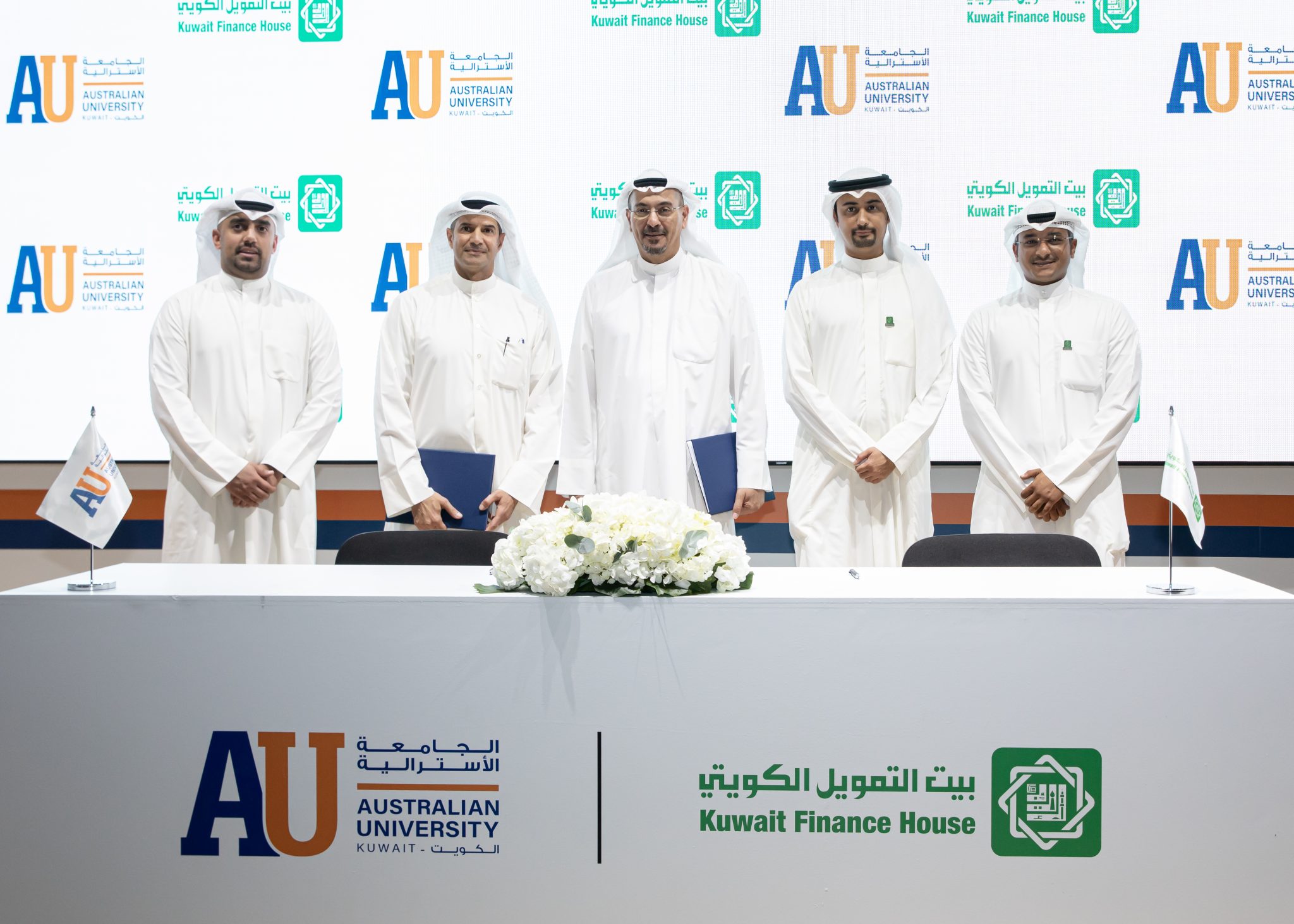
- “A Bioenergy Blueprint for Kuwait: Regional Research Insights, Waste Valorization, Feasibility, and Policy Pathways”, addressing SDG 7, SDG 12, SDG 13, and SDG 17 (Partnerships for the Goals). Published last week by the London School of Economics and Political Science (LSE);
- “Optimizing Food Waste Anaerobic Digestion in Kuwait: Experimental Insights and Empirical Modelling Using Artificial Neural Networks” (KFAS-funded project), aligning with SDG 2, SDG 7, and SDG 9 (Q1 Journal).
- “Sustainable Conversion of Petroleum Sludge to Methane: A Study on Anaerobic Biodegradability in Batch and Continuous Systems”, contributing to SDG 7, SDG 12, and SDG 13 (Q1 Journal).
- English Language Program faculty member invited to participate in London International Conference on Inclusive Education (LICIE) 2025, as organized by Center for Inclusive Education (UCL). Representing AU, Dr. Fajer Bin Rashed’s talk is about Exploring Male University Students’ Insights about the Value of Utilizing Picturebooks for Maintaining Inclusive Education, which is closely aligned to SDG4. This goal will be made possible by SDG 17 through providing research collaboration opportunities between the two institutes.
- AU’s 6th Annual Forum focused on the future of higher education in the AI age, addressing accessibility, personalization, and equitable access aligned with SDGs 4, 5, and 9, with active ELP faculty participation (in moderating the sessions and in facilitating a workshop). These goals were facilitated and strengthened by SDG 17: Partnerships for the Goals, as the forum brought together academics, policymakers, and industry experts, including ELP faculty, in a collaborative effort to shape a sustainable and ethical future for higher education.
- English Language Program (ELP) led a visit to NBK Hospital involved reading to children, promoting mental health, literacy, and inclusivity, supporting SDGs 3, 4, 5, and 10. These goals were made possible and amplified by SDG 17: Partnerships for the Goals, through the collaboration between the ELP/AU and Kuwait Association for the Care of Children in Hospital (KACCH). By extending learning beyond the classroom and into healthcare settings, the ELP demonstrates its commitment to community engagement and the values of sustainable development.
- SDG17 is further highlighted in a local partnership between the AU Health, Safety & Security Department and the English Language Program for organizing the “Ripple Effect Initiative.” The initiative incorporated a “Stress Less Fest” to support the students’ mental and emotional well-being during this high-pressure time (aligned to SDG4
- ELP organized a visit to an elderly home, with the aim of offering support and fostering meaningful connections with senior community members. supporting SDG 4. This goal was amplified by SDG 17: Partnerships for the Goals, through the collaboration between the ELP and the elderly home. By fostering meaningful connections with senior community members, the ELP demonstrates its commitment to community engagement and the values of sustainable development.