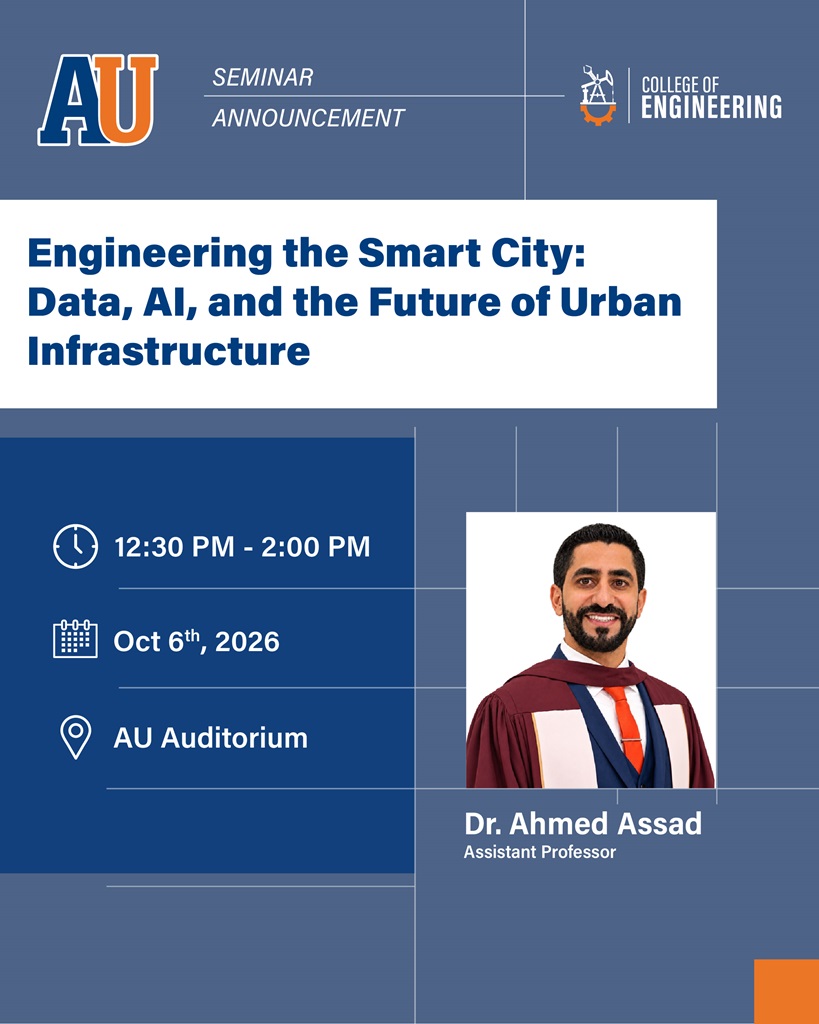
Engineering the Smart City: Data, AI, and the Future of Urban Infrastructure
About this Topic
The discussion will conclude with a look at the future role of engineers in increasingly data-driven cities, including the opportunities and challenges associated with integrating AI into engineering practice.
Speaker
Dr. Ahmed Assad
Dr. Ahmed Assad is an assistant professor in construction engineering and management. He has more than 10 years of academic, research, and professional experience in civil engineering, construction, and infrastructure. Dr. Assad’s research lies at the intersection of sustainable infrastructure and digital transformation, with particular emphasis on artificial intelligence, machine learning, computer vision, digital twins, structural health monitoring, infrastructure resilience, and smart construction. His current work explores AI-enabled construction safety, automated infrastructure condition assessment, bridge monitoring and deterioration modeling, and data-driven decision-making for resilient infrastructure systems. He is also actively engaged in interdisciplinary and industry-academia collaborations, with his research contributions reflected in more than 30 publications in peer-reviewed journals and leading international conferences.