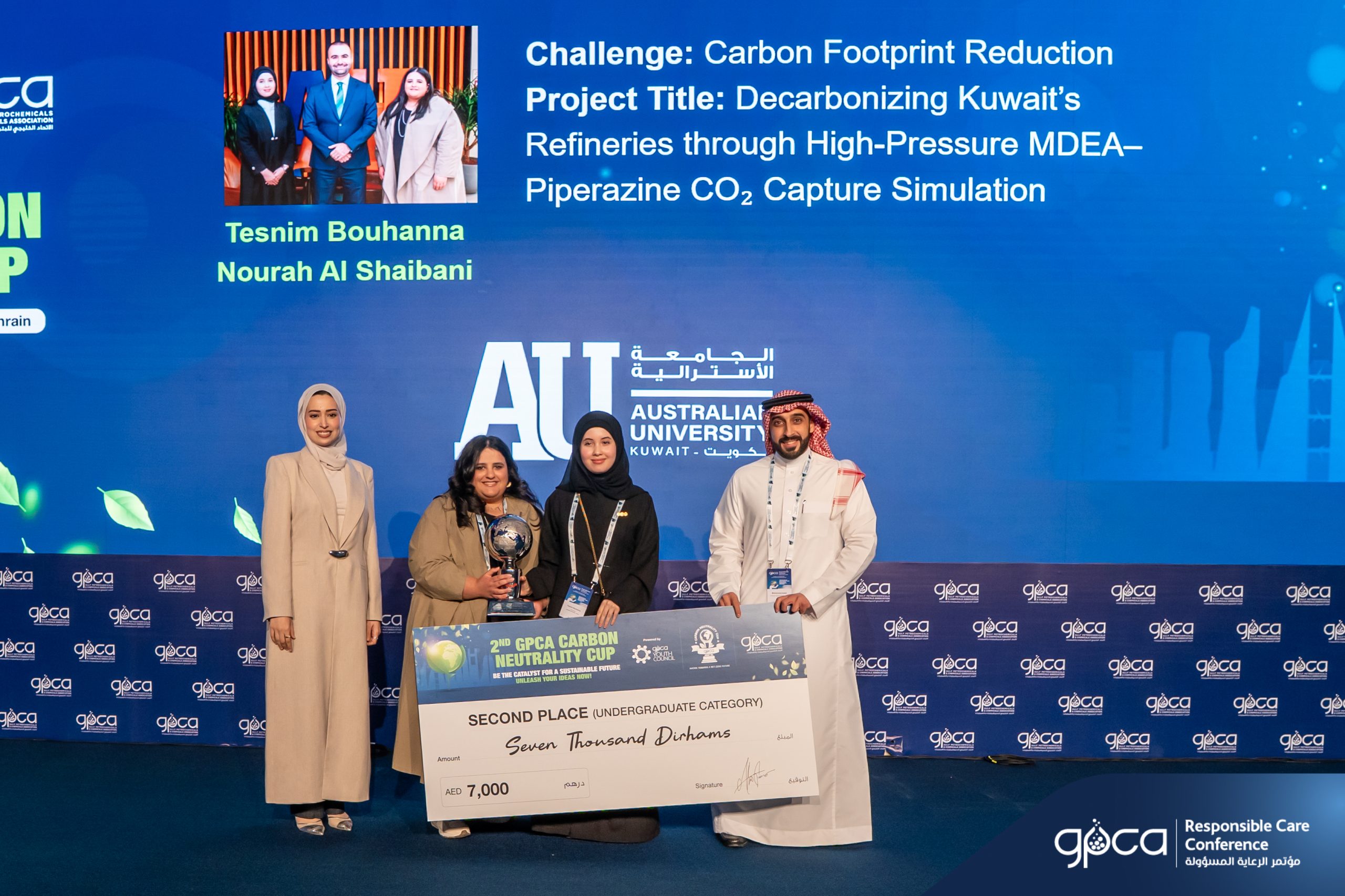
Engineering students from the Australian University (AU) secured second place at the 2025 Gulf Petrochemicals and Chemicals Association (GPCA) Carbon Neutrality Cup, a regional competition that brings together top university innovators from across the GCC to develop practical solutions supporting the region’s transition toward net-zero emissions.
Held in Bahrain during the Responsible Care Conference, this year’s edition drew more than 70 project entries from over 20 universities. Following the preliminary evaluation, five teams from the undergraduate category, including two teams representing AU, were shortlisted as finalists, and invited to present their work through poster exhibitions and oral pitches before judges composed of leading GCC industrial experts.
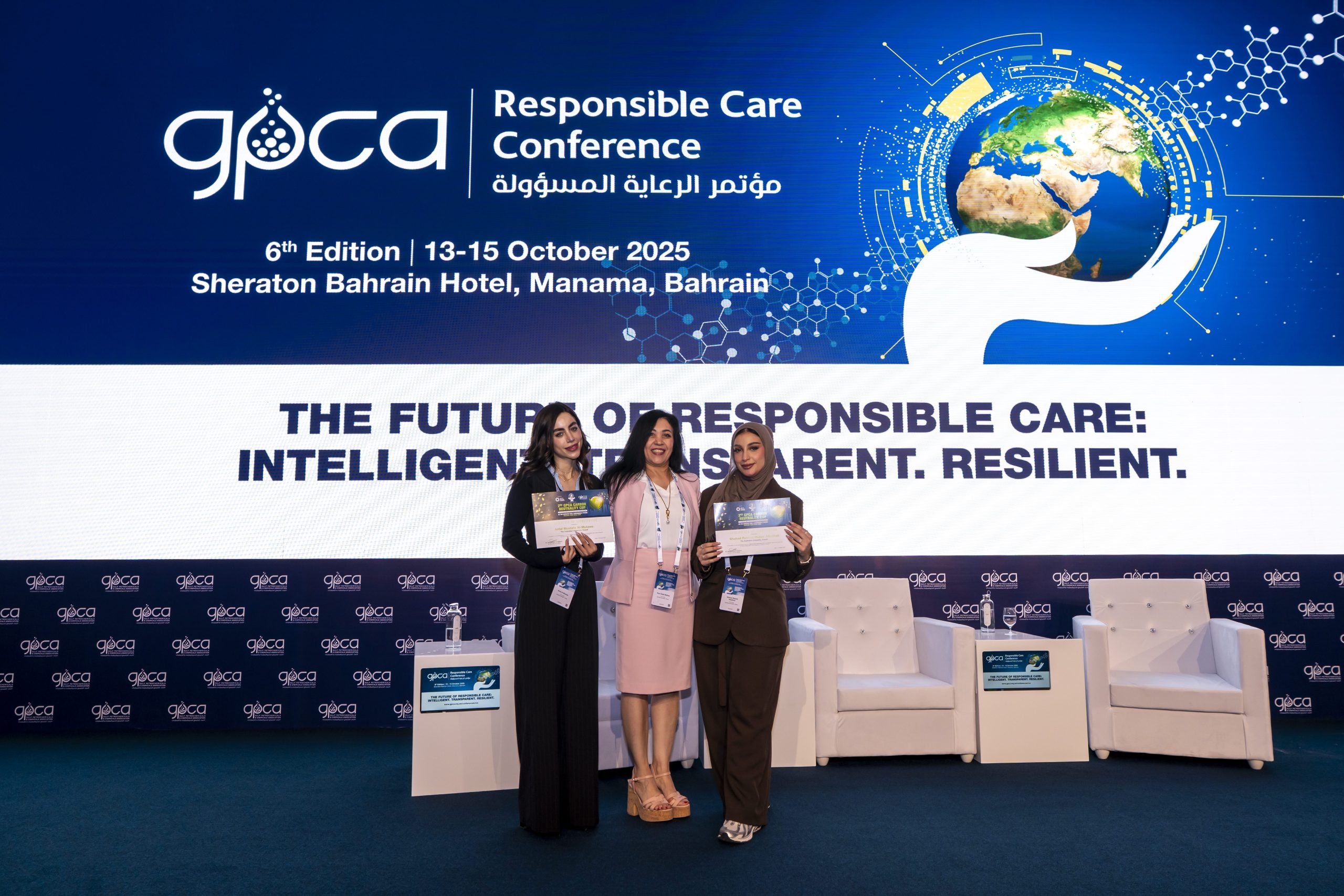
Following the judges’ deliberation, the second-place award was granted to AU students Tesnim Bouhanna and Nourah Al Shaibani, under the supervision of Dr. Jean El Achkar, Assistant Professor of Petroleum Engineering at AU’s College of Engineering. AU’s other participating team, composed of students Shahad Albathali and Anfal Al-Mutawa, and supervised by Dr. Rana Malhas, Assistant Professor of Petroleum Engineering, was also selected among the Top 5 finalists, marking a strong representation for the university at the regional level.
The students’ outstanding achievement reflects AU’s commitment to nurturing innovation, hands-on learning, and environmental responsibility. Their projects offered creative and practical approaches to reducing emissions and promoting sustainable practices—ideas that align closely with Kuwait’s long-term sustainability goals and the broader GCC vision for a cleaner, greener future.
Commenting on this achievement, Dr. Mortadha Al Saba, Head of the Petroleum Engineering Department at AU, commented: “We are proud of our students’ success, especially given that AU does not offer a Chemical Engineering program. Their achievement highlights the adaptability and excellence of our Petroleum Engineering students and reflects the strong interdisciplinary foundation provided by AU’s engineering education.”
Earning recognition at such a high-level regional platform reinforces the strength of AU’s academic programs and the dedication of its faculty to mentoring students beyond the classroom. The accomplishment adds to AU’s expanding record of regional and international achievements, highlighting the university’s role as a leading contributor to research and innovation in engineering education.