
Project Based Learning (PBL) Center
Introduction:
Project Based Learning (PBL) is an integral part of the curriculum in the Australian University. This model organizes learning around projects or complex tasks associated with in-depth questions or problems. Students are offered an enhanced form of learning through the adoption of a student-centered and active classroom pedagogy, where they engage collaboratively in complex and challenging projects that emphasize real world situations. The Australian University has established a designated center to manage its PBL model and to create an environment conducive for students and faculty to apply this approach. The University also signed a collaboration agreement with Aalborg University in Denmark to receive ongoing support from their experts in the field toward the development and delivery of PBL courses in AU.
Mission:
- Foster a PBL model for the socio-cultural context of the Middle East region.
- Develop and implement an effective PBL environment for Australian University – Kuwait (AU-Kuwait) students.
- Train, coach, and advise PBL facilitators.
-
Provide an internal and external representation of the PBL approach at AU-Kuwait.
Objectives:
The PBL Center is an integral part of the College of Engineering and aims to:
- Develop a region-specific PBL model tailored to the socio-cultural context of the Middle East.
- Create and implement an effective PBL environment that enriches the academic experience of AU-Kuwait students.
- Train and mentor PBL facilitators to effectively support students and guide them through project-based learning.
- Represent PBL within AU-Kuwait, both internally and externally, showcasing its benefits and applications.
PBL Principles
The PBL model adopted at the College of Engineering is grounded in six key principles that ensure a high-quality learning experience:
-
- Project-Oriented: Learning is centered around real-world project scenarios that guide students throughout their educational journey.
- Student Self-Directed, Facilitator-Guided: Students take responsibility for their learning while being guided by facilitators, ensuring autonomy in their educational path.
- Activity-Based: Students engage in practical activities, such as research, design, and iteration, which deepen their understanding and foster reflection.
- Real-Life Context: Projects reflect real industry challenges, ensuring relevance and practical application of knowledge.
- Analytical Thinking: Students are encouraged to tackle complex problems, requiring critical thinking and problem-solving skills.
- Team-Based: Collaboration is essential, with students working in teams while facilitators act as “clients” or “line managers,” replicating real-world project environments.
These principles work together to create a robust and effective PBL model that prepares students for success in their academic and professional careers.

The PBL Center serves as a hub for innovation, fostering creativity and pushing the boundaries of engineering knowledge. Under the guidance of experienced PBL facilitators, students work on a variety of projects designed to meet course learning outcomes.
Currently, 24 courses across multiple engineering disciplines incorporate PBL, including:
- Mechanical Engineering
- Civil Engineering
- Electrical & Electronics Engineering
- Petroleum Engineering
Projects grow in complexity each semester, effectively preparing students for future workplace challenges. Complementing the PBL approach is the CDIO framework (Conceive, Design, Implement, Operate), ensuring that students experience the full cycle of engineering design through various hands-on projects. The integration of simulation tools allows students to test and refine their designs in a virtual environment, enhancing their learning experience.

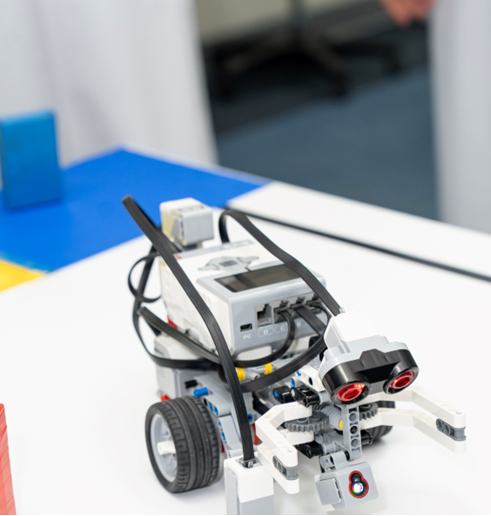
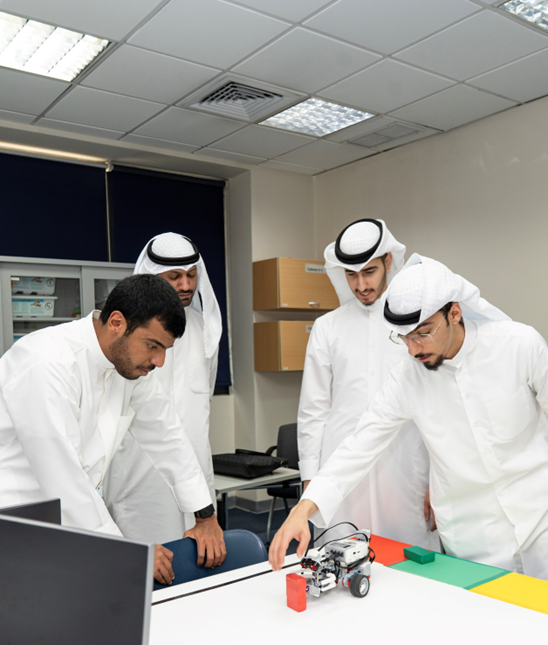
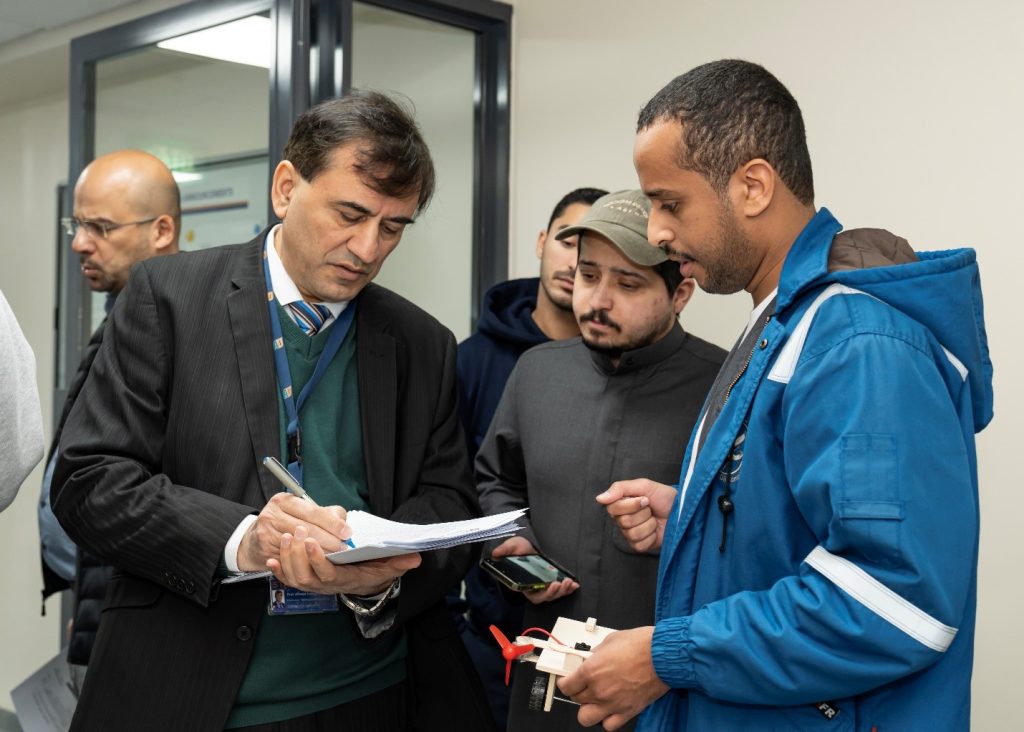
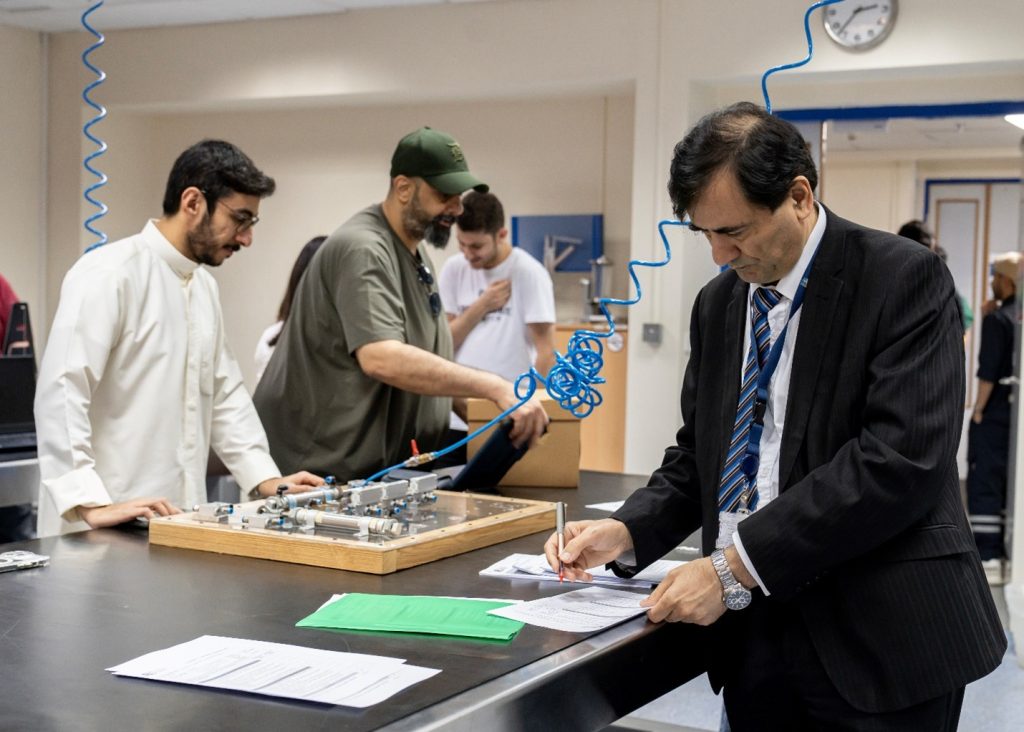
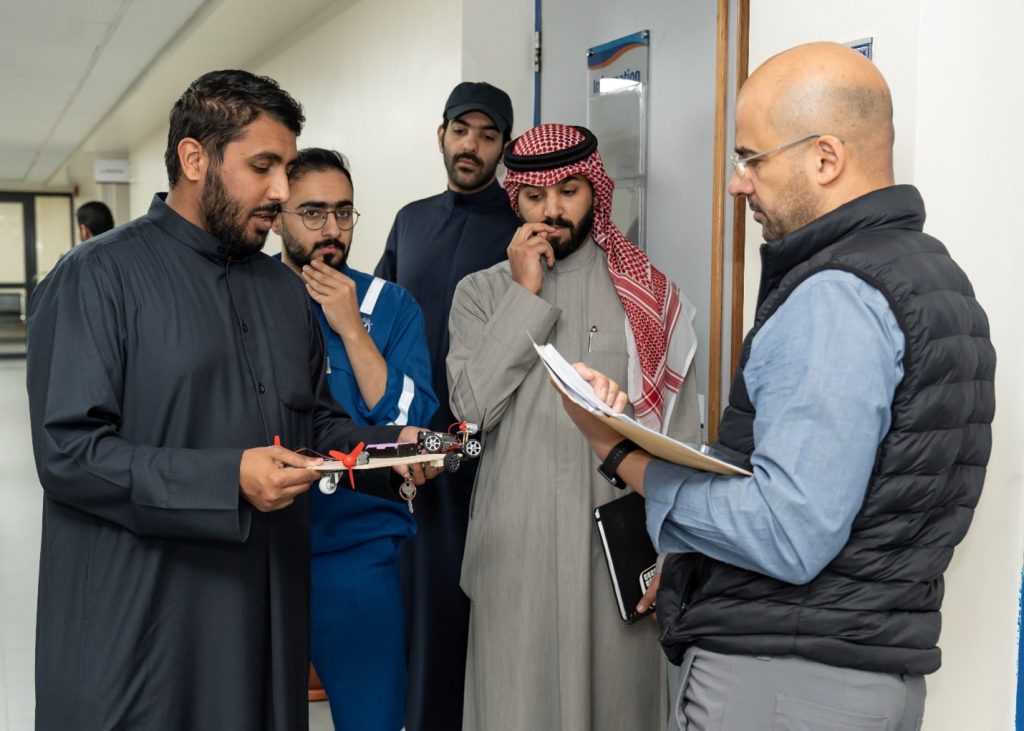
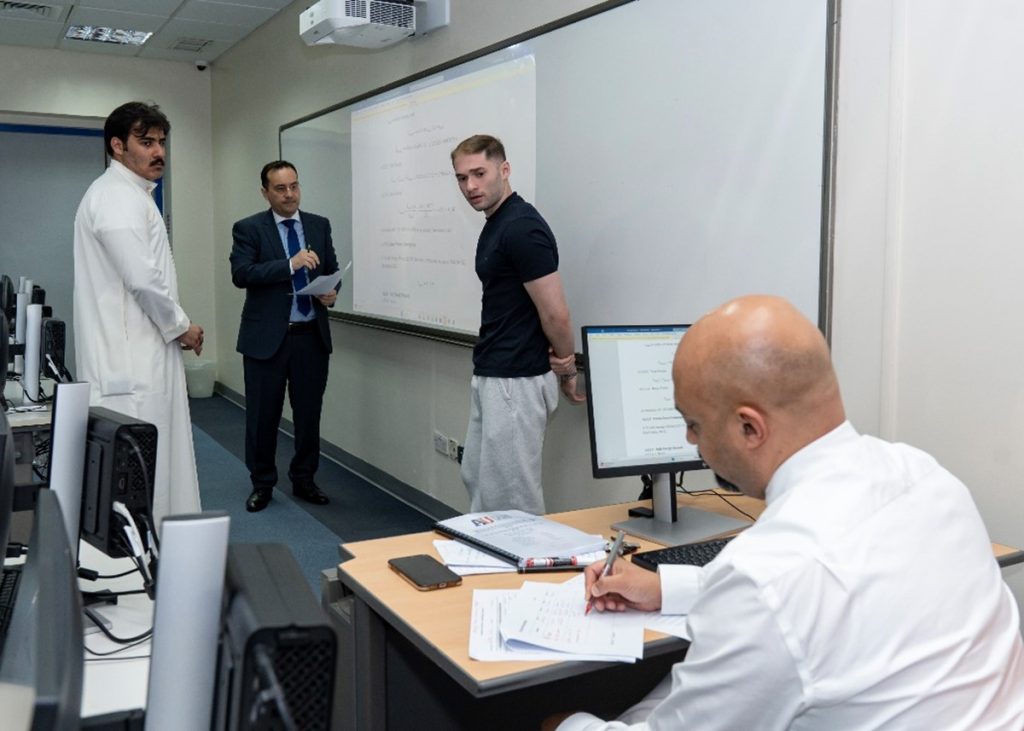
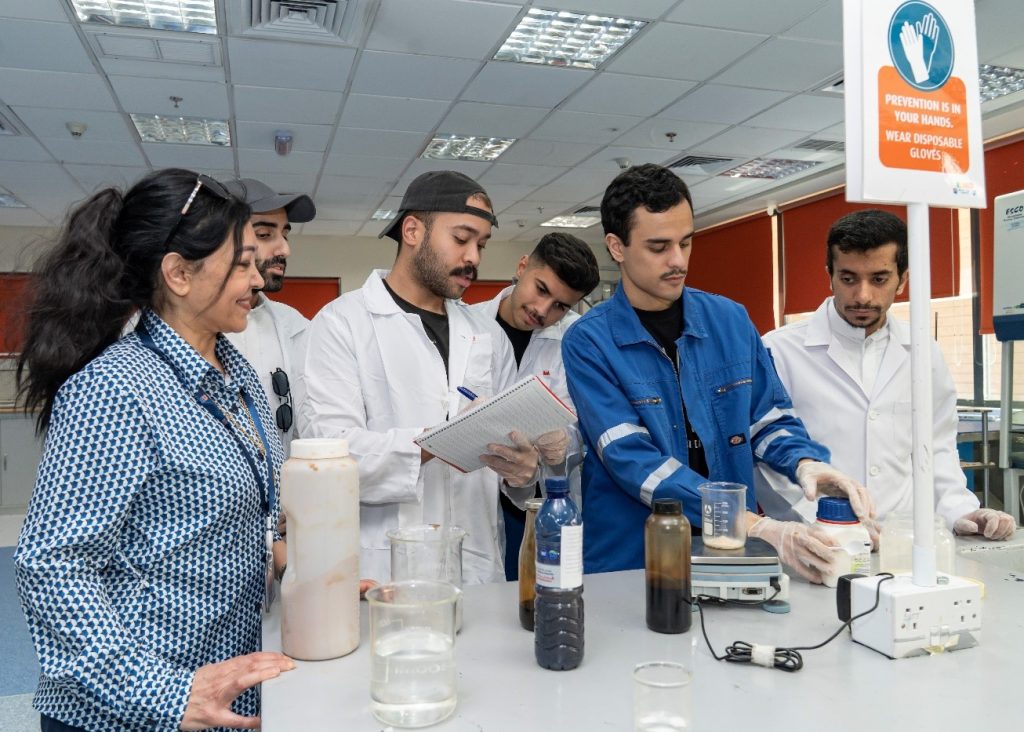
Fig. 1: College of Engineering students from various majors are collaborating on projects from different PBL courses, Fall 2024.
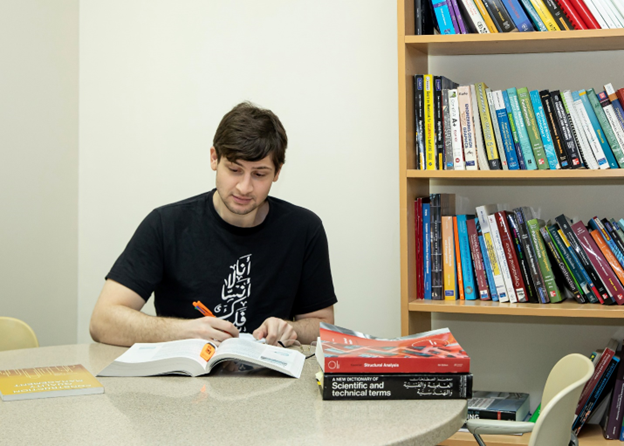
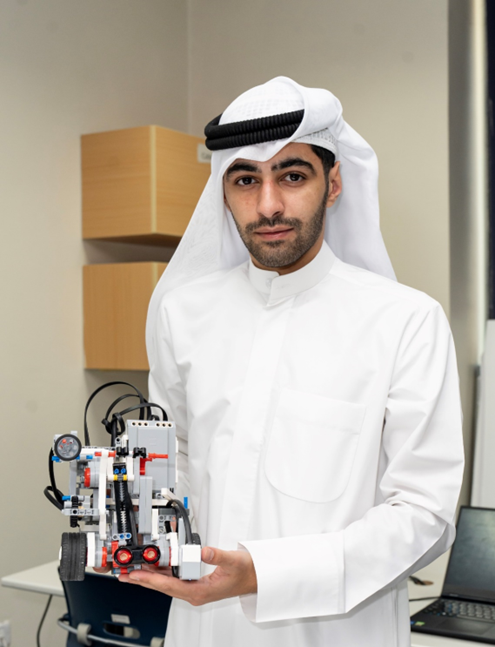
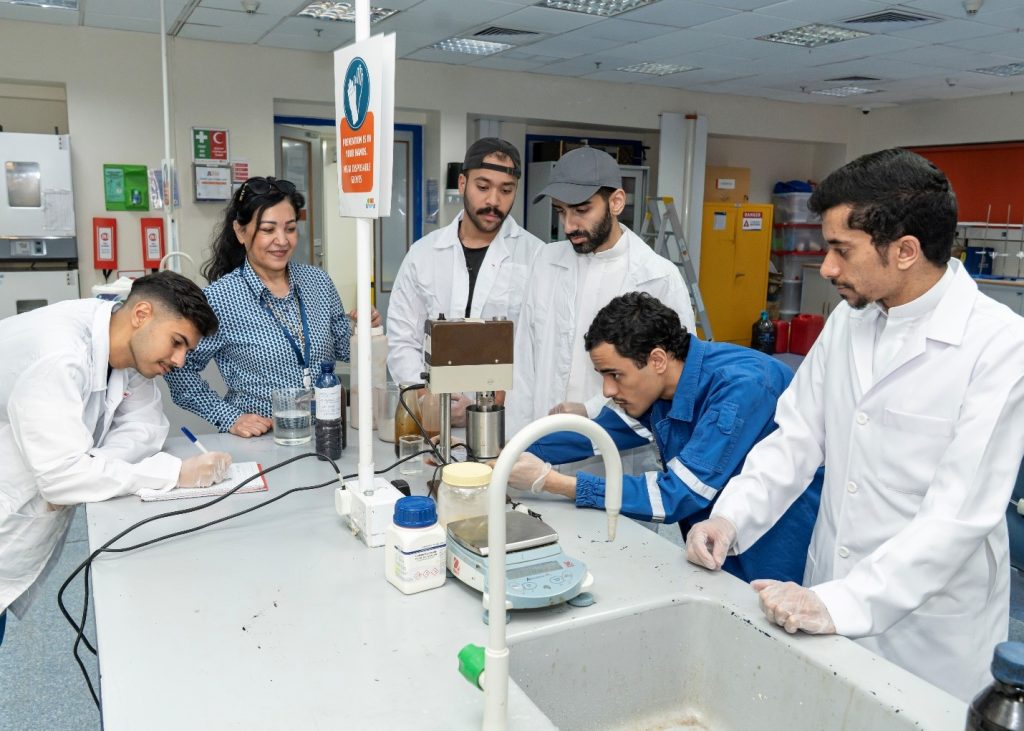
Fig. 2: College of Engineering student conducting research for a project in various PBL courses, Fall 2024.
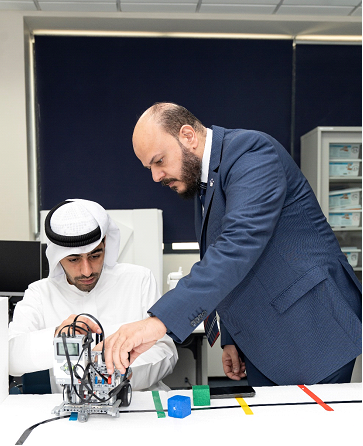
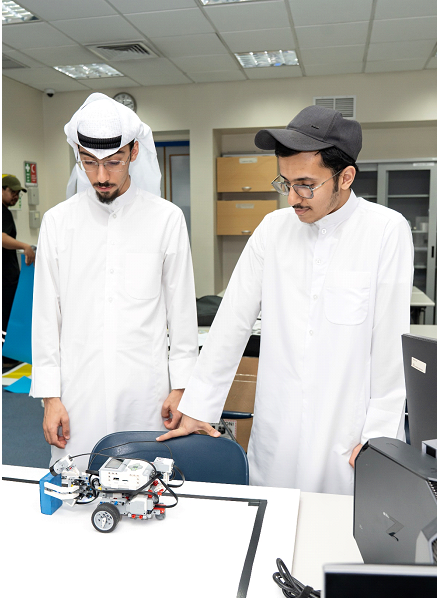
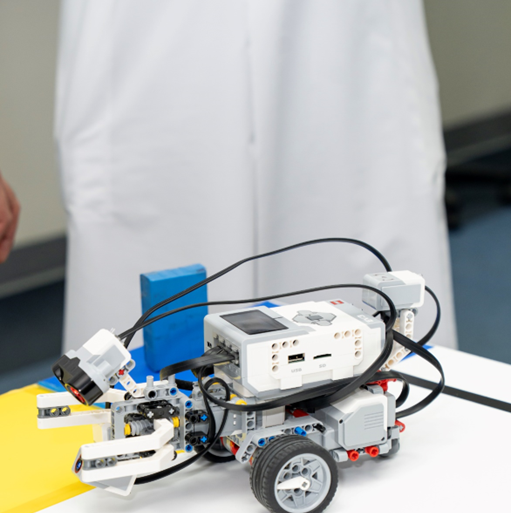
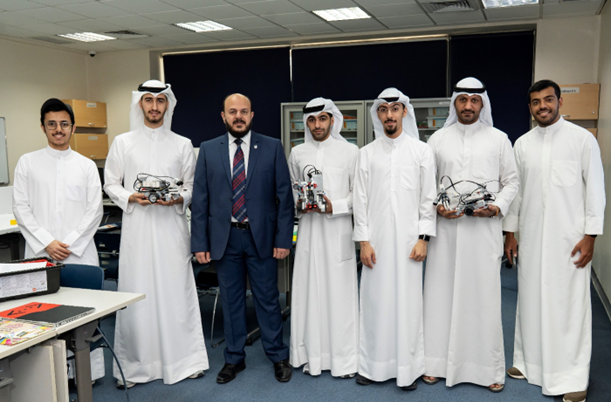
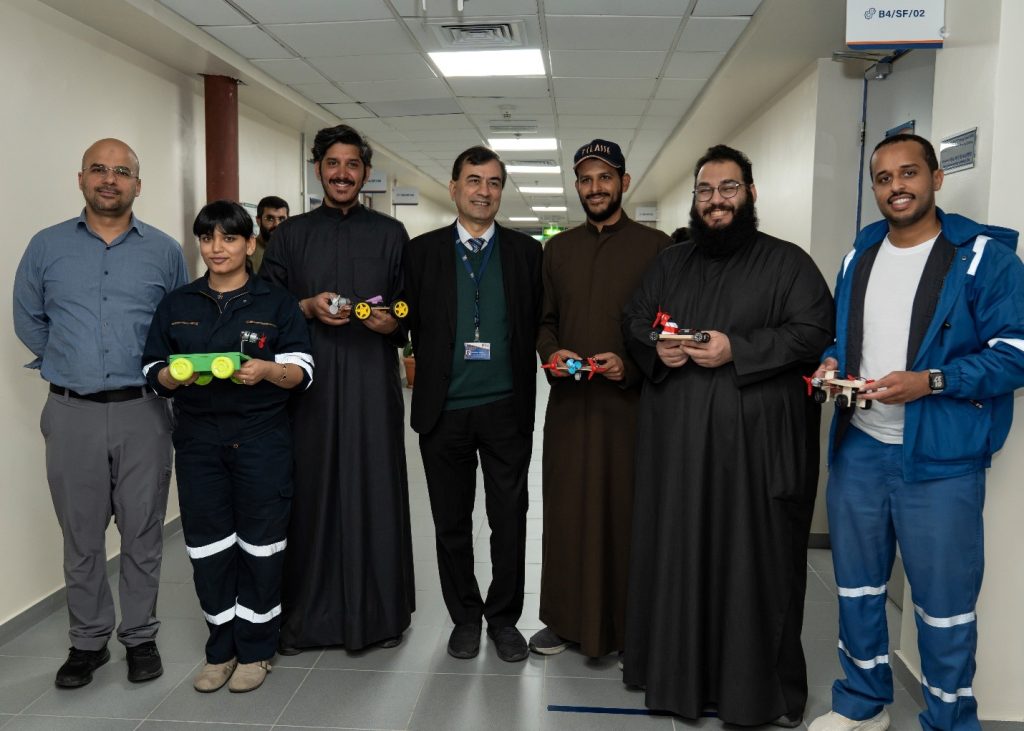
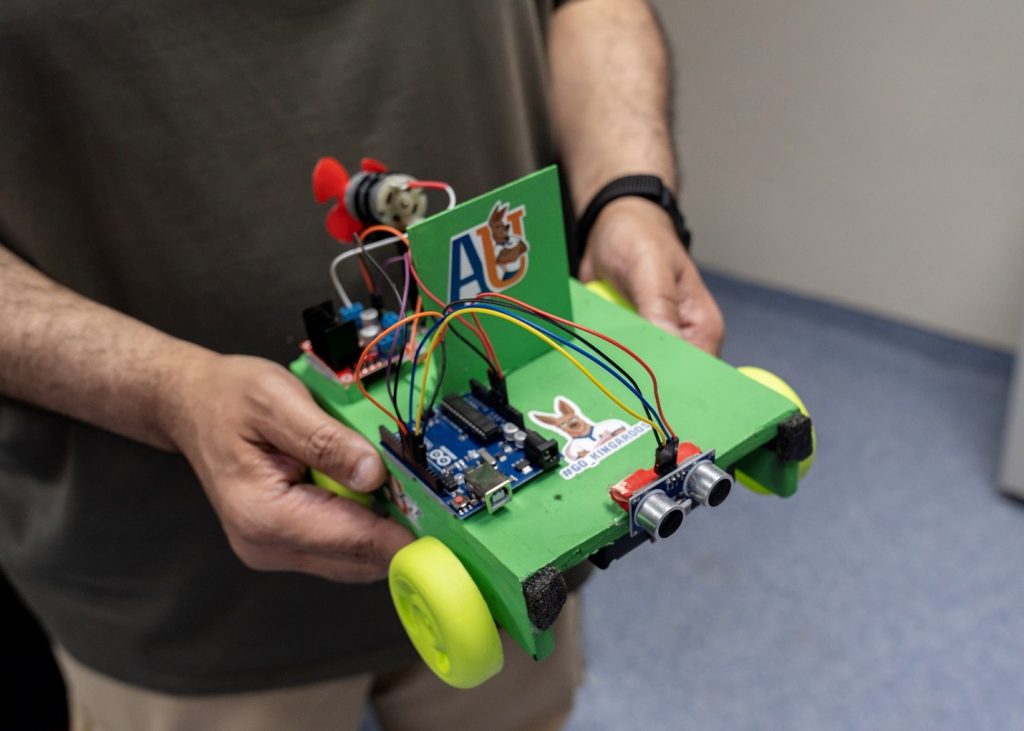
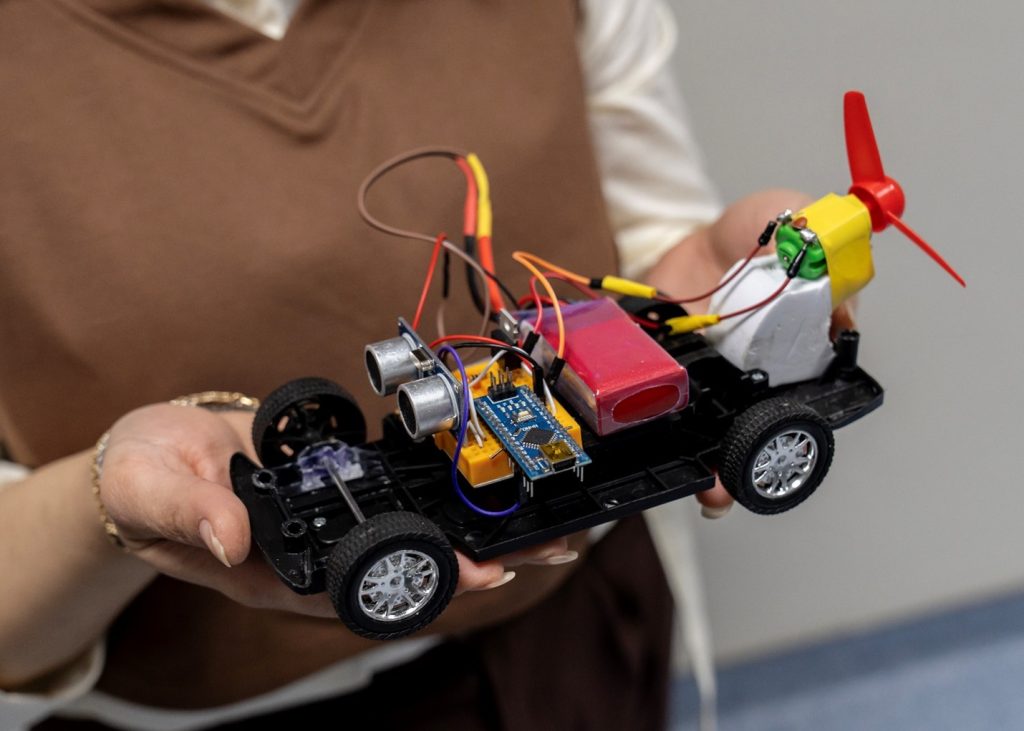
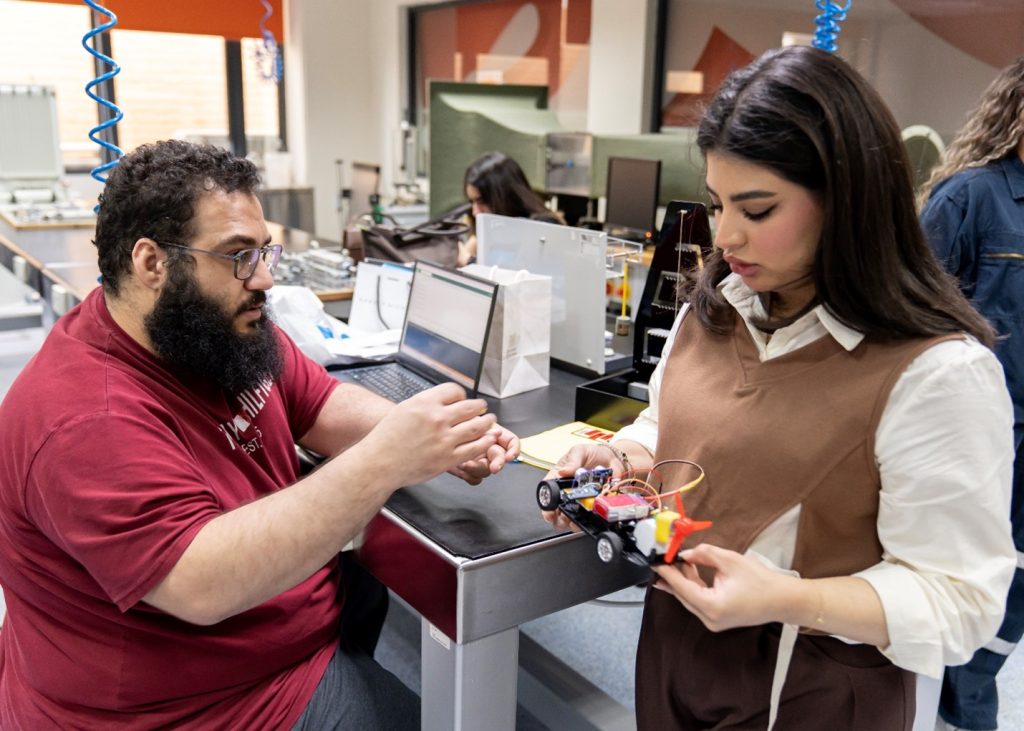
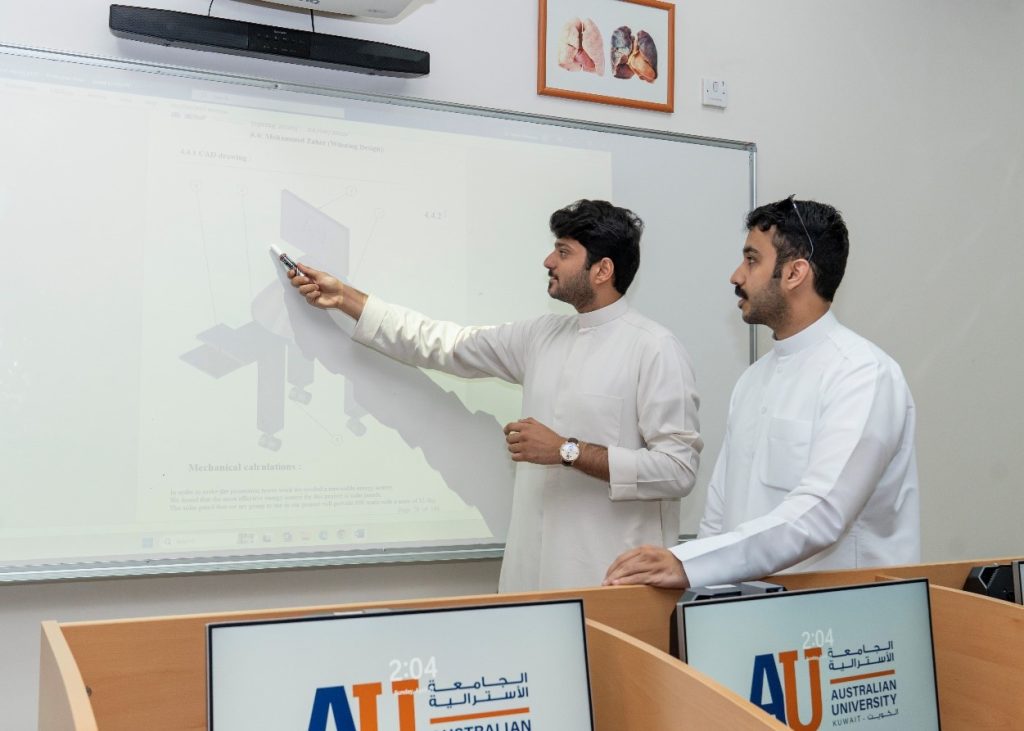
Electrical & Electronics Engineering students from the College of Engineering presenting their PBL project in the ELEC290 / Project 1 course at AU, Summer 2024–2025.
The PBL Center is at the forefront of integrating Artificial Intelligence (AI) into student projects. By embracing AI technologies, we empower students to explore innovative solutions in their coursework. As AI continues to revolutionize industries, the PBL Center ensures that AU-Kuwait students are well-prepared to harness these advancements. Our ongoing exploration of AI initiatives ensures that students receive a forward-thinking, cutting-edge education that prepares them for success in an AI-driven world.

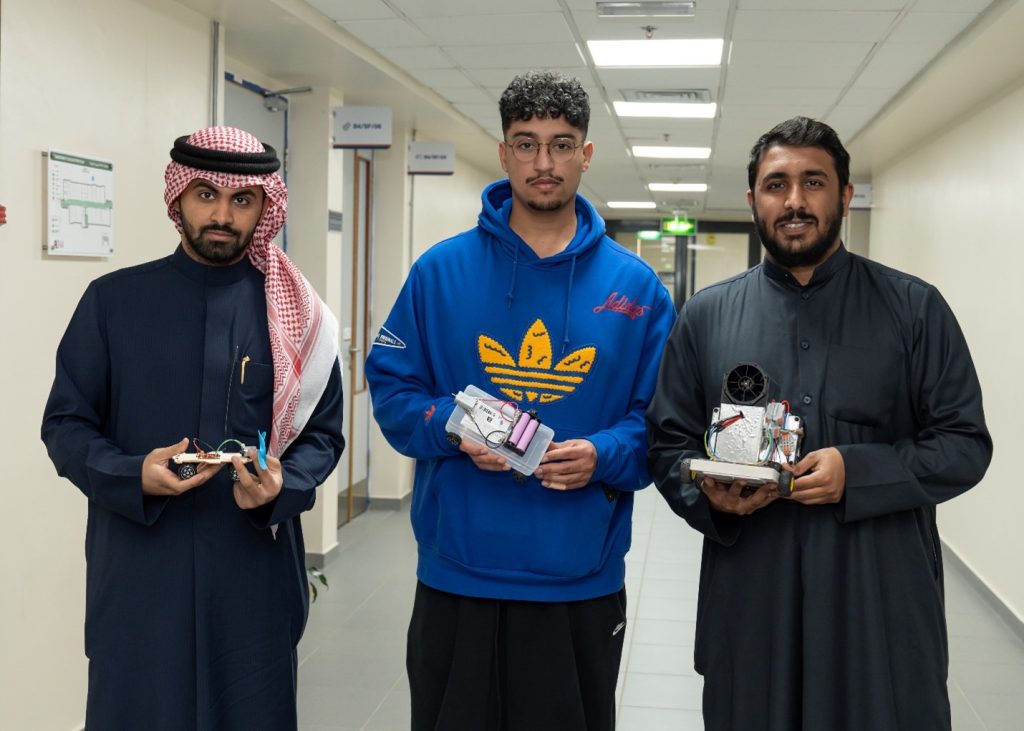
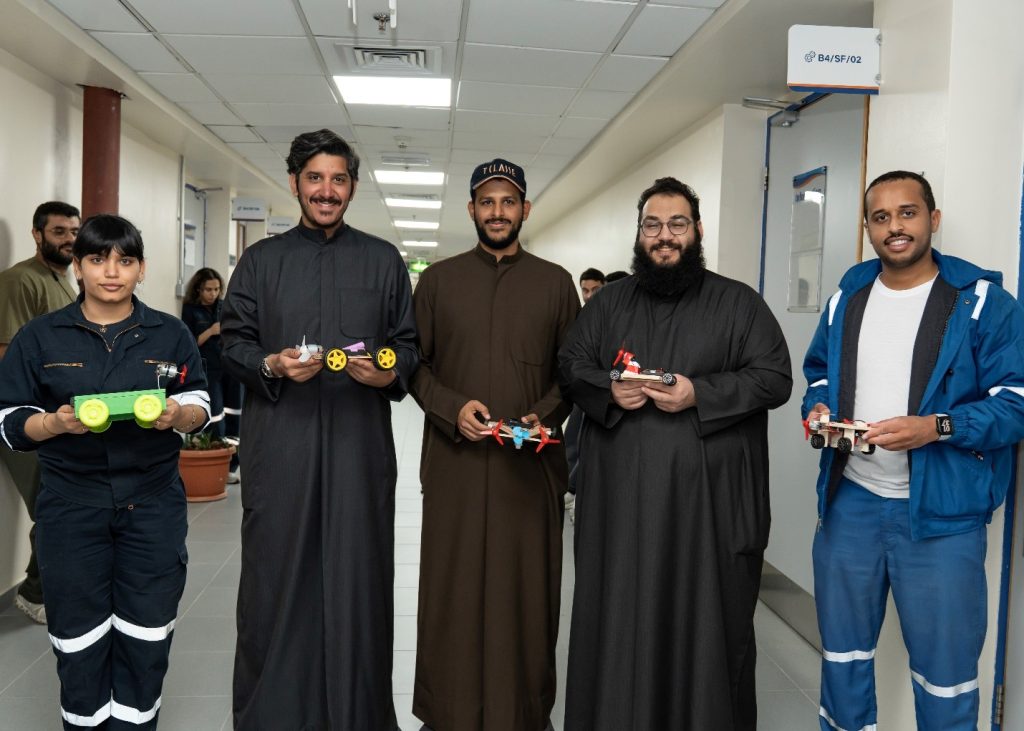
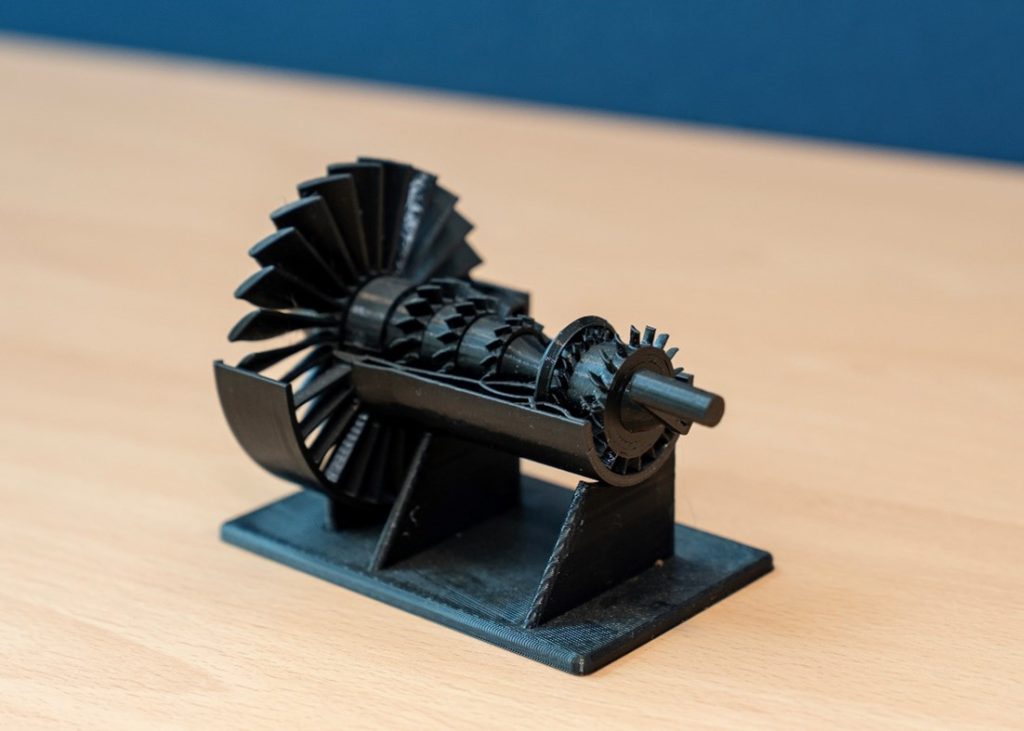
To support creativity and innovation, the PBL Center offers state-of-the-art 3D printing services. This technology allows students and faculty to transform ideas into tangible prototypes, supporting both academic projects and research activities. With access to advanced 3D printers and expert guidance, our community can turn conceptual designs into functional models, fostering hands-on learning and discovery.
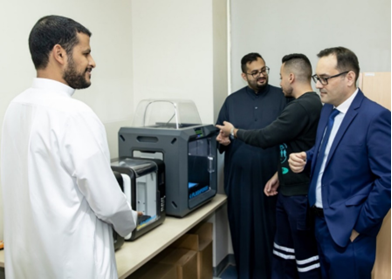
Fig. 4: Students in the College of Engineering (CoE) printing 3D models at the PBL Center, Fall 2024
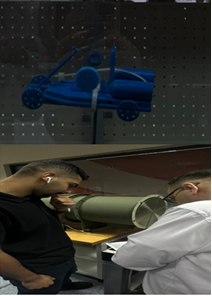
Fig. 5: Students in College of Engineering (CoE) utilizing 3D printing for PBL projects, Spring 2024.

Fig. 6: Student in College of Engineering (CoE) utilizing 3D printing for PBL project, Fall 2024.
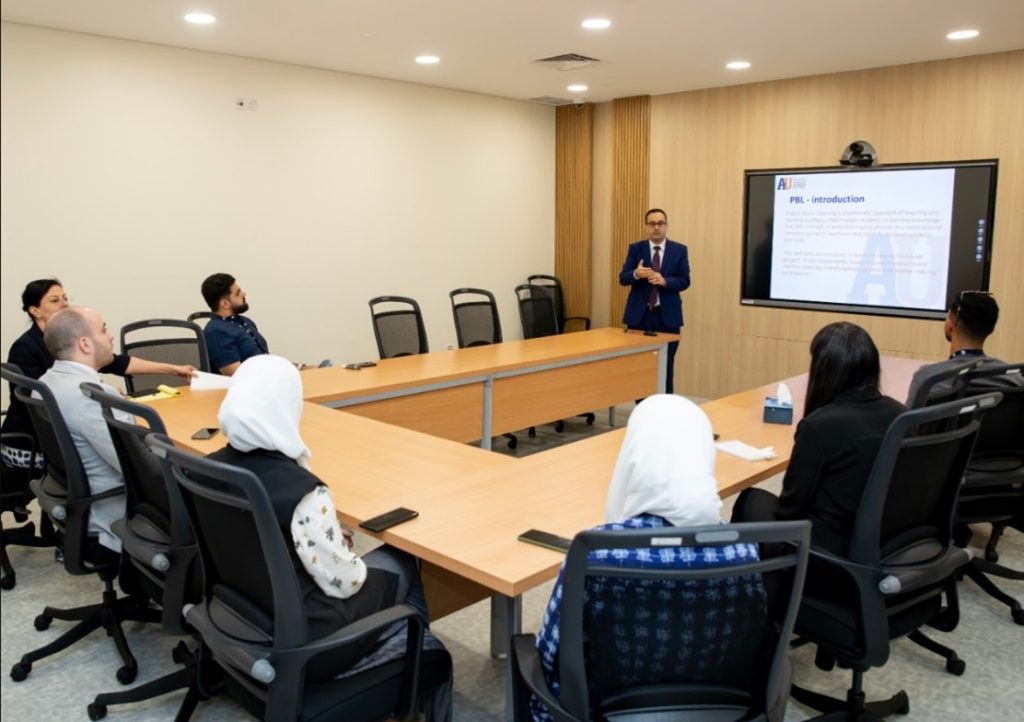
At the heart of any successful PBL model are well-trained facilitators. The PBL Center prioritizes professional development (PD) for our educators. Faculty members new to PBL are provided with training at the start of each semester, and continuous support is offered through coaching and advising throughout the academic year. This commitment ensures that both students and facilitators have the resources needed for success.
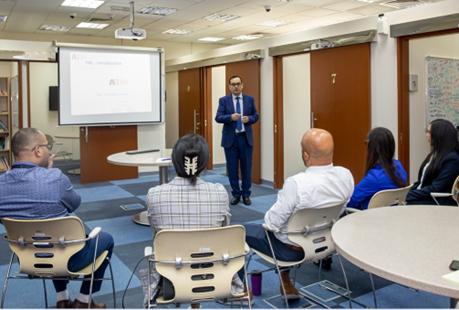
Fig. 3: Staff orientation in College of Engineering (CoE), Fall 2024.
The PBL Center is committed to fostering a culture of innovation and exploration within the College of Engineering. As part of this mission, we continually seek out new research ideas across a spectrum of engineering majors. Our dedicated team is passionate about staying at the forefront of emerging trends and technologies, ensuring that our research initiatives remain relevant, impactful, and forward-thinking. Through collaboration with faculty members, industry partners, and students, we aim to address pressing challenges, push the boundaries of knowledge, and contribute to the advancement of engineering disciplines. Whether it’s pioneering breakthroughs in sustainable energy, advancing materials science, or revolutionizing transportation systems, the PBL Center is dedicated to transformative research that makes a difference.
The PBL Center started several industrial collaborations and organized enriching field trips, providing students with real-world exposure and invaluable hands-on experiences. As part of a global initiative, the PBL Center initiated new partnerships with esteemed institutions such as Aalborg University in Denmark and UNESCO, broadening horizons and facilitating cross-cultural exchange. Furthermore, to support the creative endeavors of both students and faculty members, the PBL Center extended its services by offering 3D printing facilities for project prototypes and research purposes, reinforcing its commitment to nurturing innovation and excellence. As we look back on a year marked by progress and collaboration, we celebrate the PBL Center’s unwavering dedication to enriching the educational landscape and empowering future engineers.
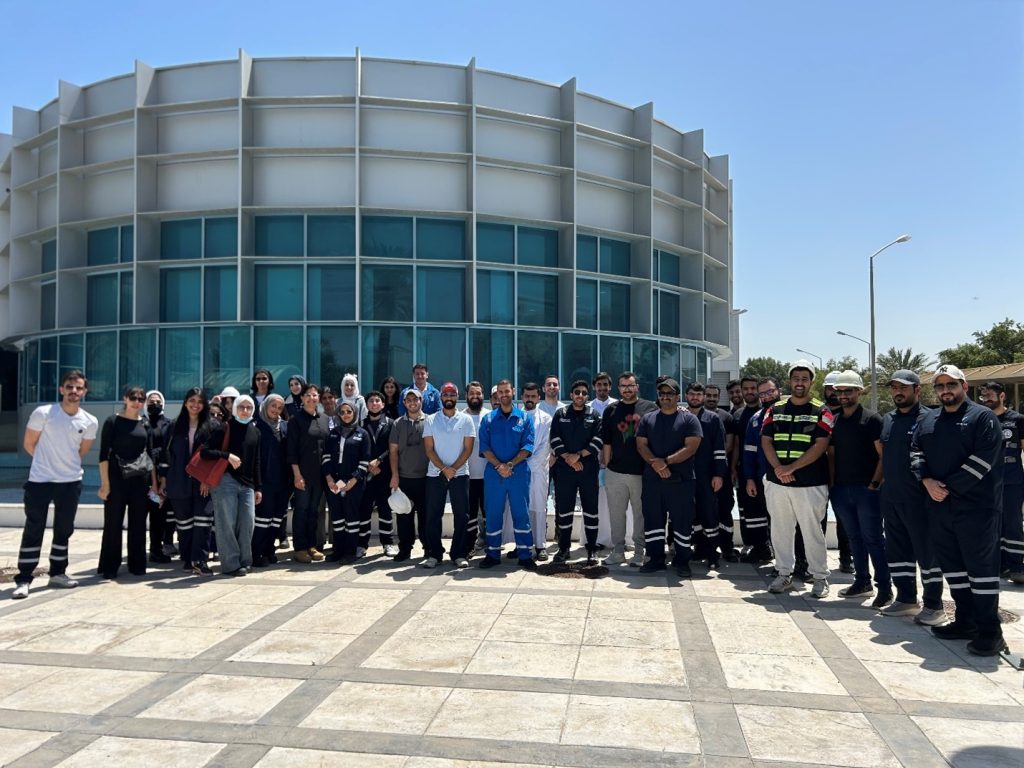
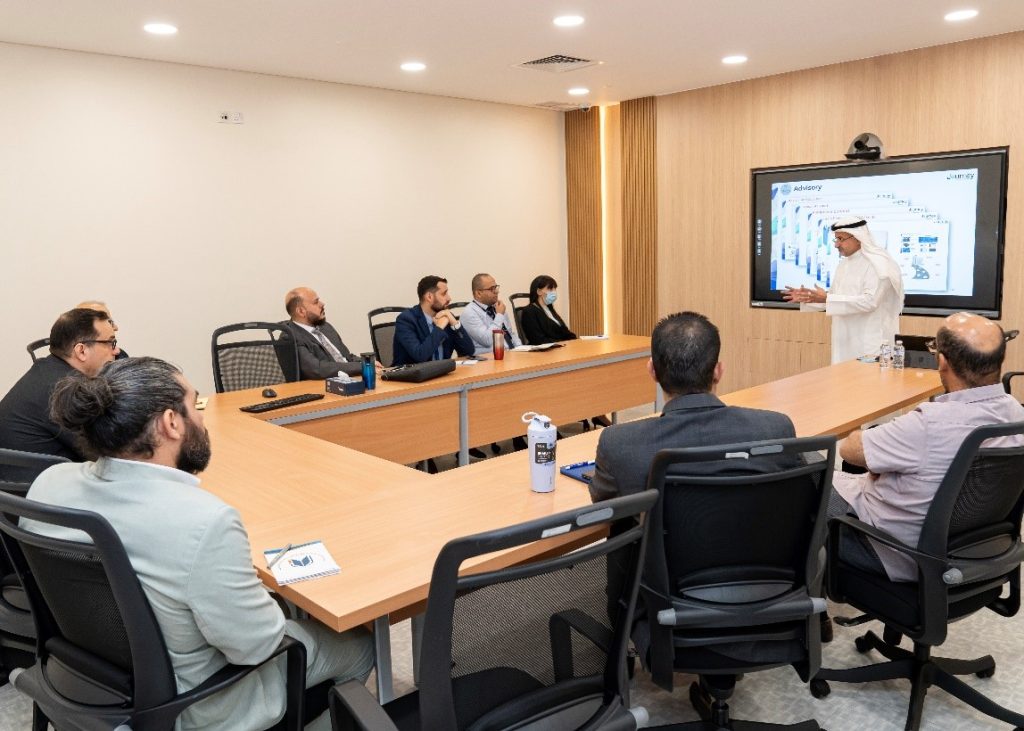
The PBL Center organized several enriching experiences aimed at bridging the gap between academia and industry. Through a strategic focus on hands-on learning, the Center organized numerous field trips, immersing students in real-world environments to apply theoretical knowledge to practical scenarios. Furthermore, The Center established significant collaborations with industry partners, emphasizing the importance of hands-on experience in shaping well-rounded engineers. These collaborations took many different forms, including seminars delivered by industry experts, insightful field visits to industrial facilities, and engaging meetings facilitating dialogue and knowledge exchange. By fostering these valuable connections and experiences, the PBL Center remains steadfast in its commitment to preparing students for success in the dynamic landscape of engineering.

Fig. 7: Presenting and Meeting with VEOLIA -Kuwait, Spring 2024.


Fig. 8: PBL- CoE committee members field visit and meeting with Kuwait Innovation Center, Fall 2024.
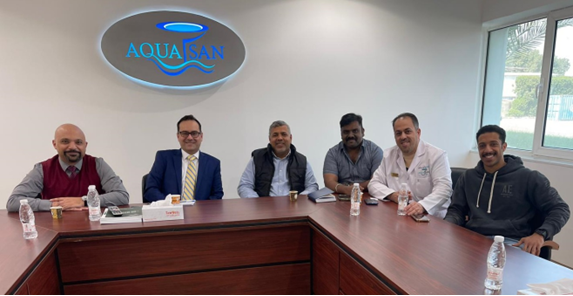
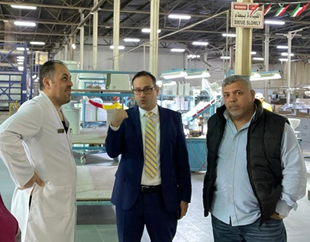
Fig. 9: PBL- CoE committee members field visit and meeting with AQUASAN, Spring 2024.
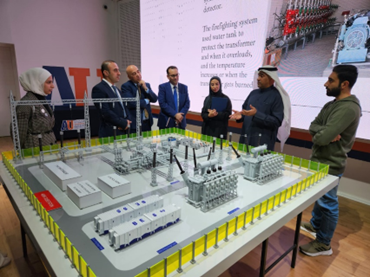
Fig. 10: Presentation from NCC at AU auditorium about high voltage substations in collaboration with electrical and electronics engineering department and alumni and career placement center, Spring 2024.
A core activity of the College of Engineering (CoE) PBL Center is its participation in prominent conferences, both regionally and internationally. For example, the CoE PBL Center proudly participated in the 6th MENA Higher Education Leadership Forum in Dubai, held from April 16-18, 2024. This prestigious forum serves as a dynamic platform for higher education leaders, decision-makers, and innovators to explore emerging trends, engage in thought-provoking debates, and collaborate on shared goals.
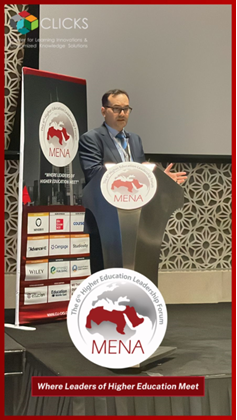
Fig. 11: AU-Kuwait case study presentation at the 6th MENA-Higer Education Leadership forum, Dubai, UAE, 16-18th April, 2024
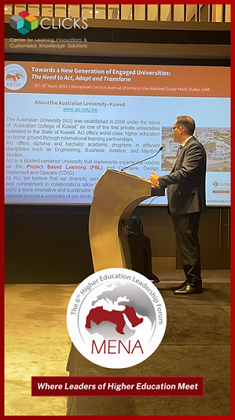
Fig. 12: Presenting CoE-PBL paper at the 6th Higer Education Leadership forum, Dubai, UAE, 16-18th April, 2024.
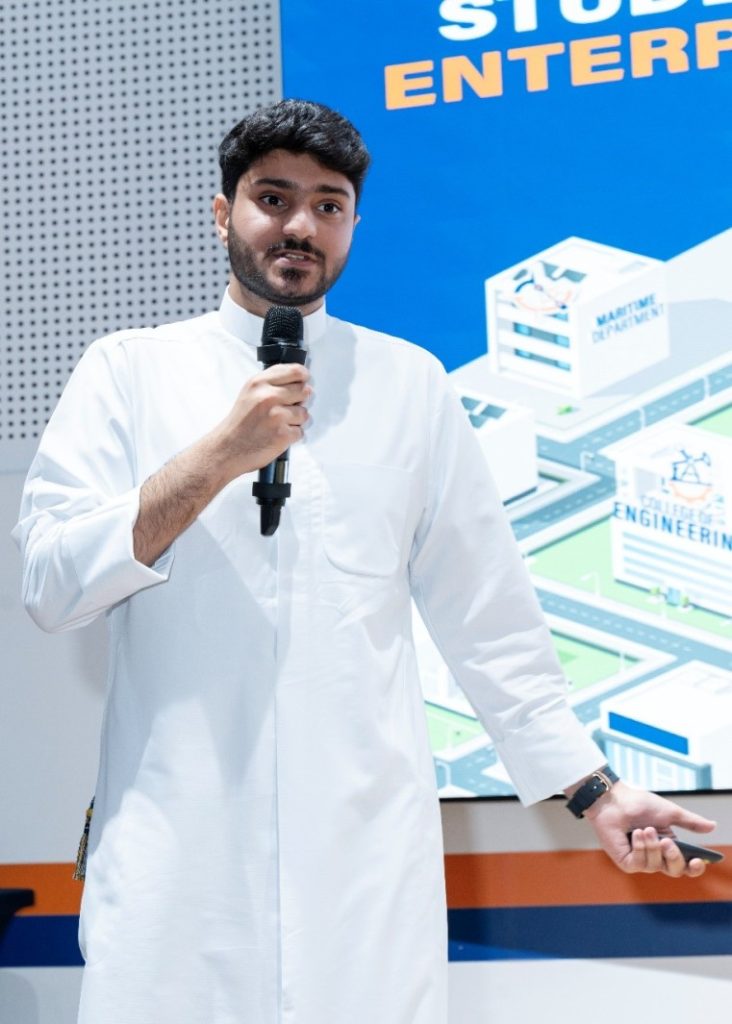
The PBL Center encourages students to engage in national and international competitions, where they can showcase their skills and innovative projects. One of the key events is the “Lead Your Future” competition, organized by the Center for Innovation and Entrepreneurship, where students present the results of their PBL courses. Such competitions provide students with the opportunity to demonstrate their creativity, problem-solving abilities, and teamwork skills.
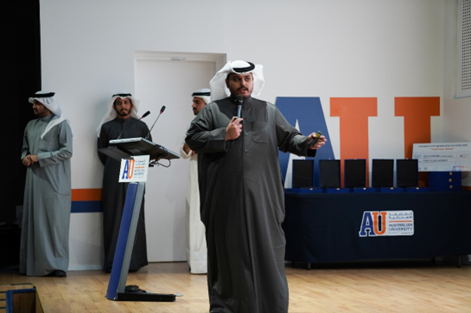

Fig. 13: College of Engineering students presenting their projects from different PBL courses at the Lead your future event organized by the innovation and entrepreneurship center AU, Fall-2024.
PBL Center actively collaborates with other centers at AU to foster interdisciplinary learning and knowledge exchange. Through participation in seminars, workshops, and university-wide events, the PBL Center enriches the academic environment and promotes collaboration across disciplines. This involvement provides students and faculty with valuable opportunities to present their research, exchange ideas, and build professional networks.
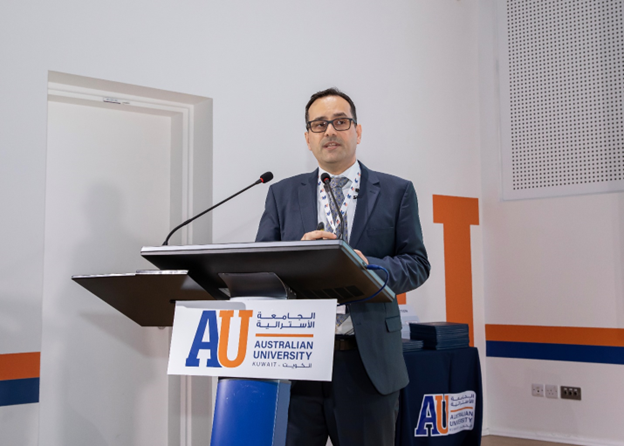
Fig. 14: Participation in an event organized by the Teaching and Learning Center Teaching Learning Center titled “Holistic Approach Towards Teaching & Learning: Pedagogical Explorations” at AU, Fall 2024.
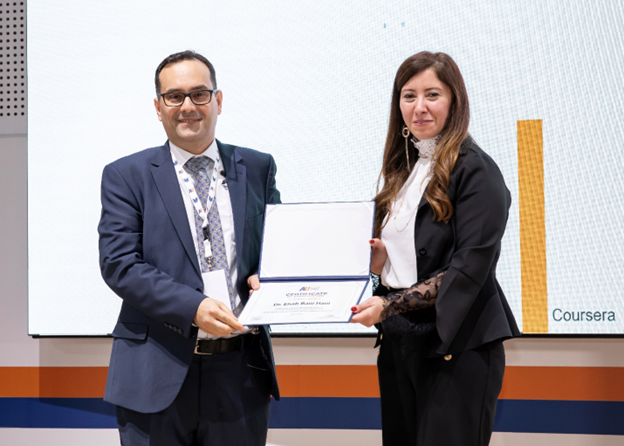
Fig. 15: Participation in an event organized by the Teaching and Learning Center Teaching Learning Center titled “Holistic Approach Towards Teaching & Learning: Pedagogical Explorations” at AU, Fall 2024.